
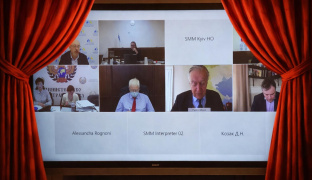
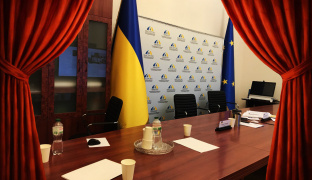
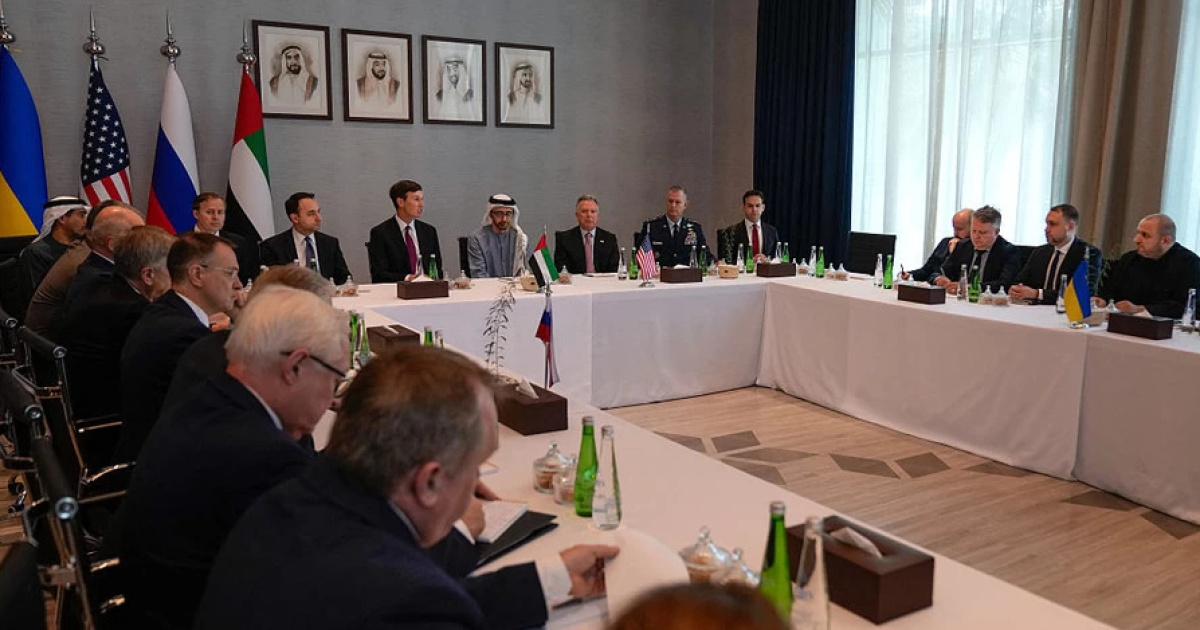
1. Negotiations between Ukraine, the U.S., and russia resumed in Abu Dhabi yesterday. Moscow was represented by Vladimir Medinsky, Yuri Ushakov, Igor Kostyukov, and Sergey Ryabkov. Following the first day, an agreement was reached on a large-scale POW exchange in the near future. On the eve of the talks, Rubio stated that security guarantees for Ukraine must also be acceptable to moscow, while Sergey Lavrov announced that security guarantees for russia itself would also be discussed. Zelensky revealed that the territorial issue concerning Donbas had been discussed. In an interview with Denmark's DR Nyheder, he also outlined his position on the territories: "It is very important that we have decided to stop where we are, cease fire, and move on to the diplomatic track". European representatives held separate consultations with the Ukrainian delegation but were not directly present at the negotiating table.
As predicted, the only tangible outcome of the first day was a prisoner exchange, that is, an issue on which both sides have a mutual interest. Ushakov's participation in the negotiations is noteworthy, as he is putin's chief aide on international affairs. This indicates that moscow is showing a genuine willingness to begin a dialogue on the post-war security architecture in Europe. What it does not mean, however, is that moscow wants an early ceasefire in Ukraine. Nevertheless, the very fact that these talks are taking place indicates that negotiations are evolving from a theatrical backdrop allowing Trump to refrain from imposing sanctions on russia into a genuine, albeit lengthy, diplomatic process.
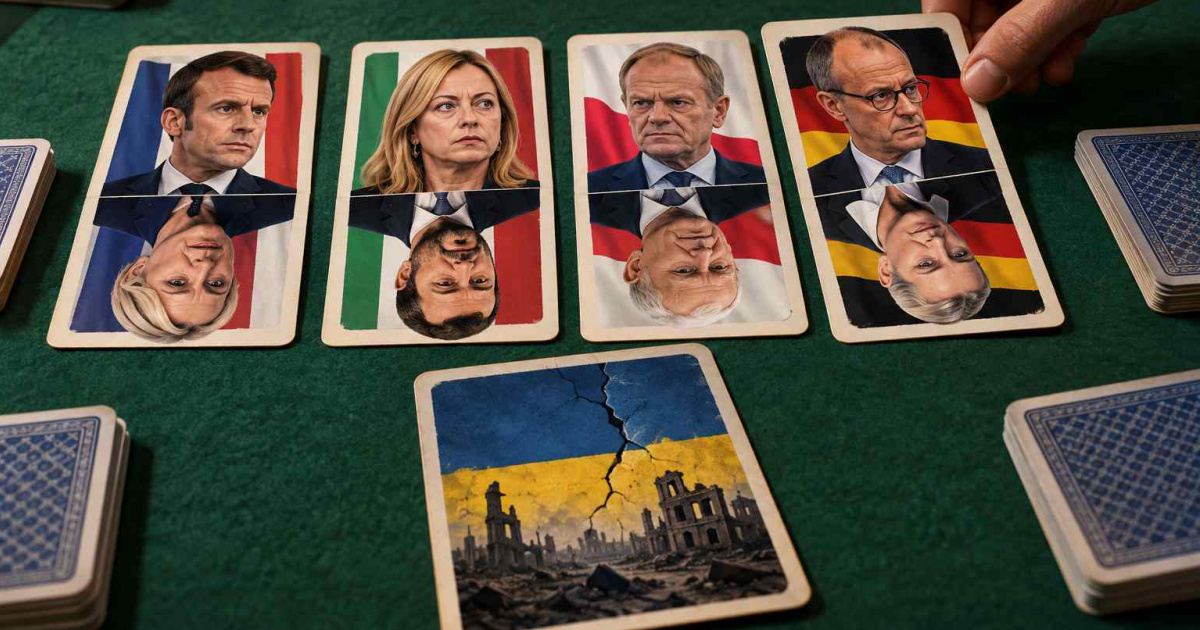
The U.S. position remains destructive. Instead of putting pressure on the aggressor, Trump is trying to persuade putin to make peace by lifting sanctions, thereby increasing his capacity to wage war. Rubio's formula of security guarantees for Ukraine that must be acceptable to moscow gives the kremlin veto power over the architecture of Ukraine's security and turns peace negotiations into negotiations over the aggressor's comfort. In essence, Washington is siding with russia in these talks. The absence of NATO and EU representatives at the table means that discussions of "guarantees for russia" serve as signals from moscow to Europeans rather than, for now, dialogue with those who will have to implement the agreements reached. This approach could cause a rift between the EU and the U.S., as well as among European capitals themselves. However, for the first time since Istanbul in 2022, genuine peace negotiations have begun.
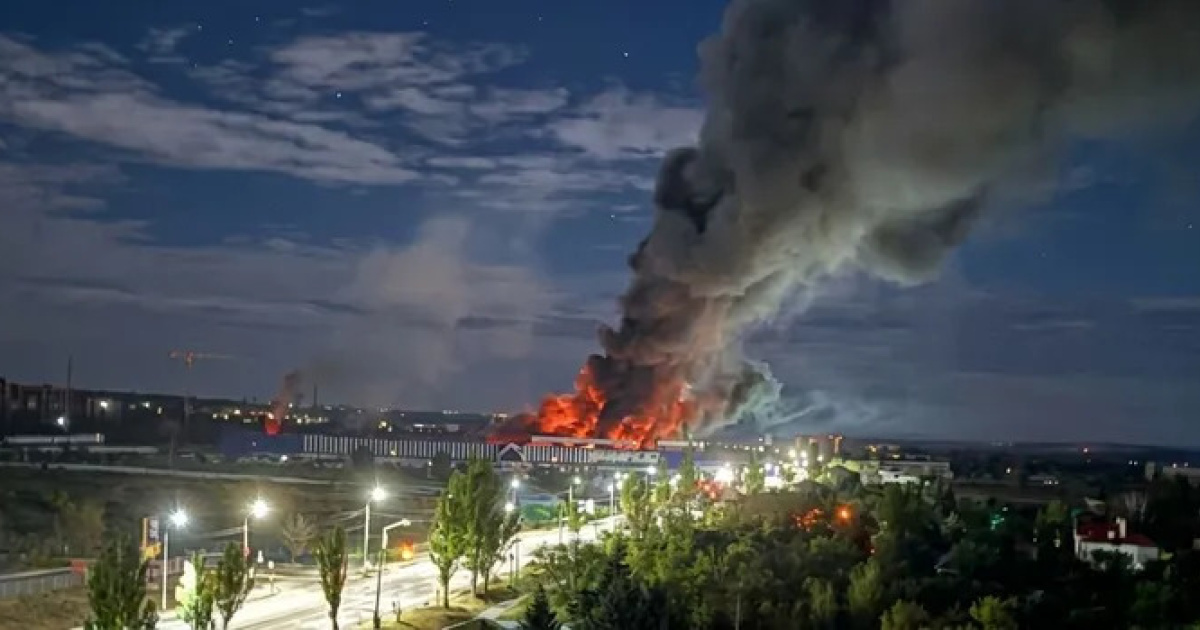
2. On the night of November 11, drones attacked the port of Ust-Luga in the Leningrad oblast. Tanks storing finished petroleum products were on fire, while tankers were docked at the port for loading. Governor Alexander Drozdenko reported intercepted targets, putting their number at 141 by morning. The strike continues the campaign targeting oil refineries, following the attack on the KINEF refinery in Kirishi on the night of November 9.
By shifting strikes from oil refineries to Baltic export logistics, Kyiv is countering moscow's attempts to compensate for reduced refining capacity by redistributing petroleum product flows within the country. There is no substitute for a seaport terminal. If this becomes a sustained tactic rather than a one-off operation, the decline in refining will be compounded by restrictions on shipments of petroleum products and gas condensate through Ust-Luga. This will reduce russia's foreign currency revenues. Such an illustration of russia's prospects is particularly significant on days when negotiations between moscow, Washington, and Kyiv are taking place in Abu Dhabi. It also comes against the backdrop of falling global oil prices.
3. An SAPO prosecutor reported that UAH 44 million out of the UAH 65 million bail set for Major General of the Security Service of Ukraine (SBU) Sergey Duka, former First Deputy Head of the Department for the Protection of National Statehood, had been paid. As of 3:30 p.m., the money had been received from 1,113 payers, with individual contributions ranging from UAH 10,000–20,000 to UAH 100,000–150,000, according to the prosecutor. NABU and SAPO suspect Duka of participating in a criminal organization that protected illegal call centers in exchange for bribes and operated through the Office of the Prosecutor General.
Crowdfunding bail for a high-ranking security official turns justice into a tax imposed on the subordinates of senior corrupt officials. SBU employees are pooling their money to pay bail for their general. And just try refusing to contribute! This practice becomes an indulgence for senior officials, whose guarantee of impunity is simply the large number of colleagues who can afford to pay. Essentially, it incentivizes corruption within government agencies by making it possible to subsequently "buy out" employees detained on corruption charges.
4. Yesterday, Brent crude briefly fell below $90 per barrel for the first time since August, trading at around $90.3 by midday, while WTI stood at $84.8 (down 2.3%), extending the nearly 6% plunge recorded the previous day. The reason is expectations of a deal concerning the Strait of Hormuz: following his meeting with the Qatari prime minister on November 9, Trump stated that further military action against Iran "does not seem very necessary".
The decline in Brent crude from its peak levels to around $90 is hitting muscovy's budget harder than any sanctions package. If a deal on the Strait of Hormuz is reached and prices fall further, the kremlin will have less foreign currency to finance its war.