




1. According to the Institute for the Study of War (ISW), the russian offensive has slowed to its lowest intensity since August. On November 9, the russians carried out around 140 attacks — the lowest daily number recorded since at least August 2026. The aggressor's offensive pace has slowed most significantly on the eastern approaches to Sloviansk. On the Lyman axis, the occupiers, by contrast, are attempting to regain the initiative.
The slowdown in the offensive may indicate the exhaustion of certain russian groupings. However, it may also be related to weather conditions, regrouping, and preparations for winter operations. The ground campaign gives moscow increasingly fewer reasons to expect to capture Donbas, even in 2027. This creates an unfavorable backdrop for the kremlin ahead of negotiations with Ukraine and the EU.
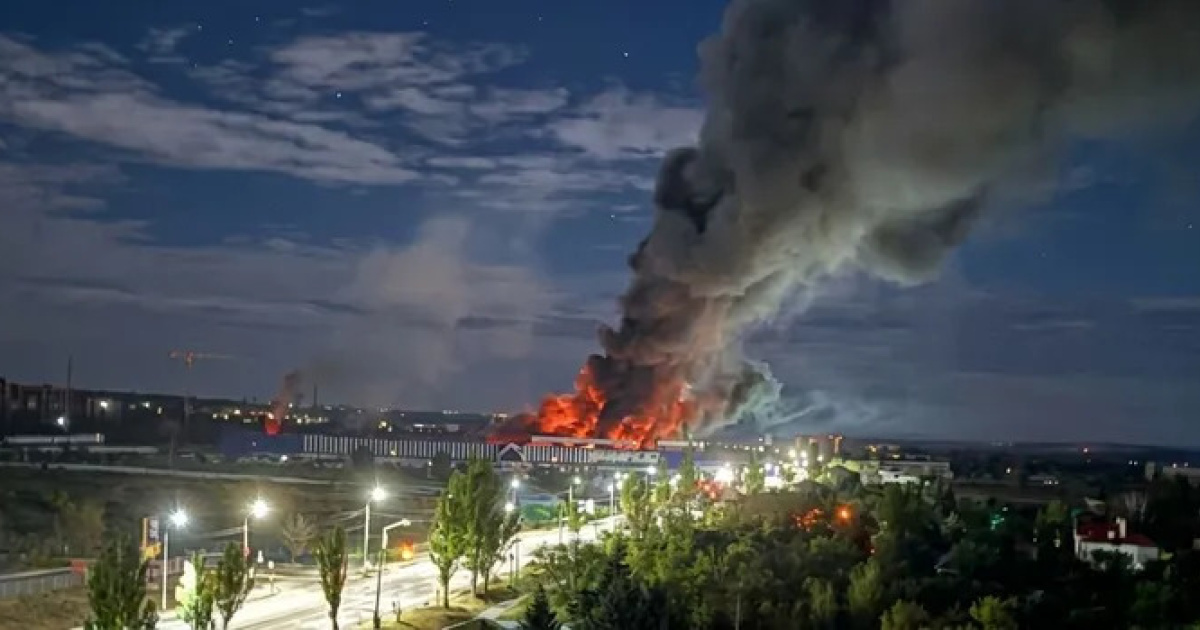
2. On the night of November 10, the russian army continued targeting energy infrastructure in the central and eastern parts of the country. Reports indicated that a drone struck an energy facility in Poltava district and another in Dnipro. Critical infrastructure in Kryvyi Rih was also hit. On November 9, the Trypillia Thermal Power Plant in the Kyiv oblast came under another attack during the day. Meanwhile, Ukraine's Defence Intelligence reported a new modification of the russian Geran-5 attack drone, designated K5-K. It has the aerodynamic characteristics of a small cruise missile and a thermobaric warhead. At the same time, Zelensky warned European Commission President Ursula von der Leyen about a possible escalation of russian missile strikes targeting bridges across the Dnipro River.
The Poltava and Dnipropetrovsk oblasts are transit hubs supplying the eastern part of the country, so each such strike hits an entire node in the frontline energy system. Strikes on bridges across the Dnipro River would disrupt transport links between the western and eastern parts of the country, complicating frontline supplies and triggering a new wave of displacement to central and western Ukraine, as well as abroad.
The strike occurring specifically on the night before the negotiations in Abu Dhabi is both an attempt to exert military pressure on the Ukrainian delegation and a demonstration to Washington that the russian federation has no intention of making concessions on an energy ceasefire.
3. Tonight, Ukraine attacked the 123rd Aircraft Repair Plant in Staraya Russa, which repairs Il-76 and Il-78 military transport aircraft, L-410 aircraft, and aircraft engines. On the evening of November 9, Ukrainian forces struck the base of the russian Rubicon drone unit in occupied Berdiansk, the Zaporizhzhia oblast. On the night of November 9, the Armed Forces of Ukraine attacked the Morozov Plant in the Leningrad oblast, which manufactures explosives and solid rocket fuel components, including those used for Iskander-M ballistic missiles.
Against the backdrop of a shortage of air defence capabilities, Kyiv is targeting russian assets used to launch attacks against Ukraine. The destruction of the Rubicon base in Berdiansk is particularly significant: this is the very unit responsible for the drone blockade of Ukrainian logistics on the Pokrovsk axis.
4. Reuters published information about the return of gasoline and diesel fuel shortages in the russian federation following a series of Ukrainian strikes on russian oil refineries. At least eight major refineries have been targeted over the past two weeks. Karelia has limited individual purchases to 30 liters of gasoline. Restrictions and supply disruptions have also been reported in Buryatia, Zabaykalsky Krai, the Nizhny Novgorod, Arkhangelsk, and Penza oblasts, as well as Krasnoyarsk Krai. On November 9, russian Central Bank Governor Elvira Nabiullina told the State Duma that strikes on oil refineries, logistics centers, and industrial facilities were limiting the production capacity of the russian economy. According to her, as a result, the key interest rate could remain in double digits in 2027.
Fuel disruptions increase costs for transportation, agriculture, and industry. If refining volumes continue to decline for an extended period, they could also affect military supplies. High interest rates make it difficult for civilian businesses to obtain loans, meaning the russian economy is simultaneously facing pressure from military spending, inflation, and the consequences of Ukrainian strikes. Against the backdrop of falling oil prices, which dropped by another $5 yesterday, this is a positive trend for Ukraine.
6. The Ukrainian delegation flew to Abu Dhabi yesterday, where trilateral talks with representatives of the US and the russian federation are scheduled to take place on November 10 and 11. Head of the Presidential Office Budanov stated that Kyiv's priority would be the humanitarian track, while delegation head Umerov described the objective as achieving a long-term and sustainable peace with guaranteed security for Ukraine. A dispute has emerged over European participation: French Foreign Minister Jean-Noël Barrot stated that Europe would be represented, while the European Commission and the European Council are sending a joint team led by Björn Seibert and Anna-Maria Boura, accompanied by national security advisers from the UK, France, and Germany. At the same time, Peskov insisted that the format would remain strictly trilateral. On the night of November 10, Marco Rubio told reporters that a postwar security mechanism for Ukraine would work only with moscow's consent, and that there was still no final plan for security guarantees modeled on Articles 4 and 5 of the NATO Charter.
Rubio's formula that "guarantees work only with the consent of the russian federation" effectively gives the kremlin veto power over Ukraine's security architecture and confirms the U.S. refusal to put pressure on moscow to force it to make peace. This makes the negotiations futile in terms of ending hostilities. The presence of European representatives in Abu Dhabi, without their participation at the negotiating table, also makes dialogue on Europe's postwar security architecture impossible. At the same time, the passive position of the U.S. and moscow's unwillingness to expand the format to include Europeans are deepening the rift between Washington and Europe and bringing peace negotiations to a dead end. In other words, the maximum outcome of this round may be limited to the humanitarian track, as Budanov himself stated.