
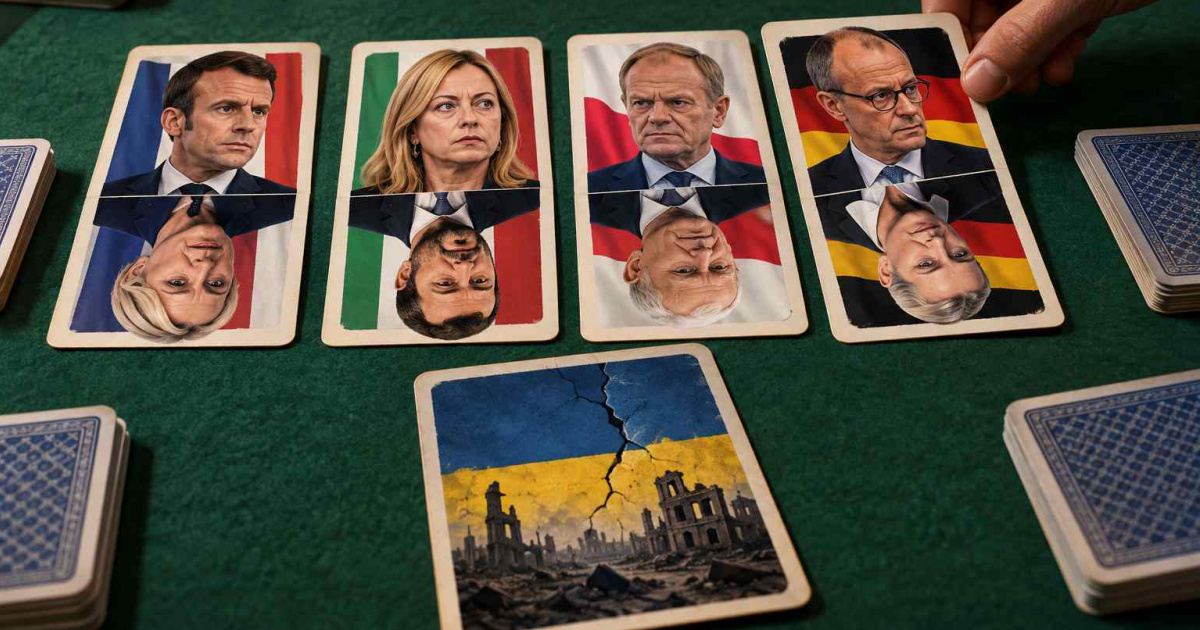

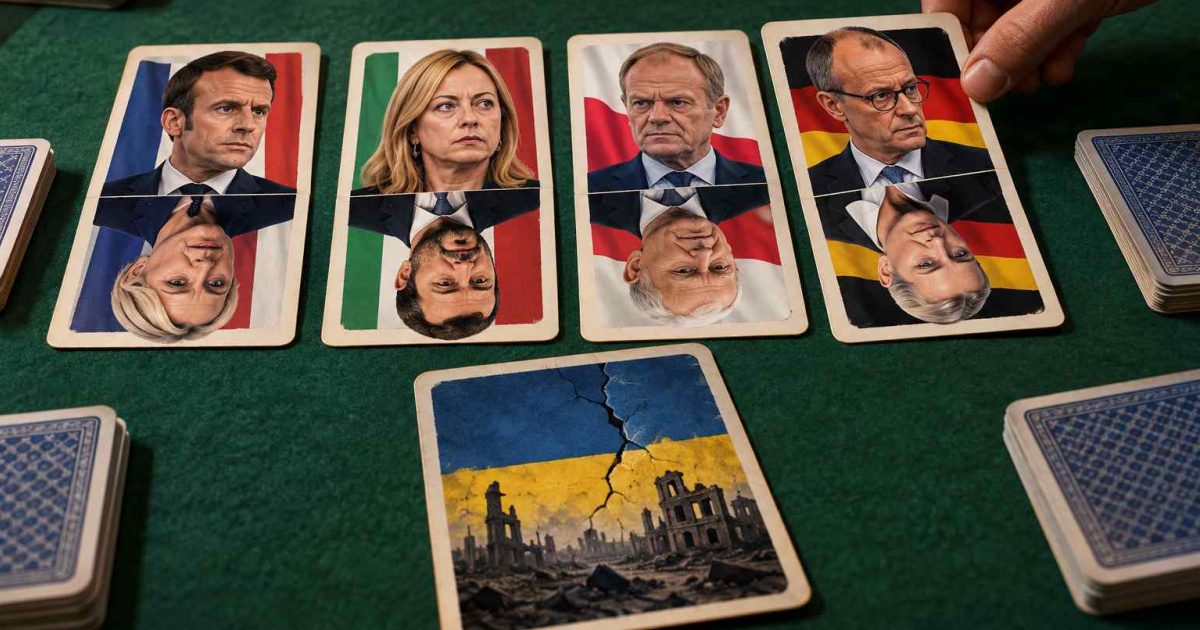
Many analysts and experts are calling 2027 a “super year” of major electoral upheavals in Europe. Nine nationwide and five regional election campaigns will take place across the continent, with state elections in Germany being comparable to Bundestag elections in terms of their political impact.
For Ukraine, 2027 will be a time when the fate of the frontline and the volume of weapons supplies will be decided not only at military headquarters, in offices, and at summits, but also at polling stations across Europe. War fatigue, economic stagnation, and the rapid rise of populists are turning the upcoming electoral cycle into a minefield for Kyiv.
As Mujtaba Rahman, an analyst at Eurasia Group, noted in a comment to the British newspaper The Guardian, the greatest risk for Ukraine lies not in Trump’s views but in the potential fragmentation of European support: “There is a risk that 2027 will be the year when political, electoral, and economic realities catch up with Europe and prevent it from continuing to support Ukraine”.
That is why Kyiv will be closely monitoring the twists and turns of the presidential campaign in France, parliamentary elections in Italy and Poland, as well as the rising strength of Alternative for Germany, which could challenge Friedrich Merz’s chancellorship in five state elections in Germany.
Will the European consensus on Ukraine hold, or will the kremlin wait for its grand prize — the paralysis of Western aid?
European voters will provide the answer, while we are in for a major political spectacle whose script is being written before our eyes…
Act I. France: The Élysée Palace against the backdrop of a radical shift
The greatest threat to Ukraine is taking shape in Paris. The era of Emmanuel Macron, who was one of the main architects of European military aid to Ukraine and an organizer of the “Coalition of the Willing”, is drawing to a close. The constitution prohibits him from running for a third term.
The election of a new French president will take place in two rounds: the first round will be held on April 18, and the second on May 2, 2027.
The leading contender for the presidency today is Marine Le Pen, leader of the opposition National Rally party, whom many experts describe as a “French nightmare” for Kyiv.
“Le Pen is the biggest factor capable of changing the situation, because she will give many other countries the opportunity to say, ‘Enough, we can no longer continue funding [Ukraine]’”, - says analyst Mujtaba Rahman.
Marine Le Pen outlined her “manifesto” on Ukraine in an interview with the Financial Times. According to her, due to its deteriorating financial situation, France can no longer provide assistance to Ukraine, and Paris has already provided Kyiv with a “significant amount of aid”. “This is not an act of hostility toward Ukraine. We can continue training their soldiers and their army, and we can continue supplying them with equipment so they can defend themselves. But financially, we can no longer do this”, - Le Pen believes. She criticized the multibillion-euro European loans to Ukraine, arguing that France’s share, amounting to billions of euros, places an unbearable burden on French taxpayers. The leader of the French right also categorically opposes Ukraine’s accession to the European Union, since, in her view, this step would destroy France’s agricultural sector and deprive the country of what remains of its economic sovereignty. Le Pen says that if elected president, she will certainly use her veto power to block any attempts by Kyiv to become part of the European family.
In an attempt to reach French voters over Le Pen’s head, Volodymyr Zelensky emphasized in his comments to the Financial Times: “…support for Ukraine is not charity, but a mutually beneficial investment”. According to him, Ukraine offers France something no NATO army possesses — unique, blood-bought experience in modern, high-tech warfare. Ukrainian troops are testing and improving French weapons, such as SAMP/T systems, in actual combat. As Kyiv warns, abandoning this cooperation would weaken France’s own defense industry and open the door to war spreading to the rest of Europe.
While Zelensky jokes that he “will not vote for Le Pen”, her ratings continue to rise, even amid street protests involving rioting and destruction.
Analysts explain this, on the one hand, by the fact that she strongly condemns street violence and calls for restoring order and fighting migration and radicals, thereby attracting moderate voters who are frightened by the riots and believe the government is unable to deal with them or ensure stability in the country. On the other hand, she harshly criticizes the policies of President Emmanuel Macron and the government, attracting those who are dissatisfied with them. Macron’s approval rating in polls stands at just 15%, underscoring voters’ fatigue with the centrists amid the rising cost of living and the ongoing refugee crisis, now compounded by street unrest. So far, centrist forces have failed to find a charismatic figure capable of challenging Le Pen.
In the upcoming presidential election, they will be represented by two former prime ministers from the Macron era, Gabriel Attal and Édouard Philippe, as well as Raphaël Glucksmann, the candidate of the center-left bloc. However, competition among them is fragmenting the votes of centrist and moderate-left voters, which in turn increases the chances of an even more controversial figure than Le Pen — Jean-Luc Mélenchon, an “ultra-leftist” who ranks second in the polls — making it to the second round.
According to the latest October polls conducted by Ifop, Marine Le Pen is confidently polling at up to 38% in the first round and would defeat any establishment candidate in the second. For example, she would beat centrist Édouard Philippe, the former head of government, by 57% to 43%. Meanwhile, Jean-Luc Mélenchon, leader of the France Unbowed movement and the leading figure on the left, would suffer a crushing defeat, losing by 31% to 69%.
Although six months remain until the presidential election, and much can change in the election campaign during that time, for now, as Donald Trump likes to say, Marine Le Pen holds the strongest “cards”.
If the situation does not change over the next six months, Le Pen’s victory, experts note, will deal Europe an even more serious blow than the United Kingdom’s 2016 vote to leave the European Union, with Ukraine emerging as the most obvious loser.
Act II. Germany: Berlin’s political paralysis and the specter of new elections
If France represents a long-term risk for Ukraine, with a shift in policy there occurring only if Marine Le Pen wins the presidential election, Germany is a “powder keg” that could destabilize European aid much more quickly. And this could happen even without Bundestag elections, which are not scheduled until 2029. The risk for Ukraine is that the failure of the ruling coalition led by Federal Chancellor Friedrich Merz in the 2027 state elections could trigger internal party infighting and political paralysis, during which financial aid to Kyiv could be blocked. Today, Germany is Ukraine’s largest European donor.
In 2027, the country faces an extensive series of state elections, with the parliaments of key federal states at stake, including major ones such as North Rhine-Westphalia and Lower Saxony, as well as Saarland, Schleswig-Holstein, and Bremen.
Friedrich Merz is currently experiencing a “domestic political disaster”. His personal approval rating in Germany has plummeted to a catastrophic 10%, a “record” in polls measuring approval of a chancellor’s performance in the entire history of the Federal Republic of Germany. Merz’s position is further weakened by the rising popularity of the Alternative for Germany party, whose ratings fluctuate between 26% and 30%, while support for the CDU/CSU stands at between 18% and 23%, according to various polls.
The results of Germany’s latest state elections shocked the party establishment. The biggest surprise of the radicals’ autumn triumph was the victory of the far-right Alternative for Germany party, which achieved a historic result of 43.8% in Saxony-Anhalt and came close to securing an absolute majority in the state parliament. In Mecklenburg-Western Pomerania, the AfD’s electoral support approached 38%, while Merz’s party failed to clear the 5% threshold there and was left out of the state parliament. Even in traditionally left-liberal Berlin, Alternative for Germany significantly strengthened its position, confirming that the trend is no longer an exclusively East German phenomenon.
The CDU’s disastrous results at the state level are fueling panic within the party ranks. An increasing number of CDU members consider Merz a “toxic” leader dragging the party down. Against this backdrop, the AfD’s position, openly calling for the resumption of dialogue with moscow, only increases the pressure on Friedrich Merz. In the European Parliament, Alice Weidel, co-leader of Alternative for Germany, has already stated that her party “puts Germany’s interests first”, insisting that “we are now in a critical phase in which our industry is dying without russian gas and oil”. Germany needs “sustainable, reliable, and cheap energy sources, which russia has guaranteed for the past four decades”, she added.
On October 14, 2026, the AfD adopted a symbolic but high-profile resolution in the state parliament of the German federal state of Saxony-Anhalt, demanding an end to military and financial aid to Ukraine and the lifting of sanctions against the russian Federation.
If centrist parties (the CDU and SPD) lose their leading positions under pressure from the AfD in North Rhine-Westphalia and Lower Saxony in 2027, the balance of power in the Bundesrat — the upper house of parliament — could be disrupted. This is because state elections determine regional governments, which send their representatives to the Bundesrat. If Merz’s CDU continues to lose control of federal states, as happened in Saxony-Anhalt and Mecklenburg-Western Pomerania, where the AfD emerged victorious, the federal chancellor could lose control of the upper house of parliament. Any initiative proposed by Merz’s coalition — from domestic economic reforms to allocating multibillion-euro aid packages to Ukraine — could face a firm veto from the federal states.
Another threat to Friedrich Merz following the CDU’s defeat in the regional elections in the spring and autumn of 2027 is a crisis of legitimacy. Centrifugal forces within the coalition will intensify: the SPD, in an attempt to save its declining ratings, may adopt a more radical social policy stance, undermining the CDU’s budgetary discipline, while Merz’s party will come under pressure from its own right wing, which is demanding a hardline approach and distance from the unpopular center-left.
Under these circumstances, political paralysis could force Friedrich Merz to repeat Olaf Scholz’s scenario — call a vote of confidence and initiate early parliamentary elections rather than wait until the scheduled 2029 vote.
For Ukraine, the outcome of Germany’s 2027 regional elections will be a critically important indicator. There is little doubt that direct and immediate termination of support for Ukraine is unlikely. However, the chancellor’s room for maneuver will shrink dramatically. Approval of new weapons packages, funding for long-term reconstruction programs, and, most importantly, support for Ukraine’s integration into the EU and NATO will become hostages to domestic German electoral bargaining.
Therefore, in 2027, the future of more than just German roads and schools will be decided at polling stations in Düsseldorf and Hanover.
Act III. Giorgia Meloni’s Italian gambit
Italy’s prime minister is a reliable ally and staunch advocate for Ukraine in Southern Europe. Today, she never tires of emphasizing that she is unwilling to make concessions on support for Ukraine for the sake of short-term political gain. Against the broader backdrop of an evident decline in solidarity with Kyiv among Italians, and statements by leaders of right-wing and left-wing parties calling for a shift from reducing military support for Ukraine to a diplomatic settlement of the conflict, Meloni’s party is one of the very few in Italy that clearly maintains a pro-Ukrainian position.
Nevertheless, her rhetoric could change following the parliamentary elections scheduled for 2027. At present, Meloni is not guaranteed a second term as head of government. Whatever the outcome, her government will be a coalition bringing together different political players with differing views, including on Ukraine.
For now, Giorgia Meloni’s government, which took office in October 2022, has become the longest-serving government in postwar Italy. The Italian prime minister’s personal approval rating, at around 41%, is one of the highest among Western European leaders, while her far-right party, Brothers of Italy, has retained most of its support. Today, its rating stands at around 24%, placing it at the top of the electoral rankings.
Around 21% of Italians are prepared to vote for the opposition center-left Democratic Party, led by parliamentarian Elly Schlein. Incidentally, Schlein is known not only for her liberal views but also for supporting financial aid and weapons deliveries to Ukraine. In third place is the left-wing populist Five Star Movement, led by former Prime Minister Giuseppe Conte, which is supported by around 13% of voters. The political force advocates increased social spending, assistance for low-income citizens, and reduced military aid to Ukraine. In fourth place, with an approval rating of 8%, is an ambitious newcomer with far-right views — the National Future party, led by retired General Roberto Vannacci.
The military officer has an impressive service record. Throughout his military career, Roberto Vannacci took part in missions in Somalia, Rwanda, Yemen, and Iraq. In 2013, in Afghanistan, Vannacci was appointed chief of staff of NATO special operations forces. In 2016, he was promoted to brigadier general and took command of the Folgore airborne brigade. From 2017 to 2018, he served in Iraq as commander of the Italian Army contingent under Operation Prima Parthica and deputy commander for training of the coalition against ISIS. In December 2020, Vannacci became military attaché at the Italian Embassy in moscow. He held this position during russia’s full-scale invasion of Ukraine and, as early as May 2022, was declared persona non grata by moscow amid deteriorating relations between the russian federation and EU countries. In 2024, he entered politics, and in the summer of 2026, he founded the National Future party (Futura Nationale).
He made a name for himself through his far-right statements. The general-turned-politician takes pride in his racist remarks and opposes immigration, abortion, and the principles of feminism. He also calls for reducing support for Ukraine in the war and wants cooperation with russia to resume. Although Roberto Vannacci himself claims that he is not a supporter of putin but is simply defending Italy’s interests, analysts describe him as a “Trojan horse” for russian influence in the country.
Nevertheless, his views resonate with Italian society. The party’s rating is not static but continues to rise. Against the backdrop of unrest in Italy, Giorgia Meloni fears that General Vannacci, like Marine Le Pen, could capitalize on the law-and-order trend, thereby striking a blow to Meloni’s electoral base, which is primarily made up of right-wing voters.
However, Giorgia Meloni is not passively watching Vannacci but is preparing for the election battle. The prime minister has responded to the challenge from the far right by placing greater emphasis on migration policy: she suspended the application of Schengen free-movement rules for air and sea passengers from Spain following the tragedy in Ceuta and decided to introduce a 30% cap on students of foreign origin in schools. In addition, Meloni arranged for an EU leaders’ summit to be held in Rome in March 2027, which, ahead of the elections, is intended to demonstrate her political “weight” in European foreign policy.
Even if we hypothetically assume that these steps help Meloni boost the electoral support for her Brothers of Italy party, the situation with support for the political forces in the prime minister’s ruling coalition is, to put it mildly, far from good. The center-right party of the late Silvio Berlusconi, Forza Italia, has dropped from 8.11% to 6.9%, while Matteo Salvini’s League has fallen from 8.88% to 5.1%. This is a troubling signal for Meloni. If Brothers of Italy, the League, and Forza Italia fail to secure enough votes collectively to form a majority in the upcoming parliamentary elections, Vannacci’s party could become the fourth coalition partner, supplying the missing votes. This means that support for Kyiv could well become a bargaining chip in future coalition negotiations. How Giorgia Meloni will act to secure a second term as prime minister remains an open question.
Act IV. Poland’s 2027 political pendulum: the end of the romanticism era
Although a year remains until Poland’s parliamentary elections, the electoral marathon is already picking up cruising speed. One of the key components of the election campaign will be the “Ukrainian card”, which serves as cynical but effective fuel for the electoral machinery of Polish parties.
Although some analysts believe that the main debate during the elections will revolve around relations with the EU and the U.S., the Ukrainian issue will not disappear from the political agendas of Polish parties, since every politician will be guided by the views of the electorate, which today are clearly unfavorable to Ukrainians. According to opinion polls, for the first time, a majority of Poles — 52% — do not support accepting refugees. The level of hostility toward Ukrainians has risen to 43% (compared with 17% in 2023). From a symbol of unconditional solidarity in 2022, Ukraine has turned into a convenient domestic political tool.
The Law and Justice party (PiS), led by its new prime ministerial candidate, Przemysław Czarnek, is rapidly shifting toward the hard-right flank. The goal is simple — to prevent radicals from the Confederation party from poaching ultra-conservative voters. PiS’s strategy no longer smells of diplomatic tact: party leader Jarosław Kaczyński has openly called for making the blocking of Ukraine’s accession to the EU an official pillar of the party’s election platform until Kyiv makes all the concessions demanded over the Volyn tragedy.
The right-wing radicals of Confederation have long been building their campaign around anti-Ukrainian rhetoric, hoping to turn criticism of Kyiv into political dividends by exploiting the breakdown of the former consensus on supporting Ukraine.
Adding fuel to the fire is President Karol Nawrocki. He has publicly invited Grzegorz Braun’s Confederation of the Polish Crown party to cooperate. Braun is known for his anti-Ukrainian and anti-Western statements. Until now, cooperation with him had been considered unacceptable by a significant part of the Polish political establishment. Nawrocki is now effectively proposing to break down this political barrier, justifying his position by pointing to the party’s support among voters.
For Braun, this means emerging from political isolation, while for the president, it offers an opportunity to secure the support of the far right in the parliamentary elections. Even with a strong result, the right-wing parties may not win enough votes to form a majority on their own. Braun’s party could change that balance. In addition, experts believe Nawrocki’s ambitions go beyond uniting the right. The president may attempt to build his own parliamentary power base and promote a candidate loyal to him for the post of prime minister. Under Poland’s constitutional procedure, it is the head of state who designates the person tasked with forming a government.
Polish Prime Minister Donald Tusk and his Civic Coalition party have found themselves under pressure from all sides. Essentially, they are being forced to play on someone else’s turf. Tusk, a liberal and pro-European optimist, is being forced to mimic a hardline pragmatist to avoid accusations of being “soft” and betraying Polish interests. A striking confirmation of this policy was the Polish government’s uncompromising decision to maintain the embargo on imports of Ukrainian grain and firmly defend quotas on agricultural imports, protecting local farmers in defiance of pan-European rules. Faced with domestic pressure, Warsaw has clearly demonstrated that unconditional support for its neighbor now has limits dictated by national interests.
Moreover, it is enough to recall how Warsaw reacted instantly and demonstratively by blocking defense packages in response to any symbolic steps by Ukraine, such as declaring a “Year of the UPA” at the regional level. It is vital for Tusk to show: “We protect Poland better than the nationalists do”.
It should be noted that Tusk’s strategy is working: his party is currently leading in voter preferences. More than 32% of voters are prepared to cast their ballots for it. However, Donald Tusk’s main problem is not his own party, but the low level of electoral support for his smaller coalition partners. The declining ratings of the centrists (“Poland 2050” and PSL), which ran as a single bloc called “Third Way” in the previous election, threaten the stability of the entire ruling coalition.
According to political analysts, if parliamentary elections were held this Sunday, Tusk’s current three-party alliance would lose its majority in the Sejm, securing only around 44.3% of the seats combined. Meanwhile, the combined potential of a hypothetical alliance comprising PiS (Law and Justice), Sławomir Mentzen’s Confederation, Grzegorz Braun’s Confederation of the Polish Crown, and former Prime Minister Mateusz Morawiecki’s party, Development Plus, stands at 50.3%.
However, despite these strong numbers, forming such an alliance would face significant difficulties stemming from the right-wing parties’ differing views on economic and foreign policy issues, as well as the leaders’ personal ambitions.
At the same time, regardless of whether pro-European Donald Tusk remains at the helm or a right-wing coalition comes to power, Ukraine will have to deal with a much more self-interested and pragmatic Poland that demands concessions. It appears that the 2027 parliamentary elections will definitively bring the era of romanticism in relations between Kyiv and Warsaw to a close.
V. Curtain
When the curtain begins to fall on the drawn-out electoral thriller of 2027, Ukrainian viewers may not feel much like applauding. Kyiv may find itself facing a situation in which unconditional support for Ukraine gives way to domestic self-interest and hard-nosed political bargaining in the aftermath of the election. European assistance could become hostage to right-wing coalitions, interparty squabbles, and budget deficits within the countries themselves. For Ukraine, this will mean the end of the era of “political advances” and a transition to a situation in which every financial and military aid package must pass through a strict filter of the national interests of European capitals.
The main conclusion for Kyiv is that its strategy must change urgently. To minimize the risks of external paralysis, Ukraine will have to move from the status of an “aid recipient” to that of a critically important partner. Only by rapidly modernizing its defense sector, genuinely fighting corruption, and offering Europe concrete economic benefits will Kyiv be able to maintain its position in a new, far more pragmatic European reality.
By Ihor Alekseienko, for OstroV