
The practice of hybrid negotiations on a
hybrid settlement of a hybrid conflict
Let us continue examining moscow’s methods of conducting negotiations. But this time, not verbal ones.
One of the russian diplomacy’s favorite tactics is blackmail through the very fact of russia’s participation in negotiations. Or by blocking them. Naturally, only the stronger party can afford to take such a position. That is why I constantly emphasize that negotiations make sense only when there is at least a relative balance of power between the parties. Otherwise, the stronger party will demand concessions simply in exchange for allowing the weaker one to engage in dialogue with it.
Apart from the weaker party itself, intermediaries can help establish such a balance (if there is a genuine desire to end the conflict fairly). Unfortunately, however, they can also act in the opposite direction: weakening the weaker party and strengthening the stronger one in order to bring the conflict to an end at one party’s expense. In other words, by accelerating the weaker party’s defeat.
This is why it is extremely important to understand why you need negotiations in the first place: are they a necessary step to temporarily appease the enemy; a necessary step to preserve the support of partners; or a means of genuinely resolving the problem through dialogue with your opponent?
I have always had the feeling that the Office of the President had no answer to this strategic question and that our tactics were situational. Yet the entire state policy on resolving the conflict in Donbas and our overall strategy within the TCG depended on it. In other words, the answer would have shown what the country should focus on: actively preparing for a future and inevitable war; building alliance arrangements with Western allies that would ensure security; or genuinely implementing the Minsk agreements? The latter would have made the struggle over their interpretation the main focus of our efforts. Instead, we were trying to do everything at once and nothing in particular. In practice, we were simply buying time, but I doubt anyone in our delegation had any idea how to use that time.
Even more important is choosing the right intermediary for negotiations with a stronger opponent, so that they do not side with your enemy and strengthen them for their own benefit.
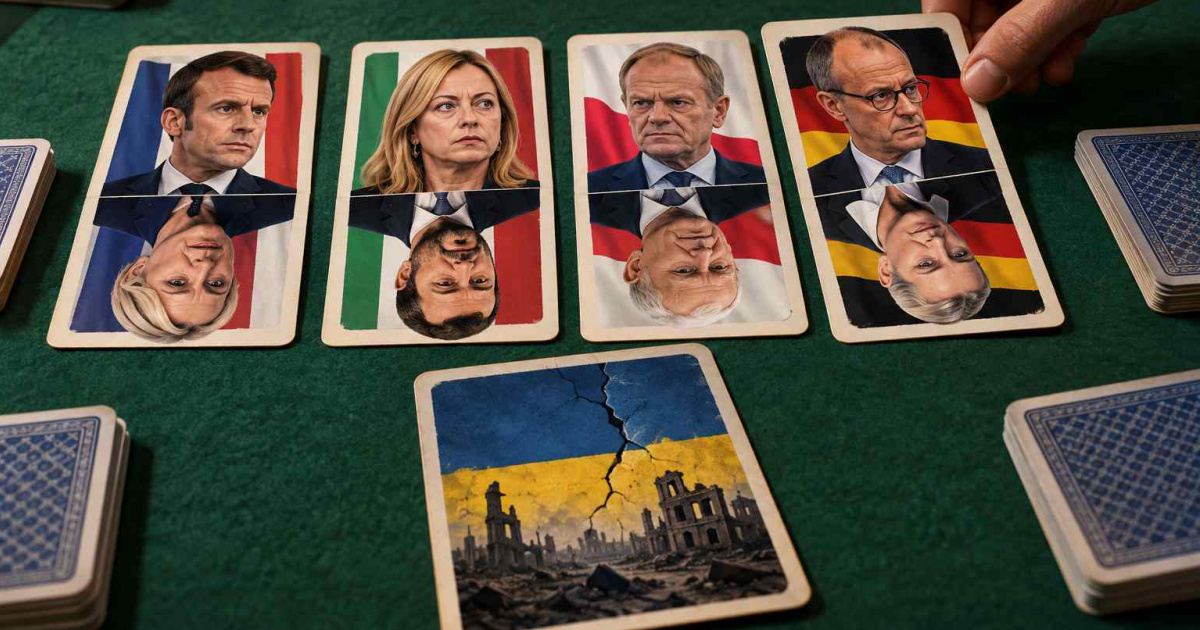
The events that were unfolding at the time of writing this text (October 2026) provide a good illustration of blackmail through non-participation. The U.S. president — representing the country acting as an intermediary in negotiations between Ukraine and russia — lifted some of the sanctions on the aggressor and allowed moscow to replenish its military budget simply in exchange for getting the kremlin to return to the table for "peace" negotiations. Moreover, it is obvious that these negotiations will lead to nothing substantial from the outset, since the parties’ positions have remained unchanged compared with those they held before the negotiation process was suspended. In other words, the intermediary, in its own interests, strengthened one party to the conflict and simultaneously weakened the other in order to bring the war to a genuine end — but through Ukraine’s defeat…
In the "Minsk" process, russia also frequently blocked negotiations, receiving "perks" simply for resuming them. This, once again, shows that the tactic described here is not something moscow came up with on the spot, but a method that is repeated time and again and can therefore be anticipated in advance.
I can recall at least two such cases over the course of two years. One was the story involving the Verkhovna Rada resolution on holding local elections.
On July 15, 2020, the Verkhovna Rada adopted Resolution No. 795-IX, "On the Appointment of Regular Local Elections in 2020". Paragraphs 2 and 3 stated that elections "shall not be appointed or held" in the occupied Crimea and Sevastopol, in certain districts, cities, towns, and villages of the Donetsk and Luhansk oblasts, and that the Donetsk and Luhansk Oblast Councils would not be elected either.
Paragraph 4 stipulated that elections there "would be appointed in accordance with the procedure and within the time limits established by a separate law" subject to the following conditions: the end of the temporary occupation and armed aggression by the russian federation against Ukraine; the withdrawal of all illegal armed formations controlled, directed, and financed by russia; the restoration of Ukraine’s full control over the state border; the disarmament of all illegal armed formations and mercenaries; the restoration of constitutional order and the rule of law; and the provision of security for citizens "which will create the conditions for compliance with OSCE election standards".
It should be noted that as many as 326 MPs voted in favor of this resolution — more than the number required even to amend the Constitution. This is important because it demonstrated both the impossibility of introducing a "special status for Donbas" into the Constitution and… the parliamentarians’ lack of confidence in our negotiations…
Such a united vote apparently indicated that the MPs feared the Presidential Office might reach an agreement behind their backs, either in the TCG or in the Normandy Format, on some other criteria for holding local elections in the occupied areas of the Donetsk and Luhansk oblasts.
However, these concerns were unfounded. From the very beginning, Zelensky had drawn a red line in his statements: first control over the border, then elections. It was probably this verbal position of his that prompted the "Servants of the People" to vote so unanimously, without considering the diplomatic consequences. However, there is a difference between a politician’s words (even if that politician is the president) and a parliamentary document formally establishing that elections in the occupied areas of the Donetsk and Luhansk oblasts would be appointed "after Ukraine restores full control over the state border". The lawmakers’ resolution was in clear contradiction with the Package of Measures for the Implementation of the Minsk Agreements, whose paragraph 9 explicitly states: "restoration of full control over the state border by the Government of Ukraine throughout the conflict zone… must begin on the first day AFTER the local elections".
In other words, our MPs’ actions were an overt challenge to the kremlin. And, naturally, it immediately used this as a pretext to accuse Ukraine of violating "Minsk" and block the negotiations.
Why did our MPs do this? Why did Zelensky’s Office allow it? That remains a mystery to me. Looking back today at the events before 2022, I sometimes genuinely think that our politicians did many things not for Ukraine, but simply to provoke the mad dog in moscow and spite their domestic rivals in the struggle for power. At the same time, no one took into account that the dog was not on a leash and the little fence between us was almost purely symbolic…
Kravchuk, by the way, already saw this resolution as an expression of domestic political infighting:
"Take that resolution, for example. We say that conditions must first be created for open, democratic elections to be held. And that is right! But could we not have written in the Verkhovna Rada that elections would be held wherever the conditions for them existed? Instead, we divided things up and wrote that elections would no longer be held in those districts that are also Ukrainian but where there are militants, while in the other areas, in the territory under our control, they would not be held wherever the conditions were not in place. There was no need to divide things up! If we consider this Ukrainian territory — and, by the way, putin considers it Ukrainian too — why divide it? Yes, it is a special territory because there are militants there, but we should have written: elections are held throughout Ukraine, except in districts where the conditions for them do not exist".
— But elections there could not be held on October 25 anyway. They had to be conducted under a separate law, and there was not even a draft of that law yet.
— It would have been good if we had appointed them, passed the law, and then they had not taken place because the necessary conditions were not in place. The OSCE would not have recognized them because the conditions were not there, including the presence of observers; there were no democratic foundations for holding elections, no transparency, openness, or competition… Then the ball would be in their court. Right now, it is in ours. I am not saying that we should immediately authorize elections and organize them. We cannot do that. But if we deny the very possibility of holding them, we give them a pretext. My position, as someone who has held numerous international meetings and signed many documents, is this: no document should leave room for anyone to seize on it. Yet, lacking sufficient experience or engaging in domestic political infighting in Ukraine — sometimes in a manner that is simply unworthy — we sometimes cross the red line…"
Whatever the case, and regardless of how we feel about it, the Verkhovna Rada resolution, which openly contradicted "Minsk", became an accomplished fact and a new factor in the negotiations.
On the very day it was adopted, July 15, during a telephone conversation with German Chancellor Angela Merkel, putin said that Kyiv’s "selective approach" was "leading the negotiation process into a dead end". It was clear that at the next TCG meeting, russian representative Boris Gryzlov would also claim that the Verkhovna Rada resolution contained conditions "directly contradicting the Minsk agreements" and that discussing other issues was pointless as long as Ukraine’s parliament continued to adopt decisions that ruled out a settlement based on "Minsk".
After that, the russian side’s blocking of negotiations, to a greater or lesser extent, brought the negotiation process to a standstill. Although not completely, since Moscow had its own tactical interest in keeping them going…
Significantly, after the adoption of this resolution, on July 22, the TCG agreed on "measures to strengthen the ceasefire regime" — a ban on offensive, reconnaissance, and sabotage operations and flights by any aircraft; a ban on all firing, including sniper fire; disciplinary liability for violations; and return fire only on the orders of the leadership and only after an unsuccessful attempt to activate the coordination mechanism. This ceasefire, the 21st at that point, came into effect on July 27, and its terms were perceived by many in Ukraine as a concession by Zelensky to moscow. This was especially true of the stricter criteria for opening return fire and the liability for doing so.
Why is this important? Because "a complete and comprehensive ceasefire" was, for us alone, an opportunity to save lives. Moscow, however, saw two things in this agreement: first, a carrot that, according to the kremlin’s calculations, Zelensky would have to make political concessions to preserve; and second, a tool for dismantling the institution of foreign policy advisers of the Normandy Four, which was inconvenient for russia because, unlike in the TCG, russia was regarded there as a party to the conflict.
To explain this, let us follow the chronology, even though at first glance not all the events in it may seem relevant to the subject of our analysis.
So, on July 3, 2020, a meeting of the foreign policy advisers of the Normandy Four took place in Berlin. They discussed steps aimed at achieving a ceasefire in Donbas, which the Normandy Four was supposed to recommend to the TCG in the form of "Joint Conclusions of the Meeting of Advisers to the Heads of State of the Normandy Four". Dmitry Kozak, Deputy Head of putin’s administration, proposed his own draft document. However, it was rejected by the other participants, including Kyiv. Germany and France then proposed a joint draft of the "Conclusions", in which, as we would later learn from Kozak’s letter, the russian position was not taken into account at all. Meanwhile, for some reason, Zelensky and Yermak agreed to Kozak’s proposals, and on July 22 the TCG approved the "Measures to Strengthen the Ceasefire Regime", bypassing the Normandy Format. Moreover, the "Anti-Minsk" Verkhovna Rada resolution on local elections DID NOT PREVENT (!) this agreement. They can do it when they want to!
After that, on July 26, 2020, putin and Zelensky had a telephone conversation. At Kyiv’s initiative! Most likely, having made a concession to Kozak, Zelensky wanted to soften putin’s impression that Ukraine was abandoning the Minsk process, an impression created by the Verkhovna Rada resolution. The ceasefire itself was the reason for the call. And the very next day, July 27, Kozak, apparently following the principle of "strike while the iron is hot", sent a letter to the foreign policy advisers of the leaders of the Normandy Four and the foreign ministers of Germany, France, and Ukraine. He returned the Franco-German draft without consideration, declared the advisers’ format pointless, refused to take part in the "endlessly prolonged charade", and proposed moving the negotiations to the foreign ministers’ level, with the participation of the TCG.
We might never have learned about this if the pro-russian outlet Strana.ua had not published the letter on July 30. In other words, a confidential diplomatic correspondence had been leaked. It is clear that this could not have happened without the kremlin’s knowledge.
If you read this document, you will understand why this "leak" was arranged. Note the following:
"A telling example of the effectiveness of our joint work is the fact that the 'Measures to Strengthen the Ceasefire Regime' adopted by the TCG on July 22, 2020, are based exclusively on the russian version of the draft joint conclusions of the meeting of N4 advisers, Berlin, July 3, 2020", which had been worked out in advance and took into account the positions of the OSCE, Ukraine, and the occupied areas of the Donetsk and Luhansk oblasts on the issue in question. The aforementioned proposals of the Russian Federation were ignored by the advisers from Germany and France, despite our repeated explanations of the need to take into account the opinions and expertise of all participants in the dialogue at the Minsk and Normandy negotiation platforms. Thanks to this "wise" position, as you saw it, the TCG’s decision to stop the bloodshed was adopted without any practical involvement by the Normandy Format".
The point that Zelensky had adopted a document "based exclusively on the russian version of the draft" was intended for the domestic Ukrainian audience. It fueled "betrayal mania" and exposed the inexperienced president to harsh criticism at home, thereby weakening him.
And the message to European capitals was clear: we can work effectively with Kyiv without your mediation — the TCG, which includes representatives of the occupied areas of Donetsk and Luhansk regions and takes into account the "opinions and expertise of all participants in the dialogue", managed to "stop the bloodshed", while the Normandy Four did not. Essentially, this was moscow’s argument for downgrading the Normandy Four at the level of foreign policy advisers, which would have sidelined Germany and France, both of which supported Ukraine. At the same time, it strengthened the TCG (where Germany and France are absent) and the "DNR"/"LNR" as "parties to the conflict" and their "subjectivity" within it. As the saying goes, a new broom sweeps into the same corner.
If we analyze not Kozak’s leak itself, but the article in Strana.ua, another motive suggests itself, although it does not really correlate with the letter. The article was titled "Kozak Announces russia’s Withdrawal from Negotiations with Yermak on Donbas. Document". The conclusion drawn by the pro-russian outlet was that "russia is effectively withdrawing from the negotiation format involving Yermak". This looked like an attempt to whitewash Andriy Yermak’s reputation in the eyes of the Ukrainian public.
On the same day, July 30, the Verkhovna Rada resolution on local elections came into force. And on that very day, Leonid Kravchuk took over as head of the Ukrainian delegation to the TCG, immediately speaking about a realistic approach to implementing the Minsk agreements and the need for compromises.
Apparently, moscow also interpreted this as a continuation of Zelensky's conciliatory approach. Therefore, although the “republics” blocked the work of the political subgroup by demanding the cancellation of the ill-fated resolution, Kravchuk's first TCG meeting on August 19 went relatively well. He managed to get out of the situation by promising to ask the Verkhovna Rada to reconsider the resolution, but only if the negotiations were unblocked. As a result, the parties even managed to agree on 20 demining areas and 4 disengagement areas.
An interesting detail: on the same day, August 19, even before the TCG meeting had ended, the Ukrainian publication Glavkom published another “leak” — a russian draft of the final document for the meeting of N-4 advisers scheduled for August 28. “The Ukrainian side received this document literally today. The main demand of the russians is to cancel the resolution that prevents local elections from being held in the occupied territories”, - the publication wrote.
The first thing I thought at the time was: “Someone on our side leaked it”, since after moscow's demand to cancel the Resolution on Elections was made public, its cancellation immediately became impossible. Although, I admit, I publicly shifted the blame to moscow myself right away. “Obviously, by leaking to the media a document (note that it was prepared for the meeting of advisers, not for the TCG) demanding that the Verkhovna Rada cancel its resolution on elections, russia made it impossible (even theoretically) not only to meet this demand, but also to raise the issue before parliament in the first place. Thus, russia deliberately drove the situation into a dead end, blocking the future meeting of N-4 advisers, which Kozak had previously openly opposed. Russia wants to disrupt the meeting and block the work of the institution of advisers itself, but shift the responsibility for this onto Ukraine. Next, citing the ineffectiveness of the N-4 advisers' institution, moscow will demand that all issues be transferred to the TCG, which does not include France and Germany but does include the CDDLO. This is precisely russia's goal, not the cancellation of the Verkhovna Rada resolution. The Verkhovna Rada resolution is merely a pretext. Clearly, the fragile peace we have had in Donbas for the past 26 days will be the subject of blackmail against Ukraine and the West…”, - I wrote on Facebook at the time.
On August 25, the meeting of the “Normandy Four” advisers, scheduled for August 28 in Paris, was indeed cancelled…
And then moscow began implementing its tactic of using the TCG to discredit the “Normandy format” and push through the subjectivization of the “CDDLO”.
As early as September 2, at a TCG meeting, the demand to cancel the Resolution was shifted to the humanitarian track.
Facebook, September 2, 2020: “The hysteria on the other side began during the humanitarian track, where they blocked the POW exchange, justifying this by the need to cancel the well-known Verkhovna Rada resolution on holding local elections. Den Kazansky took the floor and began saying that this resolution had nothing to do with the exchange and that one cannot play politics when people are sitting in prisons. Including THEIR people. Nikanorova and Deinego started shouting like crazy, and the latter even turned off the video connection”.
On September 11, the postponed meeting of the “Normandy Four” advisers took place in Berlin. It lasted about seven hours. Following the meeting, Kozak stated that the Verkhovna Rada would consider a draft resolution “adjusting the resolution that was adopted on July 15”.
However, after a wave of criticism erupted in the country, Andriy Yermak stated on September 14 that Ukraine had made no commitments. In turn, Deputy Prime Minister Oleksii Reznikov explained that Ukraine's representatives had merely informed the parties about a registered legislative initiative by MPs.
Such an initiative did indeed exist: back on July 28, Oleksandr Kachura, a member of parliament from the Servant of the People party, registered a draft resolution (No. 3943) changing the conditions for holding elections in the CDDLO. It replaced the ban on elections with a requirement for the “full completion of disarmament, demilitarization and reintegration procedures” in accordance with UN and OSCE standards. It also removed the references to russia as the aggressor, the withdrawal of armed formations, and the requirement to restore full control over the state border.
Who actually promised what, or did not promise anything, in Berlin is unknown to me. But Andriy Kostin, Ukraine's representative in the TCG political subgroup, who was there, told Interfax-Ukraine immediately after the meeting of the N-4 advisers:
"Today, it was noted at the meeting that a draft law amending the resolution on the appointment of local elections is currently under consideration by the Ukrainian parliament. It provides for a different version of paragraph 4, which has been the subject of so much heated speculation. The proposed version fully complies with the Package of Measures for the Implementation of the Minsk Agreements". The same news report also quotes Kostin as expressing hope that "during the consideration of the draft, Kravchuk will be able to address parliament and present his arguments to demonstrate that Ukraine is committed to implementing the Minsk Agreements".
On September 14, Verkhovna Rada Speaker Dmytro Razumkov, answering a journalist's question, said that amendments to the resolution on elections were not on the agenda for that week's plenary sessions. "Who promised what to whom" was none of his concern…
On September 16, the TCG meeting lasted about seven hours. Meanwhile, russia's puppets spoke only about the demand to amend the parliamentary resolution, as if the TCG or our delegation could force the Verkhovna Rada to do so. The moderator of the political subgroup, Ambassador Pierre Morel, said he had never encountered anything like this in his 50 years of diplomatic practice. The head of the OSCE Monitoring Mission, Ambassador Yaşar Çevik, for the first time in his years of working with the TCG, ended the security subgroup meeting early…
Facebook, September 17, 2020: "Despite a mass of conspiracy theories about certain secret agreements reached at the latest N-4 meeting, today's session of the Minsk TCG allows us to confidently say that no major agreements were reached there. Because nothing has changed in the TCG: the work of the political subgroup remains blocked. The prisoner of war exchange is blocked too. The reason is still the same — the Ukrainian parliament's resolution on local elections. The collaborators from the CDDLO are demanding that it be brought into line with the Minsk Agreements. Russia continues to pretend that it is an observer".
At the time, I concluded that the real goal of blocking the negotiations and issuing all these ultimatums was not the Verkhovna Rada resolution, but the Normandy Four summit, at which Zelensky had proposed formalizing the terms of the ceasefire with the signatures of the heads of state, including putin. But after all, "russia is not a party to the conflict" — so how could it sign such documents! That meant the summit itself had to be derailed…
That same day, September 17, I gave a brief interview to Dzerkalo Tyzhnia, in which I presented four arguments against amending the resolution. First: the resolution merely establishes Zelensky's "red line" — "The President said this at the Normandy meeting in Paris as well. He openly acknowledged many times that this contradicts the Package of Measures for the Implementation of the Minsk Agreements, but this is the position that is unacceptable to Ukraine". Second: "cancelling or amending this resolution would mean Ukraine abandoning its red line… essentially, we would be acknowledging the possibility of holding elections without control over the border". Third: "the ultimatum in the TCG is being issued not by the russian delegation, but by its puppets from the CDDLO. In this way, they are trying to establish the CDDLO's status as a subject and a party to the conflict". Fourth: "Another danger of 'bringing the Verkhovna Rada resolution into line with the Minsk Agreements' is the actual legitimization of the Minsk Agreements by the Ukrainian parliament, something the Verkhovna Rada has so far managed to avoid".
On September 18, during a live broadcast of Savik Shuster's Freedom of Speech, Andriy Yermak acknowledged that amending the Verkhovna Rada's resolution on elections was being put forward as a condition for continuing the dialogue, and expressed hope for a "wise decision by the Verkhovna Rada". Yermak wisely refrained from saying what that decision should be.
On September 19, during a broadcast on Ukraine 24, Servant of the People MP and author of the alternative resolution Oleksandr Kachura stated that, following "Andriy Yermak's speech yesterday", the majority faction (Servant of the People) had "crystallized its understanding" and around 70% of its members supported the amendments. On the same day, on the same channel, Verkhovna Rada Speaker Razumkov, apparently already making plans for a presidential campaign, dashed Yermak's "hope": "Making any changes to this resolution today would call into question the legitimacy of holding elections throughout the country, because it would contradict the current legislation"…
The TCG meeting on September 30 continued in the same vein. The political group remained blocked, and humanitarian issues, including the POW exchange, also ran into the ill-fated Resolution. Gryzlov stated that Kyiv's decisions were "a continuation of aggression against Donbas". Kravchuk replied: "Ukraine is an independent state that will not allow anyone to dictate any conditions to it"…
It all ended on October 25, 2020, when the next local elections took place in Ukraine. They were held without the occupied parts of the Donetsk and Luhansk oblasts and without 18 frontline territorial communities, where the Central Election Commission had declared holding them impossible. From that moment on, Resolution No. 795-IX had been implemented, and the subject of the complaints disappeared. But moscow's creative urge did not disappear: at the TCG meeting on October 28, it had already come up with a new pretext for blocking issues it found inconvenient…
Facebook, October 28, 2020: “…After moscow had made a complete fool of itself with its ultimatum demanding the cancellation of the Verkhovna Rada resolution on local elections, the russians had to find a way out of the dead end they had driven themselves into. So, in order to re-enter the negotiation process without losing face, they came up with a new gimmick — a "Plan of Action for Conflict Settlement…". And once again, they tied the implementation of this "plan" to the prisoner exchange, demining, and all other issues directly affecting people's lives. In order to unblock the negotiations, we agreed to discuss some new document within the TCG…”
To sum up the consequences of this entire story surrounding the Resolution (with all its intertwined plotlines and objectives) for the negotiation process and the TCG, it served as a testing ground for a mechanism to turn political demands into humanitarian blackmail. They then used it constantly: to refuse to open checkpoints, block exchanges of prisoners and the bodies of the dead… — in fact, to obstruct any issues that directly concerned living people. This was obvious even to the OSCE, whose representative, Ambassador Heidi Grau, explicitly called such linkage "unacceptable". However, why would moscow abandon a mechanism that works if it will face no consequences for using it anyway?...
The last two parts of our publication were difficult to read because of their purely methodological analysis of moscow's diplomatic practices. We will continue this analysis, but to break things up a little, in the next part I will offer another "Behind the Scenes" account and reveal (!) what the acting head of our delegation, Deputy Prime Minister Oleksii Reznikov, was secretly thinking during the TCG meetings…
By Serhii Harmash, editor-in-chief of OstroV