
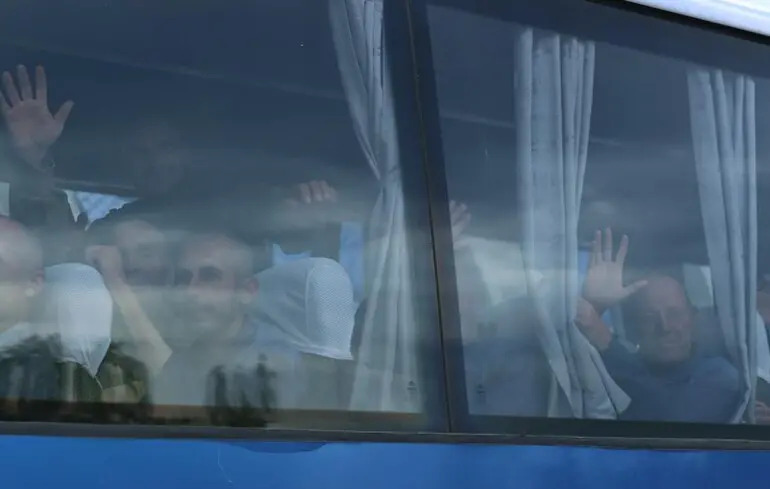
Returning from russian captivity does not mean returning to normal life. For Ukrainian civilians who spent years in unlawful detention, the real challenges often begin only after the exchange. They need to restore their documents, undergo medical treatment, apply for state benefits, find work and housing, and learn how to live freely again.
The released civilians themselves admit that while the first days after their return are generally well organized, they are often later left alone to deal with problems that require long-term solutions.
According to a study by the Civis Fortis Civil Society Protection Foundation, the main problems faced by released civilians remain housing, medical treatment, restoration of documents, obtaining official status, and financial support. The authors of the study note that Ukraine still lacks a comprehensive system of long-term assistance for people after their release from captivity, forcing many to seek help on their own and resolve everyday and medical issues independently.
Kostiantyn Davydenko, head of the Civilians in Captivity charitable foundation, told OstroV that housing remains the most painful issue. Despite state and regional support programs, approaches differ significantly from one oblast to another, and promises do not always translate into real assistance.
"This is one of the most pressing problems, especially for those who were released from the occupied territories. People cannot return there, yet they need somewhere to live. The state could at least provide temporary housing for such people or compensate their rent. I'm not even talking about transferring housing into their ownership—at the very least, they should be given the opportunity to rent without additional financial strain. Moreover, a rent compensation mechanism formally exists, but in practice it does not work either.
As a result, a person is left alone with their problems after being released. They have just returned from captivity, they do not yet have a job because they need time for treatment and adaptation. If, in addition, the person has not received official status, they are also ineligible for state payments. In reality, they may be left without any means of subsistence and even without a roof over their head", - he said.
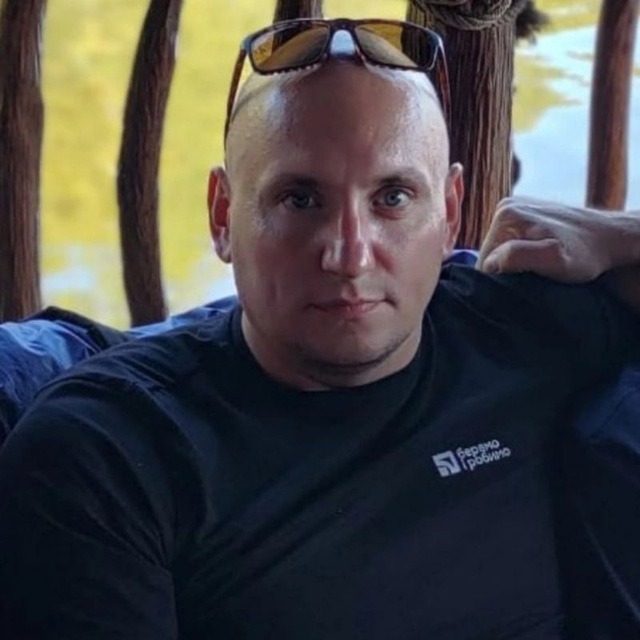
The story of former civilian captive Kyrylo Yermishev, who spent nearly six years in unlawful detention, shows that even after successfully returning home, the struggle is not over. OstroV spoke with him and also analyzed what assistance the state currently guarantees to released civilians, why some of these mechanisms are still functioning only partially, and what problems people most often encounter.
Captivity
Kyrylo Yermishev was taken captive in October 2019. He was detained in occupied Donetsk and immediately accused of spying for the Security Service of Ukraine.
Following his detention, a lengthy process of so-called "investigation" and an unlawful "trial" began, lasting nearly two years. Ultimately, the occupation "court" sentenced him to ten years in prison.
In total, he spent nearly six years in captivity. During that entire period, he was held in Makiivka, while the "trial" itself took place in the so-called "Donetsk court".
Waiting for a POW exchange, Kyrylo says, became perhaps the hardest ordeal of his entire imprisonment.
"We clung to every piece of news, every hint about a possible exchange. Any mention of it gave us hope", - he recalls.
To at least receive some information about events in Ukraine, he says he arranged for Ukrainian television channels to be available in the pretrial detention center.
"I reached an agreement, paid money, and they set up Ukrainian television for us. It was very important because russian channels reported almost nothing about possible exchanges. Ukrainian television, on the other hand, at least mentioned prisoners of war regularly", - he says.
After the return
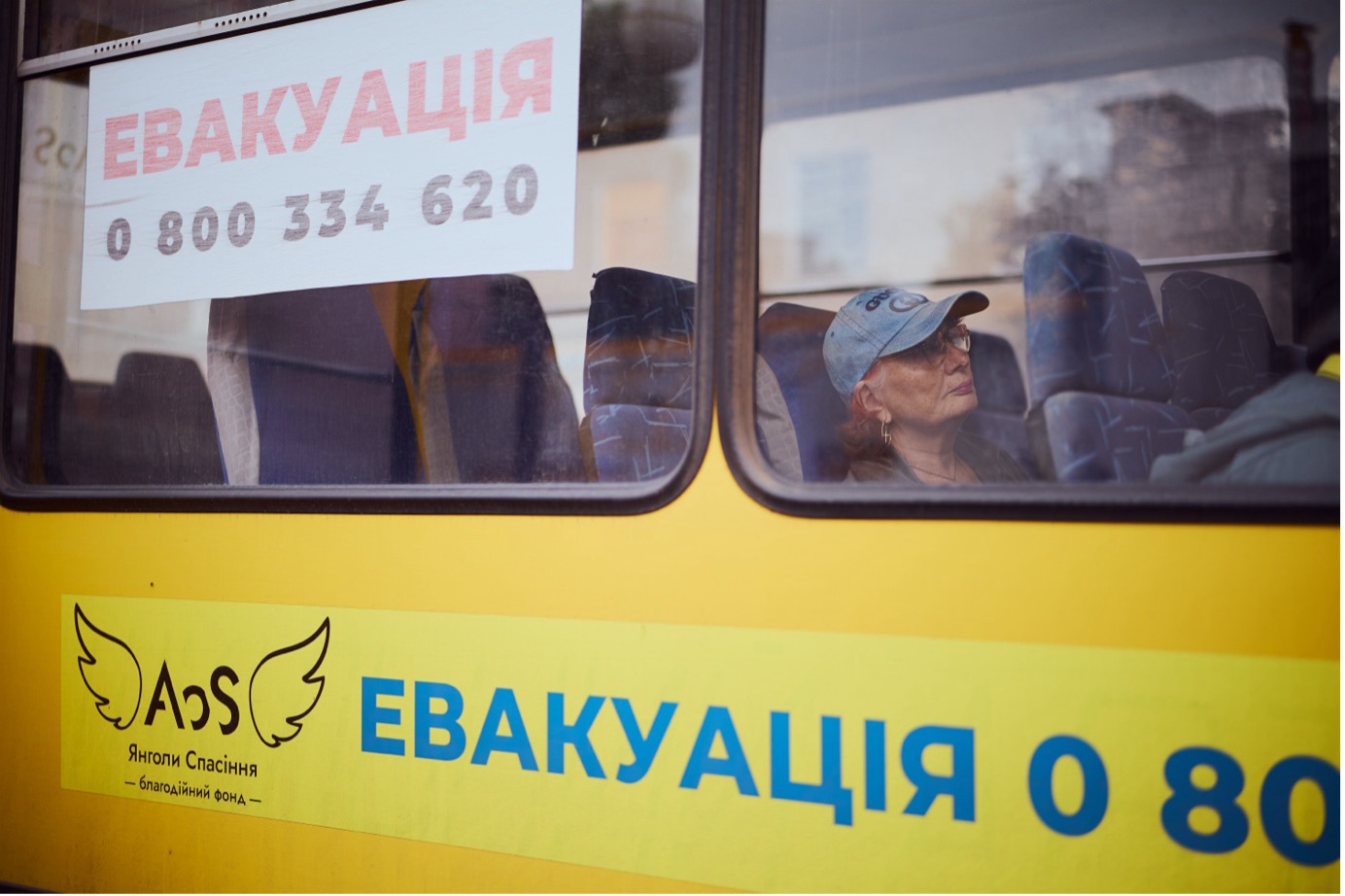
Following the exchange, all the released civilians were taken to Chernihiv. According to Kyrylo, the first few days were well organized: representatives of various government agencies constantly visited the released civilians, processed documents, provided consultations, and explained the next steps.
"To be honest, I was pleasantly surprised. Various agencies kept coming to see us, the paperwork was processed very quickly, and practically every issue was resolved on the spot", - Kyrylo recalls.
At the same time, it became clear even then that the system functioned unevenly. While there were no problems with food, medical assistance, according to him, was effectively limited to an initial examination.
"They brought us dairy products, yogurt, and the refrigerators were fully stocked. Food wasn't a problem at all. But when it came to medical care—there was complete silence", - he says.
Later, all the released civilians were transferred to Kyiv Oblast Hospital for a comprehensive medical examination. According to him, the diagnostic process itself was well organized.
"We underwent comprehensive examinations. They ran all the tests, specialists examined us, and they checked virtually everything", - the man says.
However, according to him, that was essentially where the assistance ended.
"We were examined. But there was no treatment. They identified the problems, but nothing happened afterward. They simply told us, 'You have this problem', and that was it", - he adds.
According to him, the situation was similar when it came to financial support. He eventually received the payments provided for by law (charitable organizations also helped), but several weeks passed between his return home and the arrival of the first funds.
"Everyone kept saying, 'You'll receive the payments soon'. But a week passed, then another, and the money still hadn't arrived. So I called some acquaintances, and they brought me UAH 5,000 so I would have something to live on during those first days", - Kyrylo recalls.
For someone who has spent years in captivity, even a few weeks without money can become a serious problem. Most people return with virtually no personal belongings, no job, and no immediate means of providing for even their basic needs.
Why the support system does not always work
Kyrylo's story is far from unique. In the first weeks after returning from russian captivity, many civilians face the same problem: they are already home but still unable to access most of the state guarantees. Despite being released, people are often forced to wait for payments, resolve issues related to medical treatment or housing on their own, and complete procedures without which they cannot receive full state support.
For this reason, at the end of 2025, the government adopted Resolution No. 1775, introducing an emergency assistance mechanism for released civilians. The document provides that a person can receive support immediately after returning, without waiting for the decision of a special commission confirming the fact of unlawful deprivation of personal liberty.
In particular, the resolution provides for a one-time payment of UAH 50,000, assistance in restoring documents, medical, psychological, and rehabilitation services, social support, free legal aid, and, if necessary, temporary housing.
At the same time, as Kostiantyn Davydenko, head of the Civilians in Captivity charitable foundation, notes, in practice this mechanism is still not functioning fully.
"Not yet. It also requires a decision by a special commission, but that commission has still not been established. The law came into force on January 1, yet six months have already passed, and the mechanism still hasn't started working", - he says.
However, even the emergency assistance mechanism does not eliminate another key procedure—the official recognition of the fact of unlawful deprivation of personal liberty. It is the decision of a special commission that determines whether a person will be able to receive most of the state guarantees provided by law.
Once this status is officially recognized, a released person becomes entitled to a one-time payment of UAH 100,000, as well as UAH 100,000 for each year spent in captivity, in accordance with the Law of Ukraine "On Social and Legal Protection of Persons for Whom the Fact of Deprivation of Personal Liberty Has Been Established". However, without the commission's decision, these guarantees cannot be accessed.
According to Kostiantyn Davydenko, head of the Civilians in Captivity charitable foundation, this procedure remains one of the biggest problems today.
"According to our data, about 80% of civilian applicants are denied. Most often because they allegedly failed to prove their pro-Ukrainian position", - Davydenko notes.
He also claims that the commission effectively imposes additional requirements that are not stipulated by law, including demanding notarized witness statements from eyewitnesses, which significantly complicates obtaining official status and the related state guarantees.
"Why this happens, we cannot say for certain. Whether it reflects the position of the country's leadership or that of individual commission members is unknown. But in our opinion, the most likely reason is a desire to reduce state budget expenditures. That is our assumption, not an established fact", - he says.
Regional support programs also exist, but they differ significantly from one oblast to another.
The most difficult issue: housing
Despite the introduction of new support mechanisms, housing remains the most difficult issue for most civilians released from russian captivity. Kyrylo describes it as the problem that remained unresolved after his return.
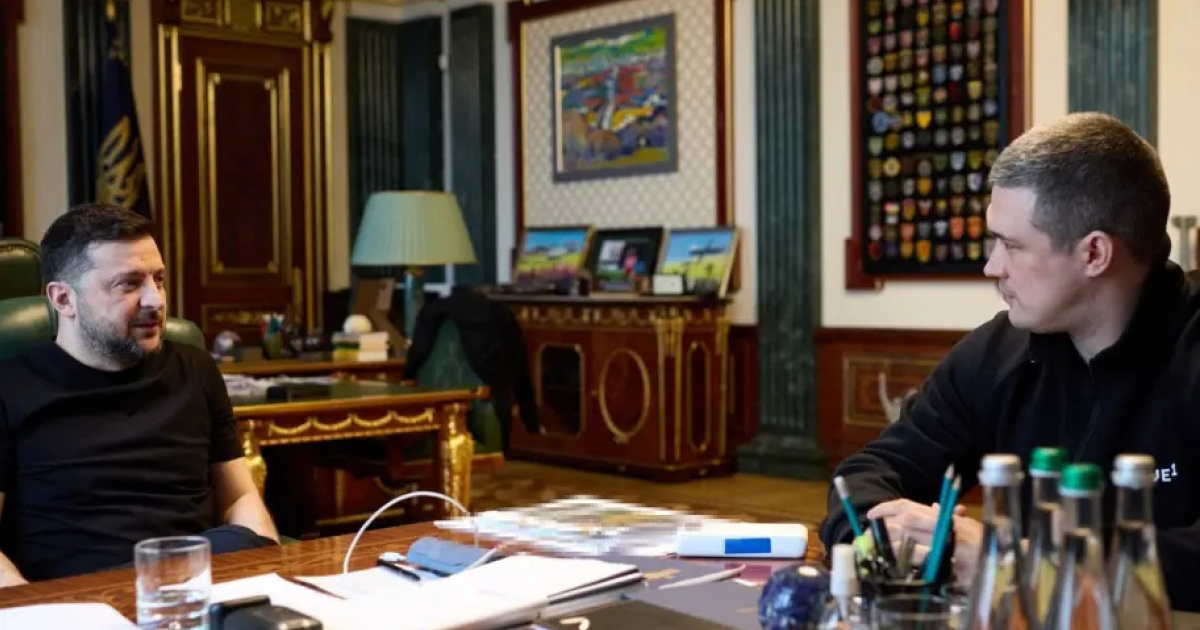
During rehabilitation, the released civilians met with Deputy Head of the Office of the President Iryna Vereshchuk. According to him, officials then announced plans to provide housing for former civilian captives.
"There is a program that I've already mentioned to you briefly, though not in detail. It is a program of the Ministry for Communities and Territories Development for internally displaced persons, residents of the temporarily occupied territories, and combat veterans. Under this program, certificates worth UAH 2 million will be issued for the purchase of housing... Yesterday I raised this issue publicly, and Mr. Kuleba promised that civilians and military personnel released from captivity would also be eligible for this program", - Vereshchuk told the released civilians.
At the time, many of the released civilians took those words as a promise that the housing issue would soon be resolved.
"We even applauded because it seemed to us that the issue would finally be settled", - Kyrylo recalls.
However, several months have passed, and the idea has yet to be implemented. As OstroV found out, the initiative referred to a housing voucher program for internally displaced persons (IDPs). However, its current funding barely covers the needs of internally displaced combat veterans, so the program has not yet been expanded to include new categories.
"Vereshchuk probably had this program in mind. But even if civilians or military personnel released from captivity were added to it, that does not mean they would automatically receive a UAH 2 million housing certificate. There are many nuances and many applicants. I believe Vereshchuk should not have made such promises, especially since she is not responsible for overseeing this program", - a government source told OstroV.
For Kyrylo himself, the issue remains unresolved.
"I called representatives of the Donetsk Oblast Administration and asked what stage the issue was at because our names had been mentioned back then. They told me everything was still at the same stage as before", - he says.
He is particularly puzzled by the differences between regional support programs.
Today, the approach to housing support for civilians released from russian captivity largely depends on the region to which the person belongs. There is currently no nationwide housing program for this category, so each oblast effectively determines its own assistance mechanisms. The difference between the Luhansk and Donetsk oblasts is particularly illustrative.
According to Kyrylo, former civilian captives from the Luhansk oblast were given the opportunity to purchase housing under a special regional program, while residents of the Donetsk oblast received a one-time financial payment of UAH 150,000.
"We were even required to travel to Kramatorsk to obtain our IDP certificates there. Then we had to wait several more weeks for the payments", - he recalls.
Indeed, the Luhansk oblast has a separate preferential mortgage program for people released from captivity. It covers 99.5% of the cost of housing and waives the down payment. According to the head of the Luhansk Oblast Military Administration, Oleksii Kharchenko, in 2025, 176 families purchased homes under this program, including 46 people released from russian captivity.
In the Donetsk oblast, however, support takes a different form. In response to an OstroV inquiry, the Department of Social Protection of the Donetsk Oblast Military Administration stated that, following their release, people receive assistance with temporary accommodation and a one-time financial payment of UAH 150,000.
According to the Donetsk Oblast Military Administration, the current situation is as follows:
- 23 people have been accommodated in modular housing settlements in Kyiv oblast with the assistance of the Kyiv Oblast Military Administration;
- 23 people have arranged their own accommodation independently;
- one person is undergoing long-term treatment at a healthcare facility.
Today, people who have endured the same experience of russian captivity may receive completely different levels of housing support solely depending on the region they are registered in.
"The Luhansk Oblast Military Administration provides housing certificates to residents of the Luhansk oblast who have returned from captivity. The Kyiv oblast assists internally displaced persons who remain living in the oblast. A similar program is also being developed in the Kherson oblast. However, these are separate regional decisions. There is currently no nationwide system", - says Kostiantyn Davydenko, head of the Civilians in Captivity charitable foundation.
As for Kyrylo, he is currently living in an apartment owned by one of his mother's acquaintances.
The state offered him a place in a modular housing settlement as an alternative, but he declined: "After nearly six years in captivity, a modular settlement reminds me too much of a detention center. Psychologically, I simply couldn't live there".
The return continues
In recent years, the state has taken several important steps to support civilians released from russian captivity. An emergency assistance mechanism has been introduced, along with financial payments, social support, document restoration, medical and psychological assistance. At the same time, the stories of the released civilians themselves show that a significant gap still remains between the guarantees declared by the state and their actual implementation.
According to Kostiantyn Davydenko, head of the Civilians in Captivity charitable foundation, one of the main reasons for this situation is the absence of a single government body responsible for providing comprehensive support to civilians after their release.
"When a servicemember returns, the Ministry for Veterans Affairs takes care of them. There is a central executive authority responsible for rehabilitation, medical treatment, housing issues, document restoration, and other aspects of adaptation. In the case of civilians, no such body exists. Different government agencies handle separate issues, but there is no single authority coordinating the process and taking responsibility for it", - he notes.
According to Davydenko, this is precisely why people often encounter the same problems after their release regardless of when they returned from captivity.
"It is precisely because there is no responsible central authority that a situation arises where, in practice, nobody is accountable for anything. A hospital may fail to provide proper treatment, social services may delay processing documents, while other institutions shift responsibility onto one another. This is clearly visible following the latest POW exchange. People returned from captivity, are staying in hospitals, and are facing exactly the same problems. They complain about the lack of proper medical care. They ask for something as basic as vitamins, IV drips, or pain relief, only to hear: 'Please wait'. Yet as of today, they are still lying in hospital and waiting", - he emphasizes.
Kyrylo Yermyshev's story demonstrates that returning from captivity does not end on the day of the prisoner exchange. After completing the paperwork, a person faces much greater challenges — undergoing lengthy medical treatment, finding housing, rebuilding lost social ties, and returning to everyday life.
"We were publicly promised assistance. We never even expected that much. Later, some people actually received what had been promised, while others did not", - he concludes.
By Vladyslav Bulatchik, OstroV