



The russian army continues preparations for its summer campaign, but its actual capabilities remain limited. The russian federation's main efforts remain focused on the Donetsk oblast and attempts to expand the land corridor along the Azov coast. At the same time, Ukraine is gradually increasing its long-range drone strike capabilities, which are already creating serious threats to russian logistics and rear areas.
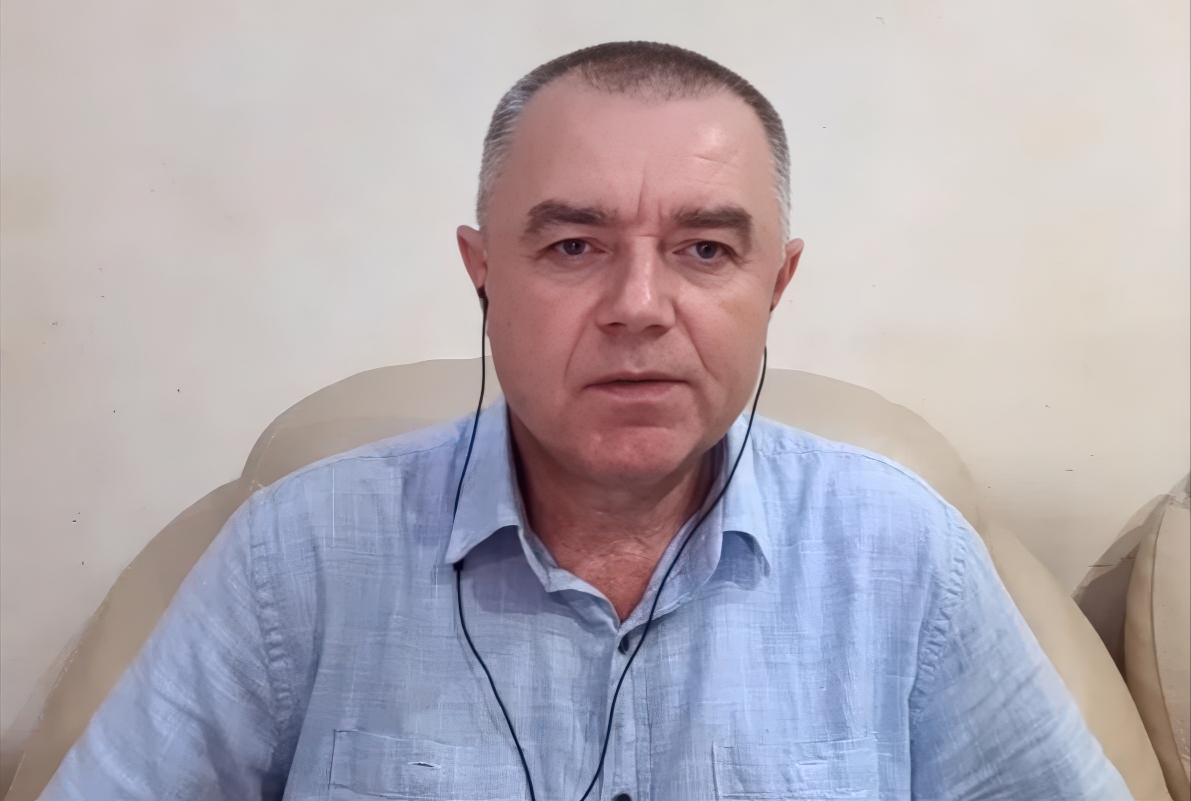
Against this backdrop, the possibility of a new offensive from Belarus is being discussed more actively. Military expert Roman Svitan spoke with OstroV about the situation on the front line, the strategic objectives of the russian federation, the threat to the land corridor, the "kill zone" of Ukrainian drones, and statements regarding a possible offensive from Belarus.
– How do you assess the current situation on the front line?
– The russians' 2025 summer military campaign effectively dragged on and ended somewhere around January–February. They failed to achieve any of their strategic objectives: they did not expand the land corridor, nor did they capture all of Donbas, although Pokrovsk and Myrnohrad were practically "gifted" to them by last year's Kursk campaign, when part of the Ukrainian forces was withdrawn from Donbas and redeployed to the Kursk direction. Most likely, that was precisely the goal—to weaken this direction and transfer forces. Thus, the russians' main gains last year were Pokrovsk and Myrnohrad. Their campaign effectively ended there.
They are now in what can be called an operational pause. Before May 9, there was a certain escalation, and the remaining operational-tactical reserves were tasked with capturing as much territory as possible, advancing, and gaining ground, including toward Kostiantynivka. However, this operational pause will most likely last until the middle or perhaps even the end of summer. The scenario is practically repeating last year's pattern.
– What does that mean?
– Combat operations are now being conducted mainly by operational-tactical reserves, while strategic reserves are being accumulated. The russians are producing sufficient quantities of equipment and ammunition and are building up personnel. By the beginning of the 2026 summer military campaign, in a few months, they will deploy certain strategic reserves to positions that will have been prepared by their current actions.
Therefore, we are now observing a slowdown in large-scale offensive operations by russia. Instead, preparations are underway for future staging areas. This primarily concerns the areas around Pokrovsk and Sloviansk, the Sloviansk-Kramatorsk direction, as well as the Kharkiv oblast—specifically the Velykyi Burluk and Kupiansk-Lyman directions, where a certain level of increased activity is also being observed.
So, from the enemy side, there is currently a decline in capabilities even for conducting large-scale operational and tactical actions. At the same time, Ukrainian forces, understanding these processes and anticipating the enemy's actions, have become more active in a number of frontline sectors. There is positive momentum. In the area of Velykyi Burluk, russian forces have effectively been pushed back from several positions, and some positions near Kupiansk have been regained. We now have fairly good opportunities there to destroy russian units.
The Lyman area is being held, and there is positive momentum there as well. Efforts are being made to push the russians out of Kostiantynivka. This is very difficult, but certain operations are being carried out there. Preparations are also underway for possible russian offensive actions in the Pokrovsk and Myrnohrad areas, as they will likely move toward Dobropillia. Based on this assessment, appropriate preparations are being made there.
In addition, the russians are currently incapable of serious escalation in the Huliaipole area. At the same time, there is good positive momentum on the western section of the Zaporizhzhia front, in the Stepanohirsk area, where Ukrainian units have practically completely cleared the settlement. As a result, the threat of shelling Zaporizhzhia with army artillery has been removed at this stage.
In other words, by taking advantage of the russians' inability to conduct large-scale operations, Ukrainian forces are strengthening their positions in a number of directions. Overall, the russians are still concentrating their main attention and efforts on the Donetsk oblast.
– What are the real capabilities of the russian army?
– If we look at their real capabilities rather than fantasies about "capturing the Moon and Mars" or "Alaska", they still have two main strategic objectives. Given the forces they have available (approximately 700,000 personnel) and their ability to replenish losses, the russians currently have the potential for a maximum of two directions of effort.
The first is expanding the land corridor, that is, the Zaporizhzhia direction. This involves an attempt to seize the left-bank part of the Zaporizhzhia oblast. This task will remain one of their key priorities.
– Why do the russians need to expand the land corridor?
– In order to reduce the effectiveness of our operational-level drones. They currently cannot deploy a full-fledged air defense system to a depth of 100–150 kilometers. Moreover, their grouping is effectively pressed against the sea. Therefore, from a purely military point of view, it is important for the russians to expand the land corridor to a depth of approximately 150 kilometers. This would mean attempting to seize virtually the entire left-bank part of Zaporizhzhia oblast.
We are talking roughly about the Zaporizhzhia–Pokrovsk line, possibly slightly farther north, almost up to the border with the Dnipropetrovsk oblast. This is the first task — a purely military one, aimed at holding territory and protecting logistics.
The second objective is the capture of the Donetsk oblast. But not merely as a territorial advance — first and foremost as an attempt to restore water supplies to Donbas. The fact is that Donbas has effectively been without a normal water supply for the second year now — the water supply system that previously existed and was fed through the Siverskyi Donets River.
Previously, millions of tons of water were delivered annually through the "Siverskyi Donets–Donbas" canal. Water flowed from the Sloviansk area through Chasiv Yar, Toretsk, Horlivka, and the Verkhniokalmiuske Reservoir. Four pumping stations operated along the route, lifting water more than 200 meters before distributing it throughout Donbas.
Last year, the russians effectively exhausted the remaining water reserves in the reservoirs, and now they face a huge problem. Summer is beginning, and Donbas will once again be left without water. Therefore, it is strategically important for them to gain full control of the Sloviansk-Kramatorsk agglomeration. And to do that, they need to approach these cities from the west (the direction of Dobropillia) and, in Kramatorsk's case, also from the north (the direction of Izium).
This means they need complete control of the left bank of the Oskil River: Kupiansk, Kovsharivka, Lyman, the left bank of the Siverskyi Donets, Velykyi Burluk, the right-bank part of Kupiansk, and further on toward Izium. In other words, this would effectively mean controlling a significant part of the Kharkiv oblast.
This is a very serious operation — a semi-encirclement of the Sloviansk-Kramatorsk agglomeration. And the russians will carry it out in stages. They will try to capture Kupiansk, Kupiansk-Vuzlovyi, and Lyman, reach Velykyi Burluk, and move toward Dobropillia in order to gradually implement this strategic objective. There is nothing fundamentally new here. These are intermediate tasks aimed at achieving a much larger goal.
It is clear that they definitely will not accomplish this this year. Even under the most favorable scenario for them, we are talking about at least three years. A minimum of three summer campaigns would be needed just to achieve a semi-encirclement of the Sloviansk-Kramatorsk agglomeration. Then another one and a half to two years would be required to attempt its complete capture and retention.
In other words, we are talking about at least 3–5 more years of war. But, broadly speaking, the russians do not really have that amount of time. At the same time, their frontline objectives remain unchanged: the capture of the Donetsk oblast to restore water supplies to Donbas, and the capture of Zaporizhzhia oblast to expand the land corridor. In its current condition, the russian army is simply incapable of achieving anything more. No other realistic objectives can be assigned to it at this point.
– Recently, there has been a lot of discussion about expanding the so-called "kill zone" through drone strikes. How important is this, and how does it affect the course of military operations?
– The russian grouping along the Azov coast, pressed against the sea, is inherently vulnerable if it does not have a defensive depth of at least 150 kilometers. As soon as we have a sufficient number of operational-level drones with FPV control and a range of up to 150 kilometers — and such drones already exist, the only question is the scale of production — then the "kill zone" effectively expands to cover the entire Azov coastline and the depth of the army rear areas of the first and second echelons.
At that point, it becomes possible to speak about creating a full-fledged "kill zone" along the entire land corridor — from Rostov to Melitopol. And the russians understand this perfectly well. Especially after Ukrainian FPV drones began reaching distances of around 100 kilometers and destroying enemy equipment moving along the Rostov–Mariupol–Berdiansk–Melitopol land corridor.
This is exactly what the expansion of the "kill zone" means — and over very large distances. It effectively amounts to severing the land corridor through aerial strike capabilities. This is precisely what the russians fear most because they have nothing to counter it with.
If, instead of the Azov Sea, there were russian territory there — as is the case in the directions of Bryansk, Belgorod, Voronezh, or Kursk oblasts — then the situation would be different. Beyond the front line there are thousands of kilometers of rear territory. They can maneuver, deploy air defense systems, reserves, and anti-drone complexes.
But in the direction of the Azov Sea there is only water, making it impossible to deploy a full-fledged layered defense. Therefore, this land corridor — this "tube" or "appendix", however one wants to call it — can be very easily severed by long-range strike capabilities. As soon as such capabilities become available in sufficient numbers, the russians will face a huge problem. That is why they understand that they have virtually nothing to oppose it. There is currently a lot of informational noise being generated, but this is done more to acknowledge the existence of the threat.
The fact that the russians captured the land corridor was, from the very beginning, part of a military gamble. They put themselves into a vulnerable position. The only mechanism that can currently ensure the security of this land corridor for them is Ukraine's capitulation and a freezing of the front line. In other words, if Ukraine were to officially commit not to retake the occupied territories by military means.
For them, this is the only way to secure the land corridor from the expanding "kill zone" reaching all the way to the Azov Sea.
– I have to ask about another topic that has been actively discussed in recent days. Both Volodymyr Zelensky and Oleksandr Syrskyi are talking about the threat of an offensive from Belarus. How do you assess the likelihood of such a scenario?
– In my view, this is complete nonsense. Those who generate such ideas either do not understand basic military realities, or they are pursuing completely different objectives under the cover of this topic. To conduct an offensive anywhere and create a real threat, you need forces and means.
That is why there is a threat in the Pokrovsk area: because there is a 100,000-strong russian grouping there, saturated with equipment, ammunition, and personnel, with a specific task — to capture Pokrovsk and push Ukrainian forces toward Dobropillia. That is a real threat. But where is such a grouping in Belarus? It does not exist. Are there even 10,000 russian troops there? No. What is there at all? The Belarusian army, which, broadly speaking, is at most capable of defending Minsk. And even that is an army without combat experience, untested in real war. It will not conduct any offensive actions.
So the question arises: who is even promoting the idea of an offensive from Belarus? With what forces? With what means? Who is supposed to attack? There is simply nothing there to attack with. And then a second question arises: why even amplify this topic?
Either it is being done by incompetent people, or some other goal is being pursued. And considering that generals are nearby, it is unlikely to be simple incompetence. Therefore, there is a feeling that the objective may be completely different — to create an information wave around a supposed threat of an offensive from Belarus. There can be several such goals.
For example, last year there was a similar story about a "threat of an offensive on Kyiv" from the Kursk oblast. Back then, there were also active claims that the russians were supposedly advancing on Kyiv, that the capital urgently needed to be defended, and so on. Under that information campaign, troops were withdrawn from Donbas and redeployed to the Kursk direction. As a result, Pokrovsk was effectively lost, as well as part of western Donbas.
So the first thought that comes to mind now is that this information noise may be used to weaken the Donetsk direction again — this time under the threat of a "Belarusian offensive". And in the end, to create conditions for the loss of Sloviansk and Kramatorsk.
It is already understood that russian troops cannot, by definition, be in Belarus as long as Aleksandr Lukashenko remains in power there. That is why the rhetoric has started to shift, now speaking not about an offensive from Belarus, but about an alleged threat from the Bryansk direction.
But the Bryansk direction is already russian territory. There could indeed be russian troops there. The only problem is that there are none. There is not even a 100,000-strong grouping there. And if such a grouping did exist, it would long ago have been redeployed either to Pokrovsk, or to Sloviansk, or to any other sector of the eastern front where russia currently lacks forces and means.
So, in my opinion, someone is simply trying to cover something up. This may be preparation for giving up part of Donbas.
In addition, Aleksandr Lukashenko recently stated his readiness to meet with Volodymyr Zelensky. And the current information campaign may very well be preparation for such a meeting. Because the immediate question arises: why should Zelensky meet Lukashenko at all? And if the topic of a "threat from Belarus" is amplified in advance, then under that pretext it becomes possible to justify both contacts and possible negotiations. That scenario also cannot be ruled out.
But the problem is different. All of this is extremely dangerous for Ukrainian society. People, especially in border regions, are already in a severe psychological state. Residents of the Chernihiv oblast constantly hear that they are supposedly about to be attacked — from Belarus, from the Bryansk oblast, or from somewhere else. Although objectively there is no one there.
And when such statements are made at the level of the president or the commander-in-chief, it turns into constant psychological pressure on people. In my view, this is simply abuse of one’s own population.
By Vladyslav Bulatchik, OstroV