



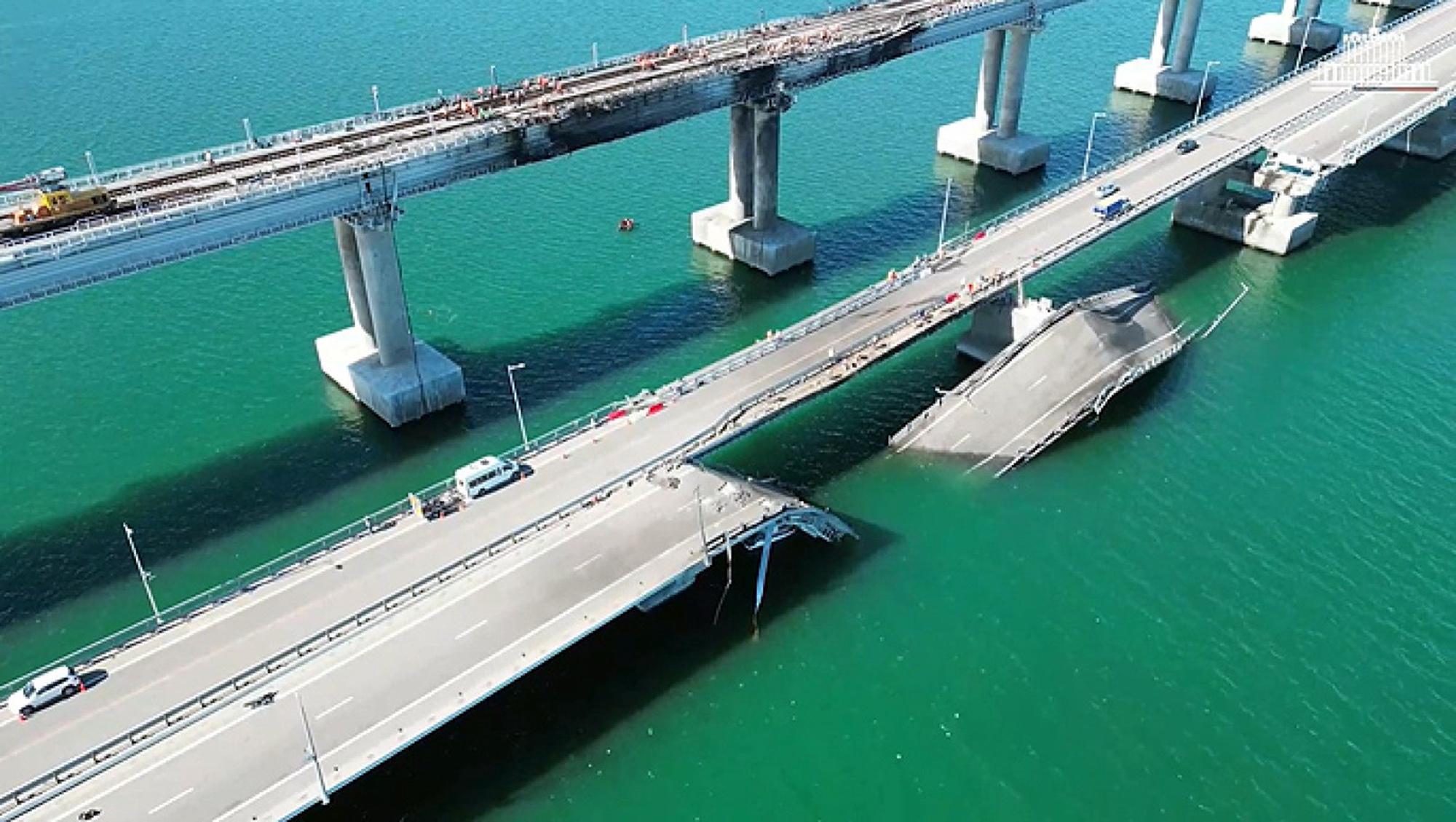
1. The main event of the past 24 hours was the disabling of the Crimean Bridge. The strike was carried out during the night of November 17. As a result, the 227-meter arch of the road section has been completely destroyed, with debris and part of the roadway falling into the Kerch Strait, while the adjacent arch of the railway section remained standing but sustained damage. According to Zelensky, the operation had been in preparation for several weeks, meaning it was carried out in parallel with the negotiation process. The occupiers resumed train services yesterday afternoon. The Times reported that the strike was carried out without the use of Starlink or Starshield systems.
The destruction of the bridge changes the logistics of supplying russia's southern military grouping in Crimea and Ukraine's Kherson and Zaporizhzhia oblasts. The entire burden now falls on the railway line with its damaged arch and the land corridor running through occupied Donetsk and Zaporizhzhia oblasts. At the same time, the corridor is vulnerable to Ukrainian long-range weapons, and the bridge remains an attainable military target. For Kyiv, this provides leverage in the negotiations that have already begun.
Another potential advantage for Ukraine could be the blockage of the Kerch Strait by the bridge debris, which would significantly complicate russia's export logistics. However, the consequences of the bridge's collapse for shipping remain unknown.
The destruction of the symbol of the "russian Spring" also has political consequences: the vengeful russian public now expects an appropriate response, while putin has already exhausted his entire arsenal of escalation measures, including strikes on bridges across the Dnipro. Furthermore, repeated strikes on Kyiv's bridges could prompt a retaliatory attack that destroys the railway section of the Crimean Bridge, creating not only a military but also a socioeconomic problem for the occupied peninsula.
The geopolitical aspect of what happened is also important. The strike took place on the eve of the APEC summit in China, where putin, Trump, and Xi are due to meet. Putin is forced to attend against the backdrop of a military and political defeat, which weakens his negotiating position and automatically strengthens Trump's "cards"...
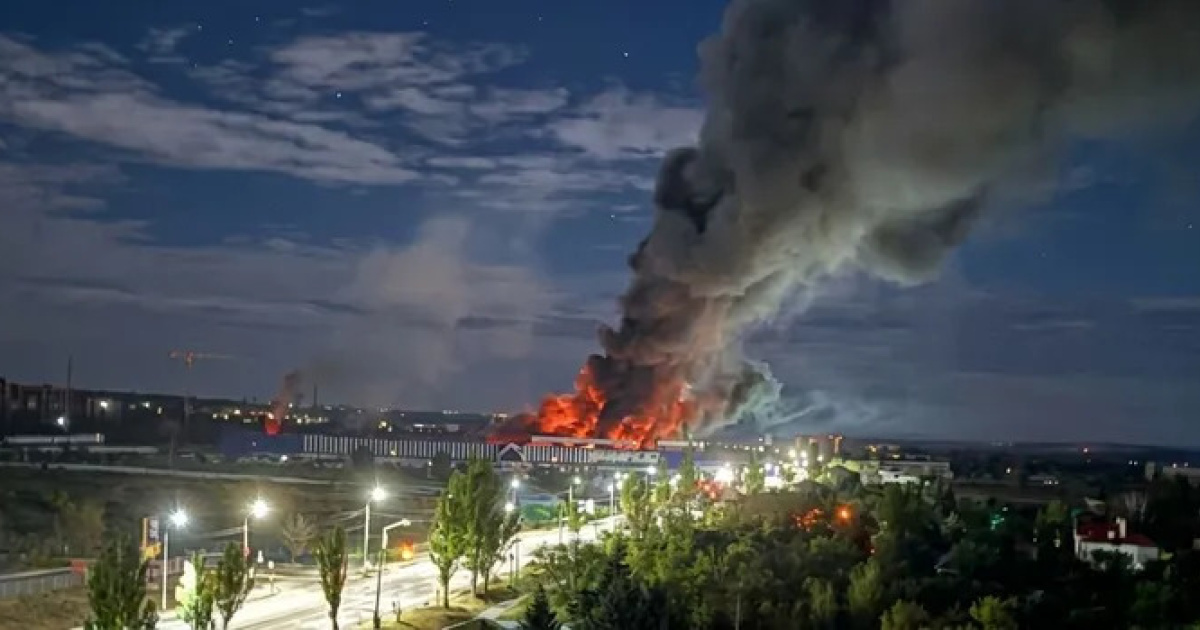
2. During the night of November 18, drones attacked russia's Krasnodar Krai. According to local residents, the Ilsky and Afipsky oil refineries came under attack. This is already the second attack on the Ilsky refinery this month.
The context is important. These strikes came immediately after, on November 17, U.S. Deputy Secretary of Defense Elbridge Colby opposed Ukrainian strikes on russian oil facilities and commercial storage sites at a meeting of Ukraine's allies in Brussels. If Kyiv is willing to openly confront its main arms supplier in this way, it means that it is relying on domestically produced weapons and support from European partners for its long-range operations, which in itself strengthens its negotiating position.
3. On the morning of November 17, three russian Shahed drones reached Mukachevo. One of them fell 300 meters from the railway station, after which Budapest restricted railway connections with Ukraine for two days. Romania's Ministry of Defense detected 11 aerial targets near the border and scrambled F-16 fighter jets. A Shahed also flew over Chișinău, prompting Moldova to close its airspace.
The attack on Mukachevo was a clear signal from moscow to the participants of yesterday's Ramstein meeting in Brussels. The objective was not military but political consequences. The suspension of Hungarian rail services sets a precedent and disrupts the logistics of Western aid to Ukraine as well as civilian transportation. Interestingly, on May 13 this year, unlike yesterday's incident, drones directly struck railway infrastructure in Zakarpattia, but neither Hungary nor Slovakia suspended rail services. This means Budapest's motive is either domestic political considerations or an attempt to establish a new mechanism for exerting pressure on Kyiv, following Ukraine's humiliating concession to Budapest's language demands concerning ethnic Hungarians in Zakarpattia.
4. During the night of November 18, Bloomberg reported that U.S. envoys D. Kushner and S. Witkoff were asking Europeans to consider new ideas regarding the deployment of NATO forces on the continent, so that these could be discussed at the upcoming negotiations in Berlin. According to media reports, moscow wants the Alliance to refrain from deploying troops in countries that joined NATO after 1997, offering in exchange to reduce its own armed forces in the Kaliningrad oblast and Belarus.
The very fact that the Americans are linking the end of the war in Ukraine to changes in NATO rules and the deployment of troops in Europe demonstrates the alignment of interests between the Trump administration and the kremlin. In effect, the White House is using the war in Ukraine to weaken Europe and strengthen russia as a potential counterweight to China. The haste of the Trump-putin envoys can be explained by the fact that, following the Democrats' victory in the midterm elections, they have a window of opportunity until January, when the new majority in Congress takes office and could restrict their "peace-making" activities. Accordingly, the greatest U.S. pressure on Kyiv will be exerted over the next two months.