


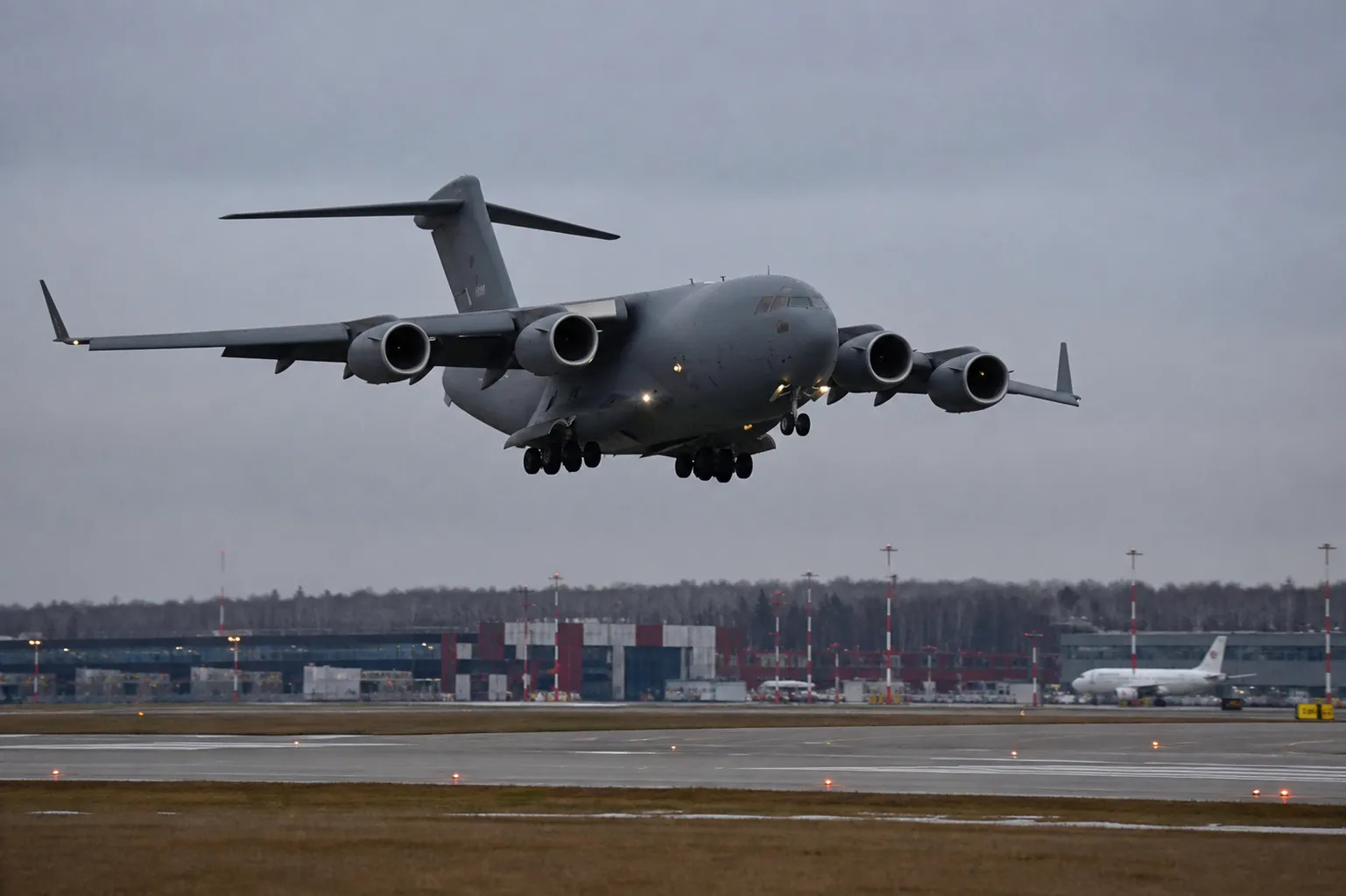
1. CIA Director John Ratcliffe secretly arrived in moscow aboard a C-17 military transport aircraft. The official purpose of the visit has not been announced; it is unknown whom he met with. Russian sources link it to a possible prisoner exchange. But Western analysts note that aircraft of this class are not used either for transporting high-ranking officials or for delivering groups of people. It is assumed that Ratcliffe secretly brought something to moscow or took something out of moscow. On the same day, putin signed two classified decrees…
According to Axios, the United States informed Ukraine about the arrival of the high-ranking delegation and asked it to suspend strikes on moscow until its departure.
The request to “not to strike moscow” is a precedent of a fundamental nature. For the first time, it has been publicly documented that Washington is asking Kyiv to restrict military operations not for the sake of a peace process, but for the sake of its own bilateral agenda with the kremlin. Ukrainian long-range strikes are becoming a subject of bargaining between the United States, russia, and Kyiv.
The likelihood that Ratcliffe’s goal in russia was to discuss a peace plan for Ukraine is low.
Many analysts note that the Washington official’s visit took place against the backdrop of yet another indefinite postponement of special envoys Witkoff and Kushner’s trip to Kyiv.
2. Kramatorsk endured a massive airstrike on residential neighborhoods — more than 20 people were wounded, including a two-month-old infant. There were fatalities in Zaporizhzhia and Kharkiv. Russian drones damaged the international Vynohradivka–Vulcănești border crossing between Ukraine and Moldova, and traffic has been suspended.
Strikes on border crossings toward the EU are a new category of targets: not military infrastructure, but civilian corridors. This is the second border crossing in a week after Tabaki and, at the same time, a signal to Chișinău. The logistics of Ukrainian exports bypassing the Black Sea ports are being put at risk.
3. Ukrainian drones attacked the Afipsky oil refinery in Krasnodar region for the fifth time since the beginning of the year. The refinery has a capacity of 7.2 million tons of oil per year. According to the Benzonavt service, AI-95 gasoline is available at only 22% of russian gas stations: in Moscow, at 161 out of 786 stations.
A shortage of AI-95 at 80% of gas stations is no longer an isolated episode, but a systemic failure of the fuel market in the aggressor country, becoming perceptible to ordinary consumers across the country for the first time.
4. The United States announced “Operation Economic Outcast” — a package of secondary sanctions against Iran and 60 global companies in the fields of digital assets, gold, technology, aviation, and maritime transport. The blockade of the Strait of Hormuz, through which around 20% of the world’s oil supplies pass, pushed prices from $60 to $110 per barrel.
The Iranian crisis is the main external factor affecting the continuation of the war in Ukraine. It works against Kyiv in three directions at once. Economic: the near doubling of oil prices provides moscow with windfall revenues that offset the damage from strikes on oil refineries. Resource-related: a shortage of air defense systems and interceptor missiles, the lack of which Zelensky has spoken about. Political: Washington’s attention is being redistributed, and Ukraine is slipping down the list of priorities.
5. Zelensky reported the arrival of a new batch of missiles for air defense systems: “a few more missiles for Patriot have come in”, several Crotale systems with ammunition, and AIM missiles. The supplying countries were not named.
The diversification of air defense — Crotale and AIM instead of relying solely on Patriot — is a forced adaptation to the chronic shortage of American interceptors ahead of winter. The wording “a little, we need more” effectively acknowledges that Ukraine did not receive the 300 Patriot missiles requested the day before.
6. Slovak Prime Minister Robert Fico said he would not support Ukraine’s accelerated accession to the EU: membership is possible only if all conditions are met, “without exceptions”. On the same day, Slovak police prevented the arson attack on a facility producing drone systems — three foreign nationals were charged, and the lives of around 70 employees and equipment worth tens of millions of euros were at risk.
A dual structure of russian pressure on the EU is evident: forceful sabotage against the defense industry combined with the use of friendly politicians to obstruct Ukraine’s European integration.
7. The High Anti-Corruption Court arrested former Deputy Head of the Office of the President Iryna Mudra with the possibility of posting bail of UAH 20 million — the Specialized Anti-Corruption Prosecutor’s Office had requested UAH 150 million. She is involved in the NABU “Forrest Gump” case concerning the laundering of UAH 150 million to post bail for a defendant in the “Midas” case.
The signal is ambiguous: anti-corruption bodies are demonstrating that they are functioning, but the 7.5-fold reduction in bail will be interpreted as an indicator of the continued influence of the defendants. Given that corruption among the president’s inner circle has already become a topic in leading international publications, this directly affects partners’ willingness to increase their support.