


Ukraine is entering the autumn facing several difficult domestic and foreign policy challenges. One of them is the conflict between the National Anti-Corruption Bureau and former Prosecutor General Ruslan Kravchenko, whose dismissal was supported by the Verkhovna Rada on September 15.
At the same time, Ukraine is trying to understand how realistic U.S. President Donald Trump’s statements about the possibility of an energy truce with russia are. On the eve of the heating season, the issue of protecting Ukraine’s energy sector remains one of the key issues, as russian strikes on energy infrastructure could become an important component of russia’s winter campaign.
Another factor of uncertainty is Washington’s position on the terms for ending the war. Recent statements by U.S. presidential adviser Jared Kushner have once again brought the issue of Ukraine’s territorial concessions and possible pressure on Kyiv to reach agreements with moscow to the fore.
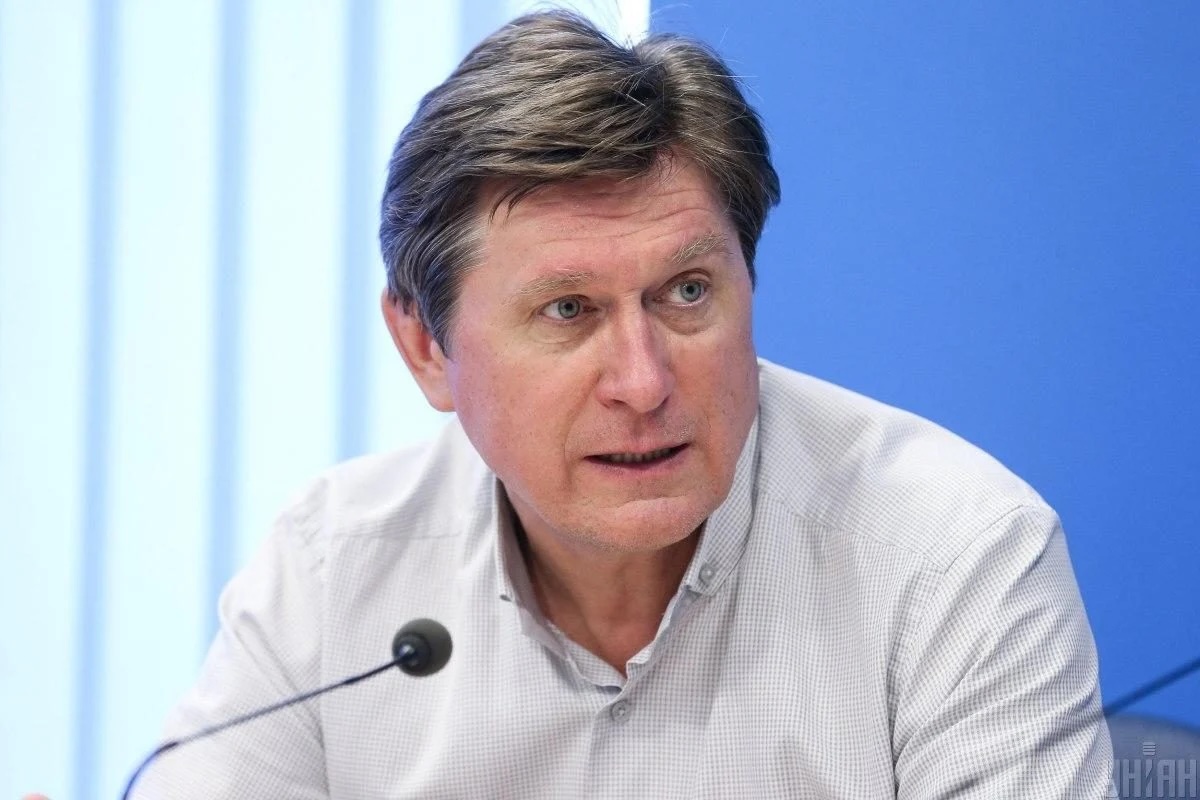
OstroV discussed all this with political analyst Volodymyr Fesenko.
— I would like to start with what is happening between the Prosecutor General and NABU. How do you see this conflict overall, and what could its consequences be?
— This conflict is now transforming into a purely informational and political one. After Ruslan Kravchenko’s dismissal as prosecutor general, it is effectively becoming a media, informational and political conflict between the former prosecutor general and NABU. It will no longer have institutional significance.
Kravchenko’s statement, and most importantly, the fact that he signed a notice of suspicion against the NABU director carried a serious risk of an institutional conflict that created major problems for Ukraine’s entire law enforcement system and even for domestic political stability. But I think these risks were well understood at the Office of the President, so they did everything to prevent precisely an institutional conflict from escalating.
And then, the Prosecutor General’s Office issued a statement saying that all these notices of suspicion — what Kravchenko had said — had no procedural significance. They were effectively withdrawn. The court procedurally and legally closed the matter. Therefore, there is no confrontation between NABU and the Prosecutor General’s Office as such now. The matter is closed.
The other thing is that investigations into corruption and the protection of call centers by individual prosecutors are indeed continuing. This already poses potential risks for former Prosecutor General Ruslan Kravchenko as well. We will see how this situation develops.
But I think no one is interested in creating an institutional war between the Prosecutor General’s Office and NABU now: neither the Office of the President nor NABU. And I think this will not happen. There is a common interest here, especially in wartime — this is definitely not something that should be done. I think both the Office of the President and NABU have received corresponding advice from our international partners.
So what is happening now is more a tactic of self-defense and counterattacks on Kravchenko’s part. And I think it is not only Kravchenko — his ongoing informational and political war against NABU very much resembles what NABU itself does: the same thing — videos, clips, supposedly recordings.
There is, however, a question here: what exactly is this? One thing happened in 2009, another in 2014. And why was this not investigated? For some reason, there were no verdicts if this really took place. Did these recordings even exist? I have doubts that it was most likely the Security Service of Ukraine (SBU) that made the recordings, because they can do this — they recorded the head of the village council and a district council official, who at that time was Kryvonos. And I have serious doubts about this: if they were recorded, then why were there no procedural or judicial consequences? So this is more likely an attempt to achieve a media and informational-political effect.
The fact that Kravchenko mirrors in form and style what NABU does is political technology. And he is definitely not doing this himself; someone is certainly helping him prepare these videos. This is quite substantial political-technological work. Therefore, I think Kravchenko has lost or is now losing his purely procedural status and some legal weight. But he himself is interested in continuing the war with NABU because, for him, this is a means of self-defense.
Besides, this will definitely be used to a significant extent to devalue the media component of NABU’s investigations. What is the calculation? To show: everyone reacts to NABU’s recordings, and now recordings are also emerging against NABU. Then the question arises: who do people believe, and why do they believe one side more than the other? And ultimately, the desired effect may be that some people will not believe either side.
— In your view, could there be consequences for Ukraine’s international image? Or will this remain a purely domestic matter?
— There will be consequences; reputational risks already exist. Budanov said that this undoubtedly has a negative impact on the reputation of the Ukrainian state. The other thing is that this will not lead to European partners stopping aid to Ukraine. After all, they are not helping Zelensky, Kravchenko or, say, Fedorov — they are helping Ukraine. And helping Ukraine means Europe’s security. Europe understands perfectly well: if aid to Ukraine is stopped, it will lose the war, which will then come to Europe, and they are very afraid of this. Therefore, aid will not stop.
But what is the problem? Undoubtedly, this affects Ukraine’s reputation and gives arguments to critics of aid to Ukraine — for example, there is “Alternative for Germany”, Marine Le Pen in France, and so on. This is where the problem lies. This is not a risk for today, but for tomorrow, because it could affect the domestic political situation in individual European countries. So, unfortunately, the risks exist, and there may be negative consequences.
But here I would draw attention to a paradox. In fact, all these scandals arise as a consequence of anti-corruption investigations. It is not simply that journalists exposed something while the authorities did nothing — no, we are talking about an active fight against corruption in the highest echelons of the Ukrainian government. There are investigations involving ministers and even deputy prime ministers, officials at the Office of the President, the prosecutor general, and so on.
And the European Commission welcomes this. They assess it objectively, as precisely a confirmation of the active fight against corruption in Ukraine. This is what is required of us as part of European integration. But there is an indirect effect: each such investigation provides new facts about corruption in the highest echelons of government, and unfortunately, this also has negative consequences.
— The energy truce announced by Donald Trump — how realistic is this process, or is he presenting wishful thinking as reality?
— Undoubtedly, Trump is presenting wishful thinking as reality, and he is doing so deliberately, this is his tactic. It is actually quite a logical tactic that has worked before with Iran. But the result is always temporary and very relative.
— What is the point of these statements?
— As of today, there are no agreements on an energy truce. Neither Kyiv nor moscow confirms this. Even Washington, apart from Trump’s statements, does not confirm it either.
The most that is probably happening now is consultations being conducted by the Americans regarding the possibility of such a truce, which they are holding with both Ukraine and russia. I do not rule out the possibility that talks on this matter could take place, for example, after September 20, that is, after the State Duma elections. These could be separate talks, or talks in a trilateral format, which are definitely being prepared now. This is confirmed both in moscow and Kyiv — preparations for resuming these talks are underway.
There are two issues at these talks that are relevant to both sides and to the U.S: the energy truce that Trump has already announced, plus a truce at sea. This is also relevant to many other countries around the world, particularly Turkey, the Arab countries, and so on. What Trump said may work, but later. The other question is whether russia will agree to it. There is a lot of skepticism here.
— Then what is Trump counting on?
— He is currently concerned not about the war between russia and Ukraine, but about the rise in diesel prices in the U.S. And this is an extremely negative factor that affects the behavior of American voters ahead of the elections in November. And if Republicans lose control of both chambers of Congress in the elections, this creates a risk of impeachment for Trump. This is precisely why he is rushing around so much.
This is precisely why he is trying to negotiate an energy truce. And why is he making such a statement now, when there is still no agreement? He did the same thing when there were talks with Iran; he did it repeatedly, and it produced an effect: after Trump’s statements, oil prices on global markets would temporarily begin to decline. This was a purely speculative effect, but nevertheless, it happened. And now, it seems to me, Trump is counting on the same effect — he probably believes that after his statements, the price of diesel, and perhaps gasoline as well, in the U.S. will begin to decline.
Whether this will happen or not — we will see; it could go either way. One thing is what happens on global markets, another is what happens in the U.S. Especially since there is actually no direct connection specifically to the war in Ukraine: the main cause is the war in the Persian Gulf. Nevertheless, Trump is probably counting on his media statements having an effect on the markets and diesel prices. That is what matters most to him.
As for the talks, they may take place; the other question is whether an agreement can be reached. Unfortunately, this could go either way. The russians may refuse to negotiate and tell the Americans: “Well, this is Ukraine’s problem, put pressure on Zelensky, convince them to stop striking our oil refineries — it is Ukraine, after all, that is to blame, so negotiate with them”, and refuse to take on any commitments themselves. In that case, there will be no agreement. They may also reach an agreement (I do not rule this out, although it will not be easy) because the two sides will need to agree on lists of facilities that both sides undertake not to strike.
This is a difficult issue. At one point, back in March last year, they had already reached a similar agreement. Then everything fell apart because the lists were different: one side did not recognize the other side’s lists. And there is still such a risk. Therefore, serious negotiations and mutual agreement on such lists are needed.
There is another problem, one with more serious implications for the future. Suppose they reach an agreement — this is possible. But will they comply with it, for example, after November 3?
— What do you mean?
— The U.S. congressional elections will take place, and Trump may lose interest in this issue. The russians, too, may fulfill their commitments to Trump, and after that their main interest will be to resume strikes on Ukraine’s energy infrastructure, because this is the main component of their strategy for the winter military campaign against Ukraine.
So, unfortunately, there are currently more grounds for skepticism than for optimistic expectations regarding an energy truce.
— Recently, Jared Kushner said that the main obstacle to a peace agreement is Ukraine’s unwillingness to accept russia’s territorial demands. In your view, can this statement be seen as a return to the “spirit of Anchorage” and pressure on Ukraine regarding Donbas?
— Unfortunately, that is exactly how it looks. And this is a great disappointment. Many people, myself included, considered Kushner to be more rational and pragmatic than, say, Witkoff, who is clearly under russian influence.
Perhaps the meeting between Witkoff and Kushner and putin had an influence here. Russia has now, and this needs to be understood, restored and even toughened its negotiating position. And the Americans have felt this as well — after all, they respond to the actual situation. And Witkoff and Kushner, like Trump, respond to who is stronger at a given moment. If one side is stronger, then the other side must make concessions. And that is what they see now.
And, unfortunately, it is not only them who see that russia currently has a huge advantage — an advantage in ballistic missiles, while we have a problem: a lack of ballistic missile defense or a huge deficit. And overall, there have been more problems with air defense, while russia has a certain advantage in the air. And this is the main factor that is negatively affecting the negotiating process. Why will russia not agree to a complete cessation of hostilities now? Because it is not in their interests: they believe that if they have an advantage, then they have a chance to win the war, which is what they are hoping for. And unfortunately, the Americans see this.
So Kushner’s position is driven, on the one hand, by russian influence — the meeting with putin — and, on the other hand, by the actual military situation in the air, which also influences the Americans.
But on the other hand, this once again demonstrates that with negotiators such as Witkoff and Kushner, there will be no real agreements. They do not understand the context of this war or its main causes. They seem not to know the lessons of history at all. European leaders once thought the same way: if we give Hitler the Sudetenland, there will be no war. But the opposite happened.
If you accommodate an aggressor, their appetites only grow. They sense your weakness and will take new aggressive steps. Kushner and Witkoff do not understand this. They view this war as a purely territorial conflict, which does not correspond to reality. And they do not understand that concessions to putin will not stop the war, but on the contrary, will only intensify his aggression.
So, unfortunately, Kushner’s statement indicates that the Americans have once again chosen the wrong negotiating strategy, which will not produce results and will instead likely produce the exact opposite result.
By Vladyslav Bulatchik, OstroV