
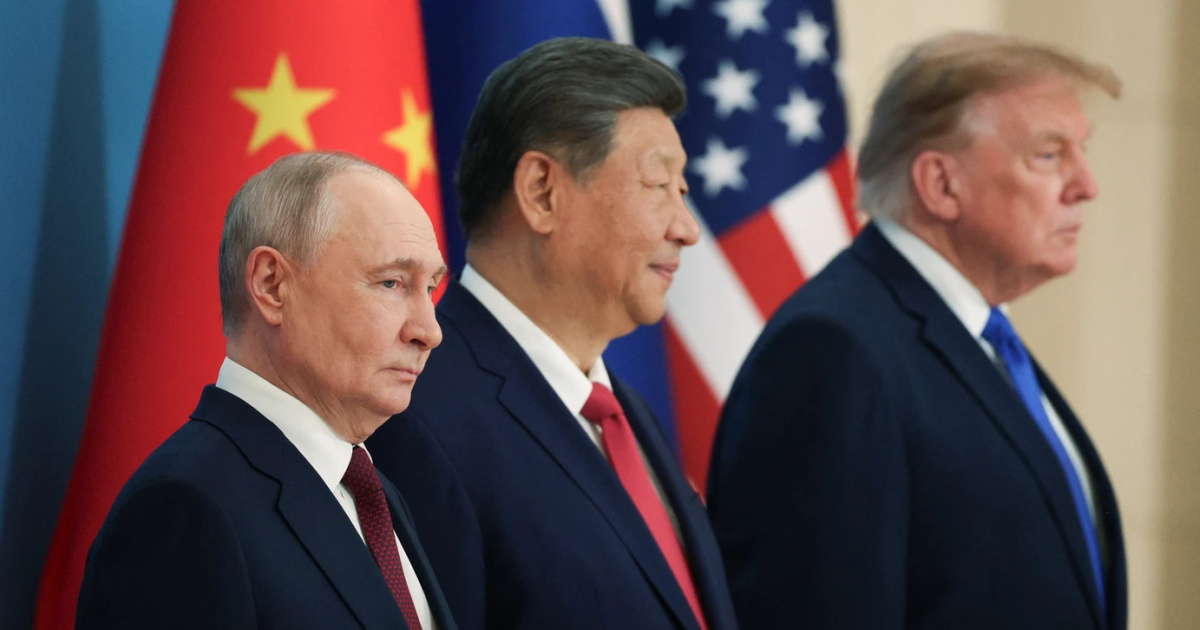
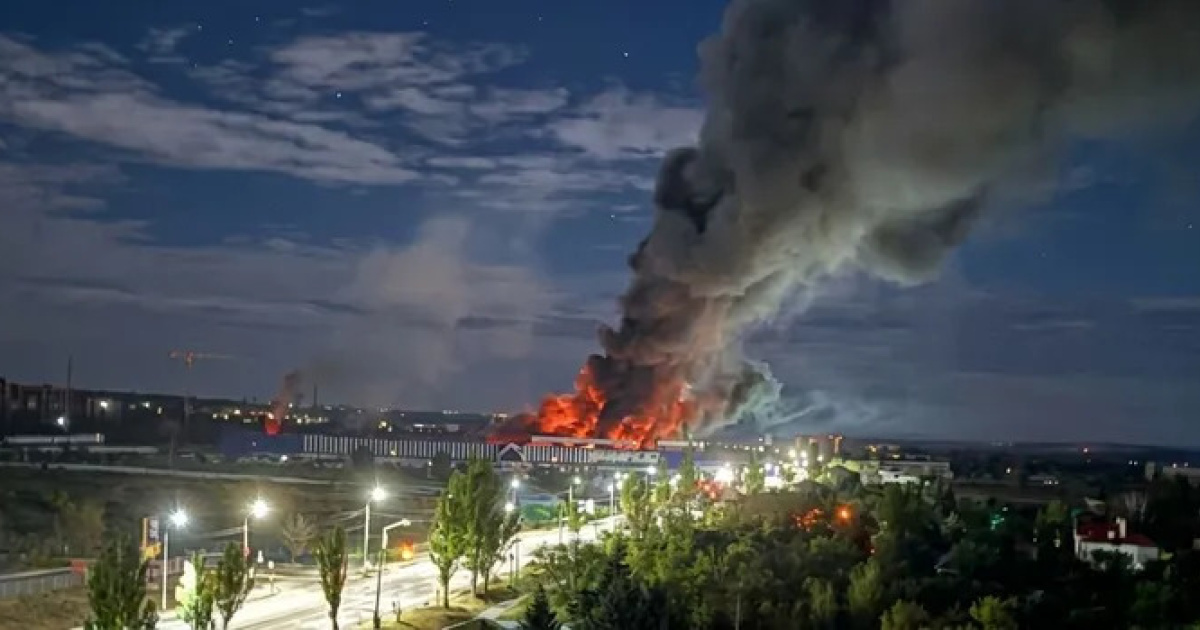
1. At a meeting with government members and oil company executives, putin complained that Kyiv continues to strike the federation’s oil refineries despite Trump’s direct request not to do so. He acknowledged that the domestic fuel market remains difficult, although petrol prices have stabilized following their October peak. Just last night, Ukrainian drones attacked the Syzran and Novokuibyshevsk oil refineries; explosions were also heard near the Kuibyshev Oil Refinery in Samara.
Putin’s public admission that the fuel market is in a difficult situation is intended to prepare russians for new problems at gas stations while pointing to the culprit — Kyiv. The appeal to Trump is meant to hurt the U.S. president’s pride in order to intensify his pressure on Kyiv over attacks on russian oil refineries. What is positive for Ukraine is that, apparently, the kremlin has no other means besides Trump to protect its oil refineries.
2. Zelensky held his first official meeting with Hungarian Prime Minister Magyar in Uzhhorod. At a press conference in Berehove, Magyar said that Hungary “knows who the aggressor is” and promised Ukraine medicines, vaccines, mobile shelters, and generators. In return, he asked Ukraine to speed up the fulfillment of its commitments to the Hungarian minority: the parties agreed that Ukraine would meet them by June 2027 (Hungarian state symbols and the use of the native language in hospitals and social institutions). Budapest will also allocate 1 billion forints (approximately 2.7 million euros) to the Hungarian community in Zakarpattia.
On the one hand, this meeting is a breakthrough in bilateral relations. On the other hand, Hungary is not a friendly country toward Ukraine, since, like russia, it is burdened by imperial phantom pains. And the fact that Magyar has not turned out to be pro-russian like Orbán does not mean that the next prime minister will continue his policy. However, under pressure from Budapest, Ukraine is deliberately creating on its territory a similar, albeit miniaturized, instrument of Hungarian influence over Ukrainian politics to the one putin sought to establish in Donbas through the Minsk agreements. Kyiv is counting on EU membership to restrain Budapest from imperial ambitions in the future, but it is unknown what will happen to the EU in the future or whether Hungary will remain part of it.
3. On November 24, Zelensky told Bloomberg in an interview that if Trump fails to secure an end to the war from putin on terms acceptable to Kyiv by the end of the year, he will appeal to the new U.S. Congress to increase pressure on russia. The new Congress will convene in January, and Democrats will control both chambers.
Zelensky’s words are an unmistakable challenge to Trump. Moreover, it is devoid of practical meaning, since Trump has no physical possibility of putting enough pressure on putin to make him sign a peace agreement on terms favorable to Kyiv in just over a month. However, Trump could still manage to do plenty of harm to Ukraine during that month. Still, it is possible that this statement is not actually aimed at Trump, but at his friend in the kremlin, so that moscow itself understands the possible consequences of changes in U.S. policy under the new Congress.
4. A number of independent media outlets published analyses yesterday of Rosstat data stolen by the hacker groups Cyberpartisans (Belarus) and Silent Crow. Meduza and Mediazona counted at least 490,000 registered deaths of russian military personnel between February 2022 and the end of August 2026. The number of people missing in action is even higher, at more than 720,000. Novaya Gazeta Europe estimated total losses at 670,000. The highest mortality rates were recorded in the Jewish Autonomous Region (nearly 1,000 per 100,000 residents), Zabaykalsky Krai (around 800), and Tuva (650), compared with 63 in moscow.
Half a million registered deaths is more than 30 times the number of Soviet losses in Afghanistan. The geographical distribution is particularly interesting: the gap between moscow (63 per 100,000 residents) and the Jewish Autonomous Region (nearly 1,000) shows that the kremlin is waging the war using the resources of the poor periphery, while effectively leaving the capital untouched. The “historian” putin knows that revolutions happen in capitals and is afraid of this. That is precisely why avoiding another open mobilization is so important to him, as it would put moscow on an equal footing with other regions. At the same time, 1,000 deaths per 100,000 residents is not a figure that can make russians feel the pain of war. For now, all they feel is economic inconvenience…