
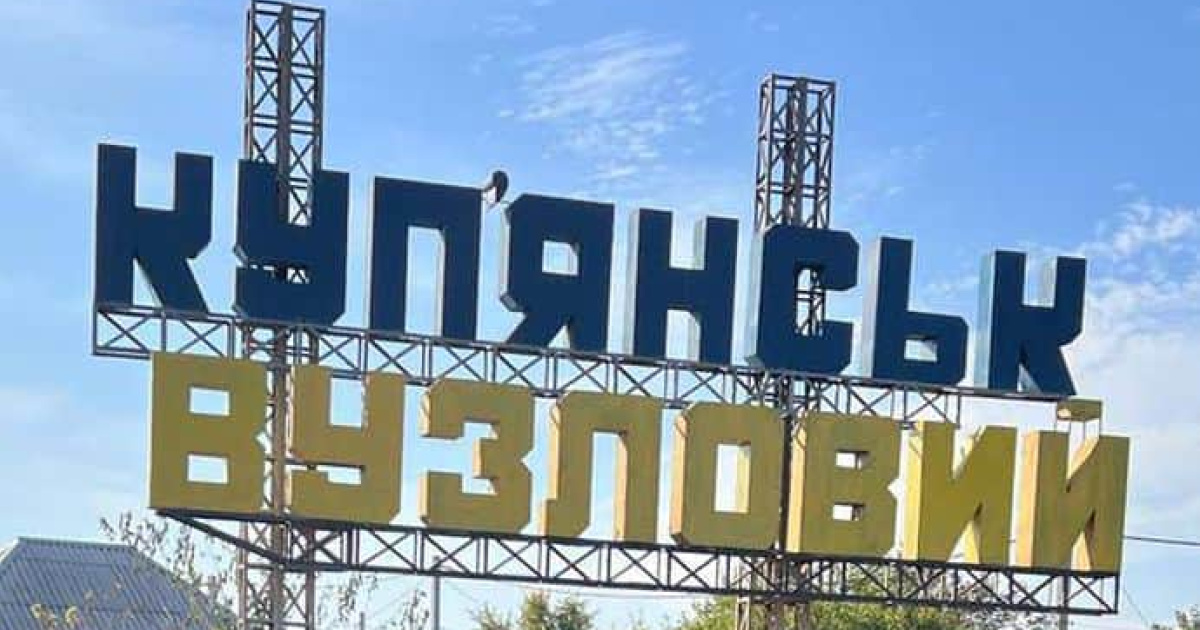
Russia is entering another phase of the war against Ukraine with a paradoxical combination of loud statements and increasingly unconvincing real results on the battlefield. Against the backdrop of the winter campaign, the russian Ministry of Defense is once again reporting the “capture” of settlements which, according to Ukrainian military data and independent analysts, are not under the control of russia. One such example was the statement about the alleged capture of Kupiansk-Vuzlovyi — despite the absence of any confirmation of the advance of russian units into this area.
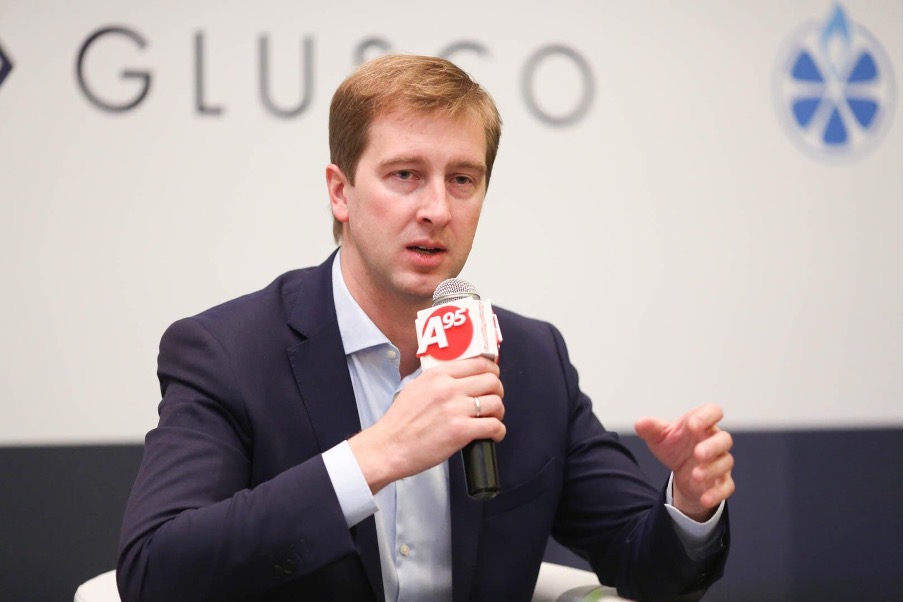
About what is happening on the front today, why the kremlin is making statements that do not correspond to reality, and what the current strategy of the russian army is — military expert and former Security Service of Ukraine officer Ivan Stupak told OstroV in an exclusive interview.
— Recently, the chief of the russian General Staff, Valery Gerasimov, announced the capture of Kupiansk-Vuzlovyi, which the russians have not even reached. According to the DeepState monitoring project, there are at least 10 km between Kupiansk-Vuzlovyi and the territory controlled by the enemy. Why make such objectively false statements? What is behind this?
— You know, this question is also being asked by russian military bloggers. I saw probably five different war correspondents who were literally outraged by what is happening. They also say that they do not control that territory. They draw their own maps, show where Ukrainian troops are and where, at most, russian units might be present.
This report was made by russian Colonel General Sergei Kuzovlev, and it definitively recorded that allegedly everything is done, Kupiansk-Vuzlovyi has been taken, everything has been captured. In essence, this is an ordinary “flag planting”. If I am not mistaken, it was DeepState analysts who were the first to introduce this term.
The russians have never been able to properly explain why this is being done. But if you look from above, it looks like a constant attempt to demonstrate positive results. Because those at the top are waiting for them. Their logic is simple: not a day without a result, not a day without a capture. You need to constantly show effectiveness, and only afterward on the ground try to pull the real result up to what went into the reports to the top leadership.
But this works against themselves, and they admit it. They say: there are areas where on maps territory is shaded as allegedly russian for 8–10 kilometers, but in fact it is not controlled. There are no russian troops there.
And this is what it leads to. Territory that is allegedly already “captured” cannot be covered by aviation. They cannot call in an airstrike, cannot request drone strikes. Because, simply put, pilots say: “Are you crazy? This is our territory”. How can they drop FABs or KABs on their “own” territory?
As a result, they are forced to operate on the ground literally on their knees, with their own two hands, without air support. And this really hits them hard.
— How do you generally assess the situation on the front today? What characterizes the winter campaign on the part of russia?
— The russians have changed their strategy. If earlier we remember assaults in groups of 10 people, then by the end of the year these were already two or three. And now we are increasingly coming to single-man assaults.
The russians even have their own term — “pouring in”. They say: “we pour into the city”. That is, they enter one by one, at most two. That’s it. There are, of course, exceptions — some russian servicemen try to organize a mass assault with equipment. But 95% are single fighters who try to get into our positions. This is their strategy now. This is the key change.
KABs remain, artillery shelling remains, but their number is already smaller. If I am not mistaken, at the peak they are now firing about 20 thousand shells. And these “flag plantings” — to quickly show a result, to show their usefulness.
— Can we talk about a decrease in russian activity recently?
— No, we cannot. I am very cautious here. In the history of this war there have already been periods when it seemed that the number of captured square kilometers was decreasing, and then a sharp surge occurred — and they moved forward again.
As far as I know, now they are accumulating in several directions. Through Mariupol they are pulling columns of equipment toward Huliaipole, and there is also an accumulation in the Pokrovsk area. They can hide from drones in destroyed buildings and they use this advantage.
I assume that they will accumulate and go into battle again. Now near Pokrovsk they have consolidated, replenished units of naval infantry. They are concentrating there.
— So the Pokrovsk direction remains a priority for them?
— Most likely, yes. But it is always difficult to guess the direction of the main strike. We all often assume that their priority is Kostiantynivka. But they have enough reserves to act simultaneously in several directions at a certain moment.
I would not discount other areas either — in particular, Siversk. This, in my opinion, is a very dangerous direction.
— There is an opinion that the russians are counting on squeezing Ukraine at the negotiating table and that Ukraine will voluntarily withdraw from the non-occupied part of Donbas. Supposedly, this is why they have reduced activity in this area. Do you share this point of view?
— The first part — yes. They really have such a vision, and this is confirmed by public opinion polls. I actually saw one study today: ordinary russians place great hopes on Trump and his administration, that they will put pressure on Ukraine, and our country will do everything “necessary” for the war to end.
But I can’t say that the russians are relaxed. If that were so, they would have reduced the number of shellings. But we see that drones, missiles — all of this continues unchanged.
— What are the prospects for negotiations, especially on the territorial issue?
— In my conviction, there will be no real negotiations until the end of March. Meetings and talks are possible. But what interests us is the moment when news appears that Ukraine and russia have formulated the text of a future peace agreement. That is what marks the final stretch.
From the russian side, there have been no such statements so far. This means that at least until the end of March, hostilities will continue. The russians will take advantage of weather conditions and frost to put pressure on Ukraine and make our position more pliable.
As for the territories, I am very far from the idea that Ukraine is ready to simply “sign over” Donbas to russia. But an interim option is possible. For example: Ukrainian troops withdraw heavy weapons from the territories of the Donetsk oblast that are currently under russian control. They remove howitzers, HIMARS, all heavy weapons. There are no Ukrainian troops left there, we pull back to the administrative borders of the oblast.
But this territory remains under full Ukrainian jurisdiction: the Ukrainian flag, Ukrainian legislation, elections under Ukrainian laws, appointment of officials by Ukraine, Ukrainian municipal and service providers, taxes — to Ukraine, patrol police, Ukrainian law enforcement agencies. Without heavy weapons, only small arms.
And at the same time peacekeepers enter the line of demarcation. But the peacekeepers must be a “mixed team”. If they are only Europeans, russia will not accept that. The only real option is a UN Security Council decision and a multinational mission: Europeans plus representatives of countries toward which russia does not have strong ideological rejection — Kazakhstan, India, China — as well as countries that traditionally actively participate in peacekeeping missions: Bangladesh, Rwanda, Sri Lanka.
Such mixed groups could realistically control the line of demarcation. Another question is numbers and money. We are talking about hundreds of millions of dollars per year.
— Is it possible to stop hostilities without resolving the territorial issue of the Donetsk oblast?
— Judging by how the russians conduct their affairs, I think that at any moment they really can simply stop mentioning the demand to hand over all of the Donetsk oblast to them. Frankly speaking, such a scenario is quite possible.
The russians have already effectively stopped mentioning the Zaporizhzhia and Kherson oblasts. They used to insist on this, constantly talked about it — and now this topic has disappeared. In the russian segment of the internet, it is already practically impossible to find mentions of these demands.
Therefore, it is quite possible that at some point — conditionally speaking, if putin makes such a decision — he will simply agree to the line of demarcation as a given. And the topic of Donbas will disappear from the public space altogether. It will not be talked about either in the news or in the media, it will simply stop being mentioned.
— Russia continues to strike Kyiv and other cities. But people are not taking to the streets en masse, the authorities’ rhetoric is not changing, yet the strikes continue. Missiles cost a lot. What is the russian government counting on?
— Now imagine a pyramid — the kind everyone drew at school.
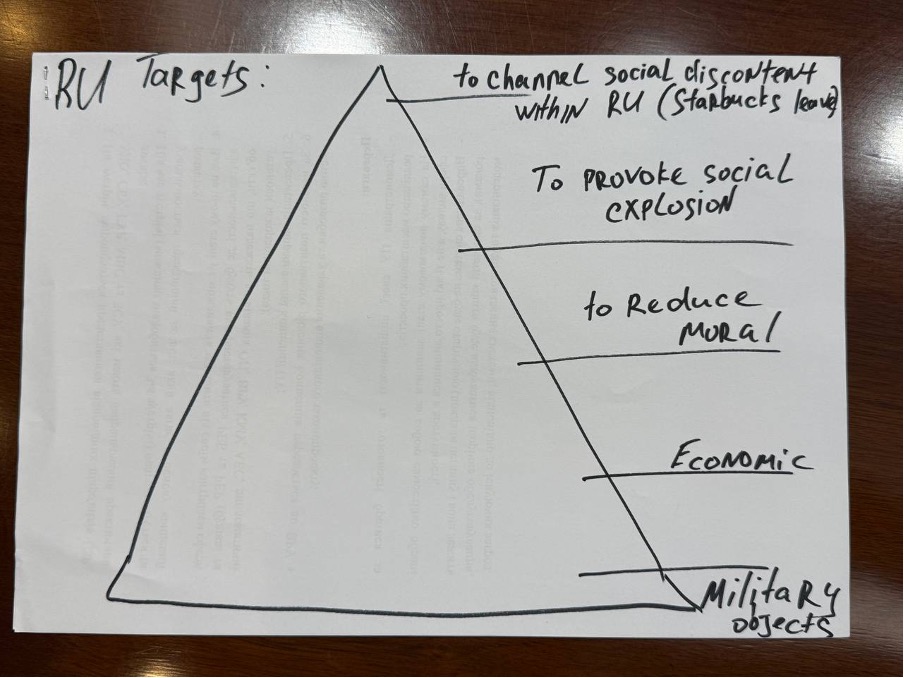
At the bottom of this pyramid are the military objectives pursued by the russian federation. First and foremost, these are purely military targets. We are talking about attacks on enterprises involved in the production of UAVs, shells, and components. The logic is simple: no drones, no ammunition — the military has nothing to fire with, and russia can move forward and seize Ukrainian territory. Infrastructure facilities also fall into this category. No electricity — 3D printers do not work, drones are not produced. This is also a military objective; everything is quite straightforward.
The next level of this pyramid is the economy. Russia strikes rolling stock. We understand that our rolling stock is practically not being restored. Our track gauge is 1520 millimeters, while in Europe it is 1435. We cannot replace destroyed railcars; their number is only decreasing.
What does this lead to? There is no ability to transport products that are produced or processed in Ukraine. They are not exported, foreign currency does not come in, the budget is not replenished, defense needs are not financed. This is a classic scheme — the destruction of a state’s economic potential.
We move higher. Here we are already talking about influencing society. The goal is to make Ukrainian society more “flexible” by striking heat and electricity supplies. So that Ukrainians begin to demand from the authorities: “Just give up that Donbas already, let us simply live peacefully, give us heat, light, internet, Netflix, and to hell with that Donbas”. And the second element at this level is an attempt to provoke a social explosion. A conditional “Maidan 3.0”, so that Zelensky flees to Warsaw or Berlin, and someone else comes in his place. I think this goal remains attractive for the russians, but they do not know how to achieve it.
And at the very top of the pyramid is a conditional “cherry on top” — this is satisfaction for everything that is happening in russia. Because after every strike on Ukraine, we see hundreds of comments in russian social networks: about how they “fried the Ukrainians”, how they “smashed them”, how they are “freezing”. All this rhetoric is a sewer for internal discontent. It allows russian society not to notice its own problems: rising prices, shortages of certain products, the disappearance of brands from the market, and so on.
By Vladyslav Bulatchik, OstroV