


“A doctor prescribed me Pregabalin”.
“Mom, don’t you dare take it! It turns people into vegetables! Doctors get the military hooked on pregabalin! Their faces should be smashed for such prescriptions! I know people who take forty pills a day!”
As if I would take forty pills a day… God, it seems he thinks he knows EVERYTHING. Even in medicine, better than a MD. At 19 years old. I read that specialists have recently come to the conclusion that from a psychological point of view a person is considered an adolescent until about 25. And what can we say about 19. And yet, there is such categoricalness, such confidence in his awareness and righteousness…
About a parallel with a film. A russian one, but…
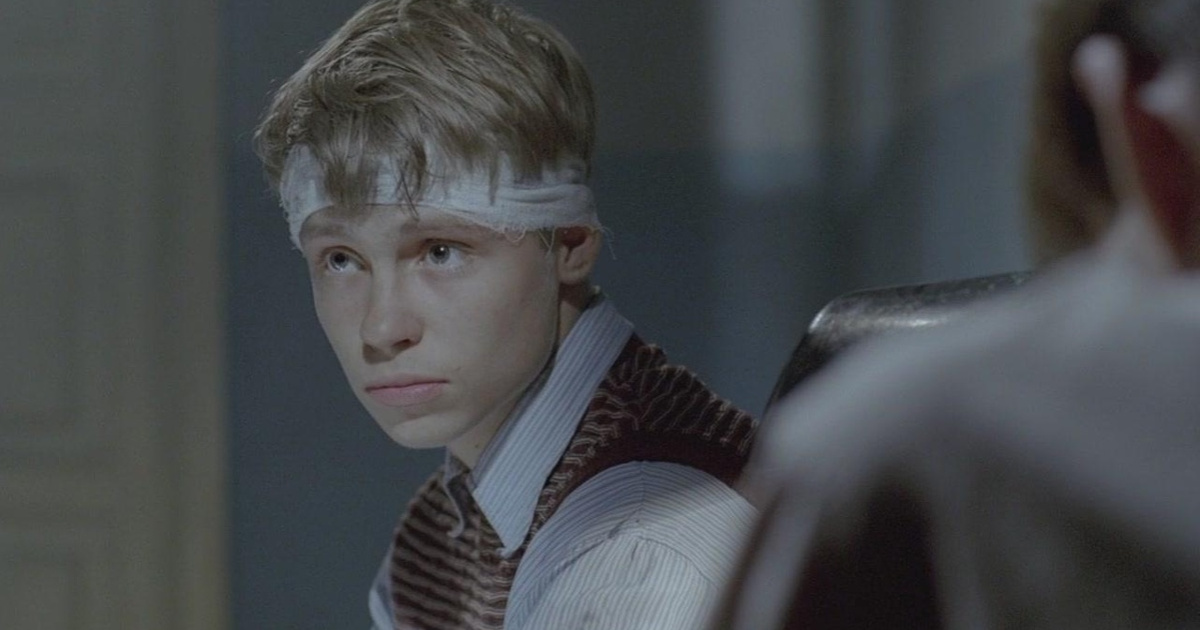
“Mom, watch the the movie titled ‘Bastards’”.
“I’ve seen it, but a long time ago. Probably even before 2014”.
“It may be russian, but it’s an okay one”.
He and the guys of his generation who went to war as volunteers at 18 or 19 — and far from being ‘drone operators’ — find a lot of parallels with their own realities in this film.
They were taught for a long time and thoroughly... And they died quickly and horribly... The percentage of survivors (at this point) is even lower than in the film. Because there are fewer characters there, and the war was different.
Another parallel is age. It is clear that 14 or 16 years of age of the characters and 18 years of our volunteers are slightly different things. But there is a feeling that the radical difference lies only in the legal plane, concerns only adulthood from the point of view of legislation. Otherwise — in both cases these are adolescents who, excuse me, were traded away and will be traded away.
…So, I did rewatch the film after all.
And I’m sad that they find parallels with themselves precisely in russian cinema — in the cinematic art of the enemy. It seems that we are filming and writing about the wrong things for now... I want to believe that over time they will find parallels with themselves — and more accurate ones — in Ukrainian cinema. But there is a feeling that this faith is too naive.
War is a competitor. Because it is profitable
After 2014, I had to teach foreign literature at a technical college. In particular, we discussed with students Bertolt Brecht’s play “Mother Courage”. The war lasts a conditional thirty years, takes all her three children, yet even the character herself admits: war is a kind of breadwinner, it is profitable. For those who have not read it or have forgotten, I will explain: Mother Courage is a trader who, with her cart, travels for years following the army and sells various goods to soldiers. This is how she lives and feeds her children.
And so in 2014, together with teenage students, while reading “Mother Courage”, we talked about who benefits from war. That war back then, a completely different one, which concerned only two oblasts of Ukraine, and from other oblasts — only the military and volunteers at most.
And we talked about the fact that war is profitable not only at the level of arms trade. The students themselves gave examples: even that old woman in Stanytsia Luhanska lived off the war because she sold pies to people standing in line at the crossing between Ukrainian and “LNR” territory. Or let people use the toilet for a fee. Or rented out housing... Many such examples were given.
And what can be said about today’s war! Sometimes I think: it has even become profitable for me personally, because there is no need to feed, clothe, and educate my child. Because he earns for his living, albeit, to put it mildly, in a very peculiar one way.
And in the 12th year of the war, I begin to realize it as my competitor, against which I have little chance. Because it can give many people much more than just a single mother — war can give earnings, positions, power, lucrative contracts to drone manufacturers and funeral homes, income to barbershops in Izium and brothels in Kramatorsk… The list can go on for a very long time.
Therefore, how can I compete with it. Even for my own child.
About “…well, let his mother buy a car now”
Recently I learned from friends that two of my second cousins, younger than me, were killed in this war. They were the grandsons of my grandmother’s youngest brother. He is very old, but alive. And two out of three his grandsons have died.
They fought on that side. That is, against my child. They were mobilized by the occupiers because since 2014 they consciously continued to live in the occupied territory.
One of them was supposedly buried right away, there were no problems with identifying the body. As for the second, his mother went to the territory of russia for a DNA examination, brought back the body, buried it… However, mutual acquaintances say she continues to believe that the examination was wrong and that he is alive. And I recall that this cousin loved my son when he was a little boy. He entertained him in every possible way and took him to the pond on a bicycle...
It is difficult for me to sort out my feelings about all this.
But for my son it is easy to sort out: “This is all natural! And now let his mother buy a car for the money she got paid for her dead son”.
That very categoricalness and confidence in his own awareness that until now seemed excessive for a person of his age... But here I realize: this categoricalness makes sense. It seems that in war it is mandatory. Without it, there is less chance to survive.
By Hanna Hamova, for OstroV