
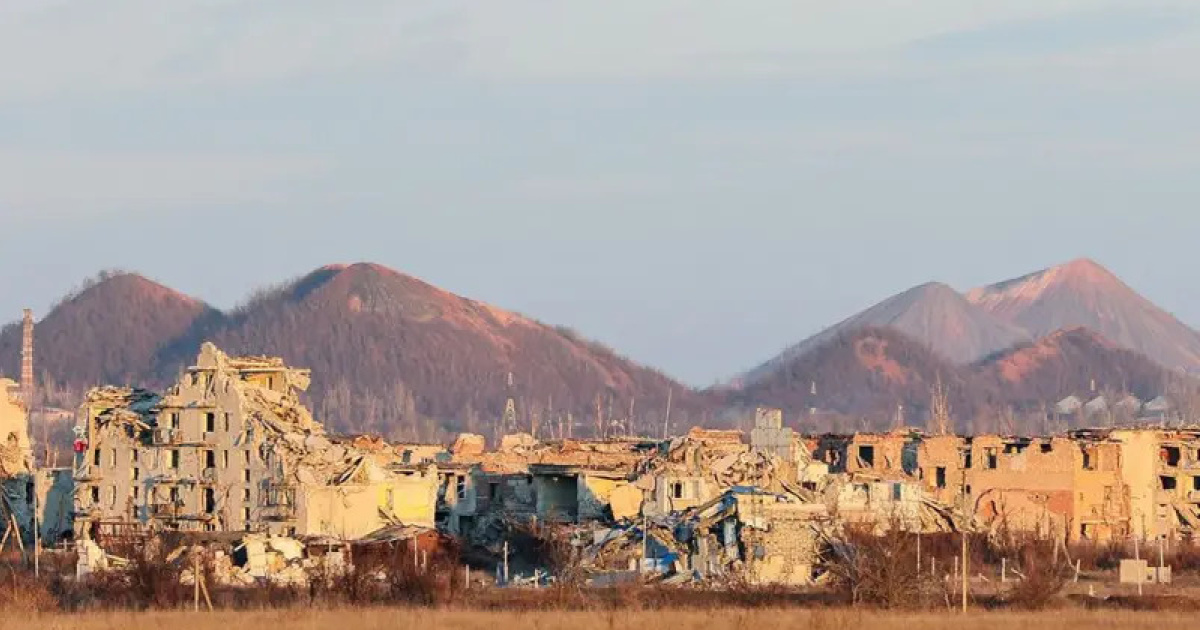
The main factors that will determine the future of Ukrainian Donbas are war and people. The war determines how many citizens of Ukraine will leave the region and whether they will have anywhere to return to. People determine whether they will want to live in a country where russia kills them and where their own “nationally conscious” compatriots stigmatize them…
“Those” and “ours”
“… Essentially, those who brought the war to Ukraine took their business from Kramatorsk to Zakarpattia and want to have the highest possible margin by destroying our Carpathians…”.
This statement by the head of the public initiative “Holka”, Iryna Fedoriv, refers to specific actions of former Verkhovna Rada MP from Kramatorsk Maksym Yefimov. They may indeed deserve condemnation. But in her comment to the national TV channel “Espreso”, the public activist speaks of Yefimov in the plural. That is, not as a specific businessman, but as a representative of the eastern region.
True, she calls him an “ex-Regional”. Perhaps her phrase “those who brought the war to Ukraine” refers to representatives of that political force. But that party also has a clear negative association with the eastern region. Moreover, in parliament Yefimov was a member of the Petro Poroshenko Bloc “Solidarity” faction (2014–2019), and from 2019 to 2023 — of the deputy group “Trust”. Thus, in this small — two-line — quote from a resident of western Ukraine, both the division into “those” and “ours” is reflected, as well as regional stereotypes toward residents of the east of the country: “brought the war to Ukraine”, “destroy our Carpathians”. The fact that this phrase was taken by the editors of the “Espreso” website into the headline is also a sign of its mainstream nature. Publication date is December 11.
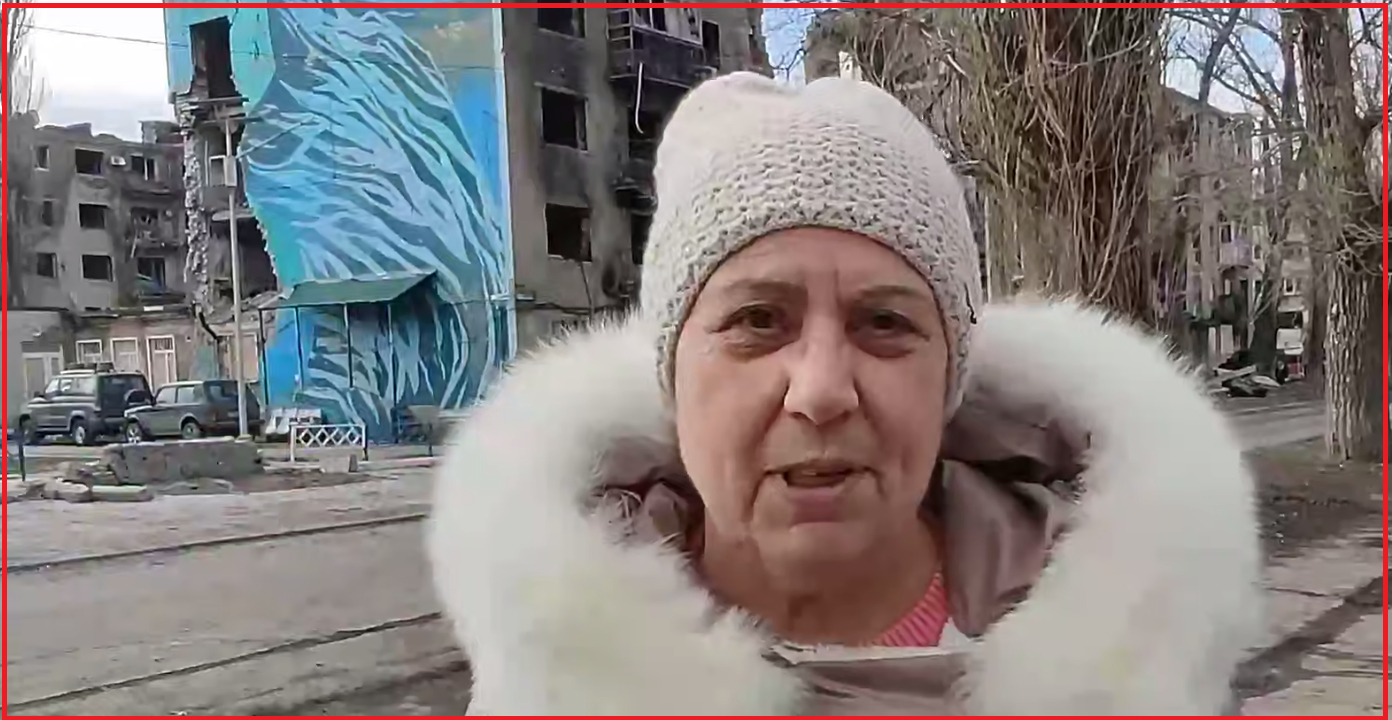
And on December 4–5 in Kramatorsk and Sloviansk, the author of this article spoke with local residents.
“I know that there are people who do not want to leave here for evacuation because they think they will be treated with hostility because they do not know the Ukrainian language. And there are really many reasons for such fears. People call those who have left, exchange information”, - says a representative of a law enforcement agency from Kramatorsk.
— And those who left — what do they say, how are they living there? — I ask an 80-year-old pensioner in Sloviansk.
— Depends. But everyone wants to go home. Sometimes they get picked on because of the language. And can hear things like “too many Donbas people came here, go back where you belong”. But what can you do? They live there, adapt. But it only concers those who went farther away. Few people want to go that far. Mostly they stay way closer, in the neighboring oblasts.
An illustration of her words about “outsiders flooding in” was an article published two days earlier on a local news website. It says that the Kramatorsk non-profit enterprise, the Regional Territorial Medical Association, is considering the state children’s sanatorium “Dzherelo” in Truskavets as a place for relocation (that is, evacuation from the frontline zone), but local deputies called the application to lease part of the sanatorium’s premises an “attempt at a raider takeover” and opposed it. Before that, medical circles in Kramatorsk were discussing the misadventures of the Infectious Diseases Hospital from Kostiantynivka. It relocated to the village of Borova in the Kyiv oblast. The staff renovated an old building, creating both a point of medical assistance and jobs in the village. But local residents came out to protest so that the newly arrived Donetsk people would not contaminate their water and fields with infections…
Stigmatization is compounded by the lack of real assistance to internally displaced persons from the state and by “language separatism”, when the presence of russian-speaking residents with their right to speak their native language in their own country is simply ignored by the authorities and condemned by part of society. Worse still, it is accompanied by calls for ostracism and boycotts.
It is hardly possible to call such a policy of separating Ukrainians along linguistic and regional lines wise. Especially given the demographic crisis into which the country is sinking because of the war.
Meanwhile, almost a third (26.5%) of those who left the eastern region after the full-scale invasion said they would like to resettle abroad permanently. These are the results of a nationwide survey conducted by the Democratic Initiatives Foundation together with the Razumkov Centre in December 2024. The survey was conducted among those who are in Ukraine. And how many residents of Donbas who do not intend to return are among those who have already left Ukraine? Clearly more than 30%. Since most of them simply have nowhere to return. They might have returned to their region, but it is under occupation. And returning to a place where every fifth person refuses to interact with you because of the language or region of your birth, and against the backdrop of economic decline and the “cannibalistic” attitude of the state toward its citizens…
By the way, among the main reasons for deciding to leave the country, 30.5% respondents named “lack of opportunities for development”.
Moreover, according to a survey by the research agency InfoSapiens in May 2024, 20% of respondents stated their unwillingness to interact with Ukrainians who have gone abroad: “no” and “rather no” — 17%, hard to say — 3%. That is, every fifth person does not want to deal with them. And as for russian-speaking Ukrainians — ready to interact — 46%, “rather yes” — 36%, “rather no” — 7%, “definitely no” — 9%, undecided — 2%. It would seem not so many — only about 19%. But this is the most aggressive minority, moreover, one that is in no way condemned by the state.
This should also include the attitude toward citizens of Ukraine of ethnic russian origin. At the time of the collapse of the USSR, about 40% of residents of the Donetsk and Luhansk oblasts identified themselves as such. In fact, 35% do not want to interact with them (“no” and “rather no” – 30%, “undecided” – 5%). This is called xenophobia.
And given that due to the geography of the war a significant share of both russian-speaking people, those who left abroad, and ethnic russian Ukrainians are predominantly residents of the east of the country, all the figures cited directly concern them.
Moreover, this attitude is felt by the region’s residents. There are people who prefer to risk living under shelling rather than evacuate to a socio-cultural environment that is hostile to them. Although it is not so much hostile as it is portrayed as such by the descendants of KGB figures, who through bans and coercion, through separating Ukrainians along linguistic lines, are trying to build “ethnic” communism in a single country.
The latest public example of this is the petition on the Cabinet of Ministers’ website calling for a ban on russian-language versions of Ukrainian websites. Against the backdrop of negotiations in which russia raises, among other things, the language issue, this is a perfect pretext for moscow to “protect” russian-speaking Ukrainians. But even worse, such provocations reinforce the sense of hostility of the Ukrainian state toward its russian-speaking citizens, residents of Donbas, and push them out of Ukraine’s information sphere of influence. Defending their identity, people will simply switch to russian-language resources of other states.
“For whom is the russian-language version of websites in Ukraine intended?” - asks the author of the petition. My answer is: for those citizens of Ukraine who have the right in their native country to receive information in their native language and who have suffered more than others from the war, the pretexts for which were created by precisely such advocates of linguistic uniformity, who created grounds for putin to “protect” someone here.
The other day, Ukraine’s Foreign Minister Andrii Sybiha called on Poland to fairly punish those who expressed xenophobic attitudes toward Ukrainians: “The Ukrainian people certainly did not deserve such treatment. I believe that several demonstrative cases of accountability for such actions can show everyone else that such behavior cannot and will never be the norm in a civilized European society”…
Summing up this part of the article, it is worth noting that the examples of stigmatization and xenophobia cited above are not just a lament over a regional identity that is now being erased, which the residents of Donbas did not choose and which was formed by Ukraine itself, but also a path toward losing the country’s demographic and labor resources, as well as toward severing the humanitarian umbilical cord with those Ukrainians who found themselves in the occupied territory and are, in essence, carriers of Ukraine’s historical memory. That is, it is also a spit in the face of future attempts by our state to reclaim its territories, because it is precisely people who will then be the main reason and resource for their liberation…
“I would like to believe that russia will fall apart and we will be able to…”
Now about the war, which determines the prospects of Donbas not mentally and humanitarianly (as people), but physically.
If just two years ago, after the successful counteroffensive of the Armed Forces of Ukraine in the Kharkiv and Kherson oblasts, many hoped for the military liberation of Ukraine’s territory within the 1991 borders, the realities of today’s war have left virtually no such hopes.
“— Of course, I would like to believe that russia will fall apart and we will be able in the near future to restore control over the occupied territories. But we see the picture today: most of Donbas is occupied, an entire generation has already grown up that was raised on anti-Ukrainian propaganda. And those pro-Ukrainian residents who left are also unlikely to want to return here. So it will not be easy. It seems to me this is not a near-term prospect.
— So your hope for the liberation of Donbas is now connected not with the war, but with the collapse of the russian federation?
— At present, such a scenario seems the most likely to me.”
This is an excerpt from an interview taken during the author’s trip to the Donetsk oblast in early December, with an Armed Forces of Ukraine officer, a native of Donetsk, Artem Zaiarnyi.
At the same time, Artem does not believe in the possibility of the withdrawal of the Armed Forces of Ukraine from the territories of Donbas that Ukraine controls today. That is, in his understanding, if the peace process fails, the remaining part of the Donetsk oblast will face a prolonged defense that may last more than one year.
If he is right, then it is easy to forecast the enemy’s destruction of the remaining cities (Kostiantynivka, Druzhkivka, Kramatorsk, Sloviansk) in socio-economic terms, while at the same time the long-term retention of their territories under the control of the Armed Forces of Ukraine.
Another interlocutor of the author in Kramatorsk, a representative of a security agency, believes that life in the agglomeration will continue if the United States manages to force putin to stop the fire along the front line.
“The percentage of those who are really waiting for russia here is… I would not call it negligible, but such people are much fewer in percentage terms than those who want to live in Ukrainian Donbas. Even if the demarcation line runs through Druzhkivka.
— Do you believe that life here in such a case will be able to return to a normal course?
— I believe that our partners are interested in making a military hub here, the ‘Eastern Gate’. That is, there will be, conditionally, a 100,000-strong grouping here. It will be properly funded. Kramatorsk will become even more developed. Conditionally, ‘Energomashspetsstal’ plant will switch to military rails, all enterprises will start working for defense needs. Military units with military towns will begin to be built here, residential buildings in which apartments will be provided to family members of servicemen. And this Ukrainian military-industrial hub will simply become a new stage of our history. This is economic growth, and this is the prestige of service”…
It should be said that none of the author’s interlocutors in Kramatorsk/Sloviansk believe that Ukraine will withdraw its troops from there, handing over territory and people to the enemy. Such a step is regarded as stupidity and betrayal.
At the same time, locals try simply not to think that the russian federation will begin to physically erase their cities from the face of the earth, as happened with Bakhmut or is now happening with Pokrovsk. However, concern for their cities still does not outweigh in their minds the consequences of surrendering the territories. Since 90% of residents do not want to live under russia, they prefer the destruction of walls by the enemy to falling into captivity or leaving their homes to russians.
Hopes now lie only in the peace process. But even it gives at least some optimism only to those whose land has not yet been occupied…
By Serhii Harmash, editor-in-chief of OstroV