
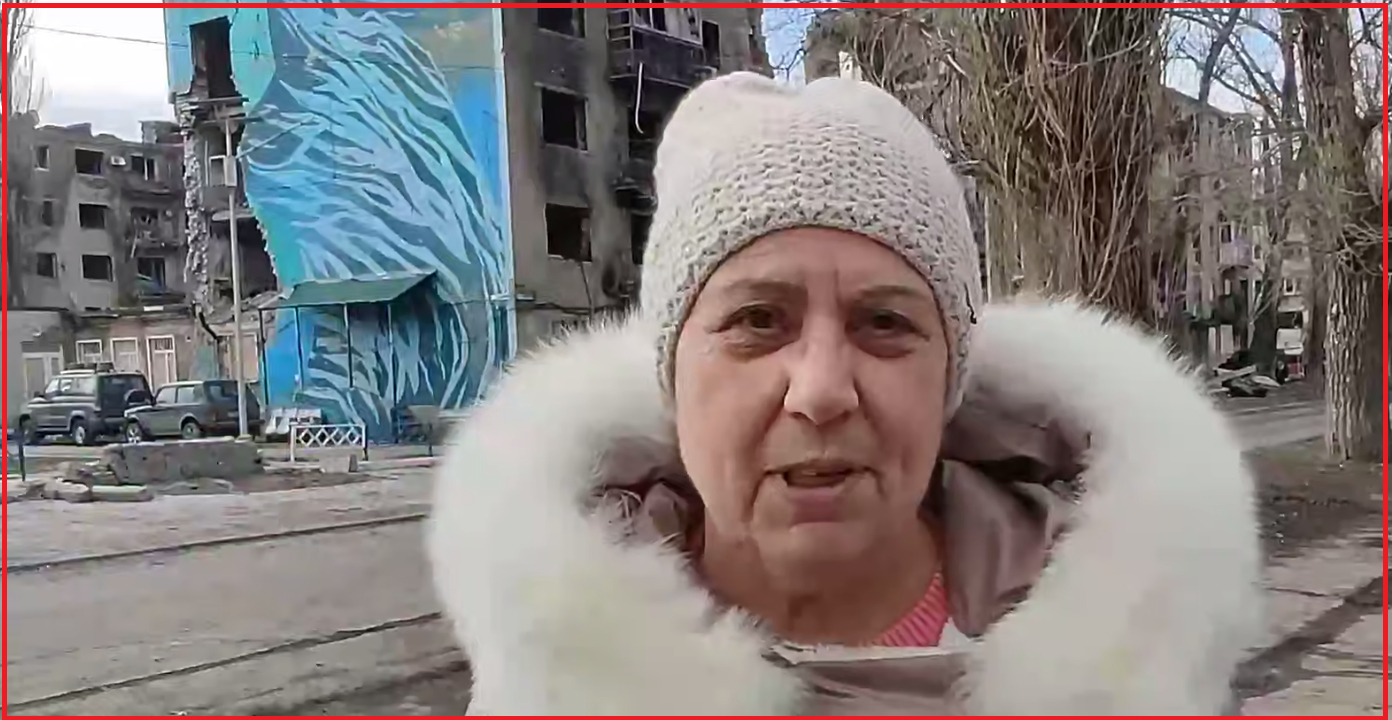
The purpose of this piece is to show a snapshot of the moods of Donbas residents regarding current events and problems. This is important for understanding the realities of life of the local population and the motivations that determine their actions. Initially, it was planned to conduct one interview — with a business representative; the rest was simply material gathering for analytics. However, after transcribing the audio recordings, the author came to the conclusion that it makes sense to present precisely different (sometimes contradictory) points of view of people of different professions, ages, and worldviews. Two of my interlocutors (since the conversations with them took place in a private format) are presented anonymously — let us call them a law enforcement officer and a pensioner; the third — a business representative — agreed to the publication of his name.
Surrender of territories, “those who wait for the russian world” and other realities of frontline life
— How will the local population perceive it if a decision is made to withdraw troops from Donbas?
Law enforcement officer, 42 years old, Kramatorsk:
— Extremely negatively. The percentage of those who are actually waiting for russia here — I wouldn’t call it negligible, but such people are much fewer, percentage-wise, than those who want to live in Ukrainian Donbas. Even if the line of demarcation runs through Druzhkivka.
— If a ceasefire does not take place, how much time, in your opinion, would the russians need to take this Sloviansk–Kramatorsk–Druzhkivka–Kostiantynivka agglomeration?
— At least 3–4 years.
— So, in terms of fortifications, are we ready for defense?
— Let’s put it this way — maybe the fortifications are not exactly as they should be according to textbooks, but even if you look at it in terms of time — how many years have we been preparing them here! Let’s count: what did they take after February 24, 2022, in Donetsk oblast? — Bakhmut and half of Pokrovsk?… How long did they take Avdiivka — a city of 20 high-rise buildings? And they had been taking it, essentially, since 2014 — a real war had already been going on there for ten years! Now their conquests are mostly villages. Even Pokrovsk — how long have they been taking it already?
— Could such a decision affect the attitude toward Ukraine of people who would be forced to leave from here?
— I think yes. But I believe that such a decision will not happen — the war will continue. I do not believe in the success of the peace process now.
— How does Kramatorsk today differ from Kramatorsk a year ago?
— There is more anxiety, more uncertainty about tomorrow, a lack of understanding of how this peace process will work. Whether there will be a peace process at all, or whether the city will be leveled to the ground.
— So the anxiety has increased not because of the war, but because of politics?
— Anxiety increases because people are thinking — and saying it out loud — that the U.S. might sell us out; that Europe might refuse to provide funding; whether sanctions will stop the russian economy or not?… In the actual military confrontation with russia, there is more confidence here. Everyone is worried in the context that some conditions may be created under which decisions will be made for us.
+++
Pensioner, 80 years old, Sloviansk:
— God forbid! We hope that this won’t happen. I don’t even want to think about such a thing.
— There is gas, electricity, water, heat in the city. And what is missing?
— There is no peaceful life. They are shooting.
— Do they often hit residential buildings?
— Yes, every day.
— It seemed to me that there are few young people on the streets. Or do young people just drive cars, so they are not visible?
— Young people have left. Especially those with children. In only pensioners are left in my house. Young people that are around are evacuees. In the evening you can see that very few windows are lit in the buildings.
— Evacuees — that is…?
— Those who have already left somewhere: from Kostiantynivka, Druzhkivka, Pokrovsk… Our locals go farther on, and these people come here.
— Young people leave, and the elderly stay? Are they waiting for russia?
— There is nowhere to go. We don’t have that kind of money to live elsewhere. Many of my acquaintances left, and they say that the apartment rent is UAH 10–15 thousand. That’s three of my pensions just to pay for the housing alone. And you still need money for groceries etc.
— And are there many who “wait for russia” here? In 2014 many supported Strelkov, after all?
— There were some, but not many. And those mostly left together with him back in 2014. Only those who have nowhere to go remain here now.
— And why do you think they hit houses?
— So that we leave. Why do they need old people? We don’t even have intact schools left anymore. They hit schools so that children don’t study, so that Ukrainians become stupid.
— All right, and personally you — when will you understand that you need to leave? What has to happen for you to decide — that’s it, it’s time!
— When they come closer.
— How much closer?
— Well, if it becomes completely impossible to live… Of course, it’s bad that we have no shelters. And there is water in our basements.
— Don’t they install concrete ones?
— They do. At bus stops, at the market. But who will make it there in time?
+++
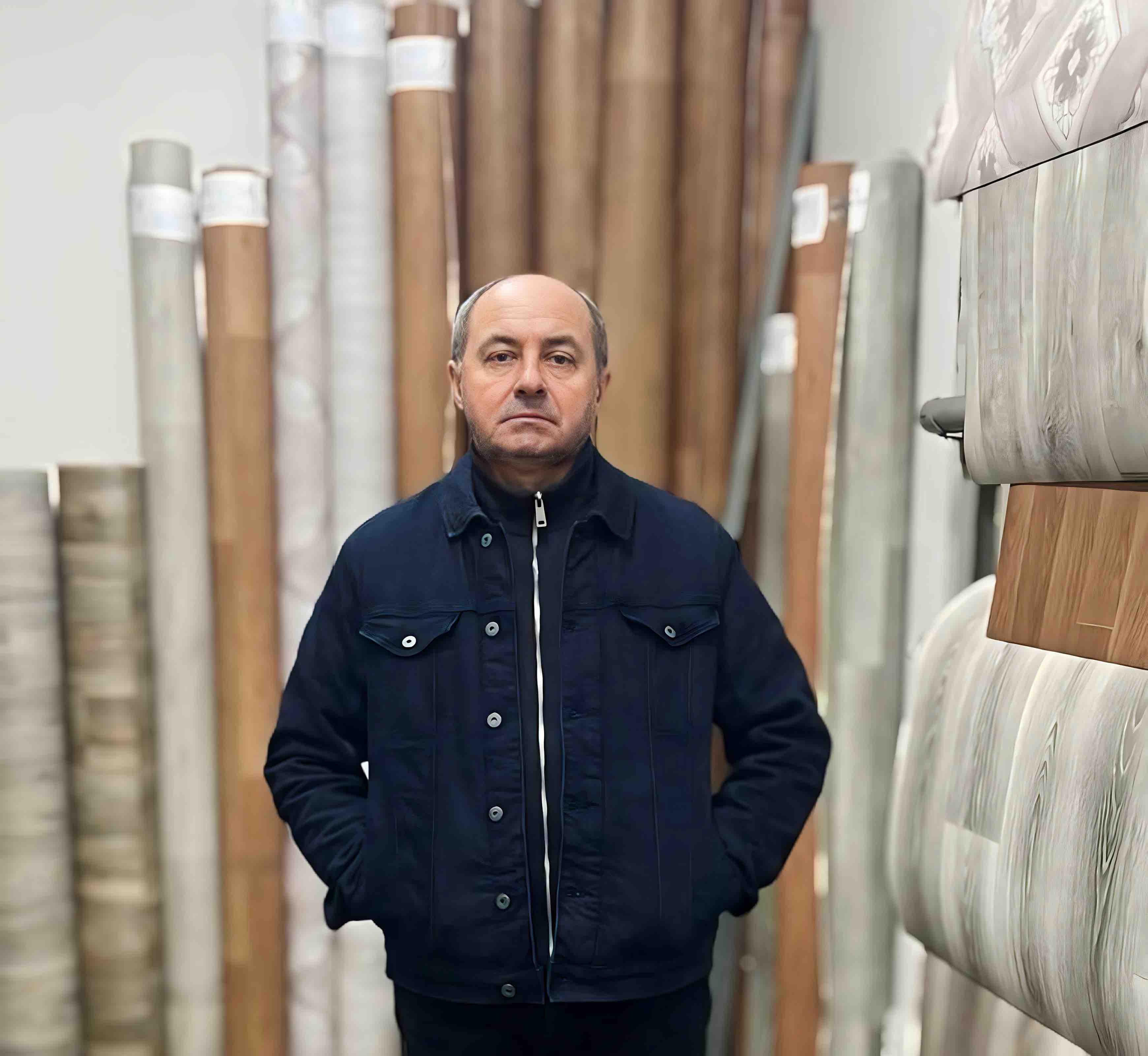
Yaroslav Havryliak, co-owner of a building materials retail chain, 54 years old, Kramatorsk:
— I don’t believe in it. And about 85–90% of people don’t believe either. But there are also those who agree with such an option — they just want peace, it doesn’t matter whether under russia or Ukraine. Some still believe that Ukraine is shelling itself. And it’s very difficult to prove otherwise to them, because they watch russian television and listen to Skabeyeva.
— But russian TV is blocked here, isn’t it?
— Many people have satellite dishes installed. They watch, listen, and then go around saying that our government is illegitimate. I often encounter such people at work.
— But you say there are few of them — 10–15%.
— Well, if about 80 thousand people live here now, then 10% is 8 thousand. That’s not a small number.
— But that’s out of the remaining 70–80 thousand, that is, those who didn’t leave. And if you count against the population of Kramatorsk as a whole, including those who left (after all, the “russian world lovers” didn’t leave), then it’s negligible. Maybe it only seems like there are many of them because they’re simply concentrated? If the previous 150–200 thousand had remained in the city, they wouldn’t be so noticeable?
— It’s hard for me to judge the numbers, but in a city like this, if you work in customer service, you encounter it. In a taxi you can speak Ukrainian, and they tell you: “why are you twisting your tongue?”. I say: well damn! Show me a German, show me a Frenchman who doesn’t know his own language. This, I say, is underdevelopment. At first I communicate in a polite manner, but when I see obvious separatists, I respond harshly.
— If a decision is nevertheless made to withdraw troops from Donbas — will your attitude toward our state change after that?
— Of course it will change! I believe this is wrong, it’s betrayal. Then what did so many people die for, if now we just give everything away? Then we should have given it away right away — people would have lived. Someone who wanted to could have moved their business, someone might have stayed. But instead lives were lost, a bunch of cities and families were destroyed. And to give all of it to these creatures is betrayal. I simply don’t believe in it, not even 1%. Because russia won’t stop anyway. This would simply be an incentive to continue the war further, but from more prepared positions.
— Do these talks about surrendering Donbas affect business?
— Yes, for sure. After every strike there is a lull in trade for 2 or 3 days, then everything comes back to life. As soon as talk starts about some kind of deals — people come to cancel their orders, saying: we’ll wait for now, because it’s unclear what will happen, maybe we’ll have to leave… So yes, it affects things. What really helps is that the city is being taken care of: parks are cleaned, trees are planted, roads are repaired — this not only gives a sense of stability, but also encourages people to settle their lives, creates jobs and purchasing power.
Language, faith, “banderization of the entire country”
— To what extent does our humanitarian policy affect the loyalty of the local population to the state? Can this be a factor of local support for the russian federation?
Security officer, 42 years old, Kramatorsk:
— I think the language issue certainly exists. My wife was reprimanded in Cherkasy for speaking russian, that is, her native language. In her own country! I come from the front-line zone to the rear just to hear how unpatriotic I am... I know that there are people who don’t want to evacuate from here because they think they’ll be treated with hostility due to not knowing the Ukrainian language. And there are really many reasons for such fears. People talk on the phone with those who left, exchange information.
I go on assignments in rural areas, and there people don’t speak russian at all, that is, they are Ukrainian-speaking. But that doesn’t stop them from waiting for russia. For example, in 2023 I was in Kostiantynivka district and inspected a woman who spoke Ukrainian. But her phone was filled with russian propaganda media like Skabeyeva’s videos… That is, she speaks Ukrainian with me, but she is waiting for russia. Hearing her language, I perceive her as a person who reflects her position through it, but seeing what she watches, which Telegram channels she reads… — I was surprised. So language is not a marker of patriotism.
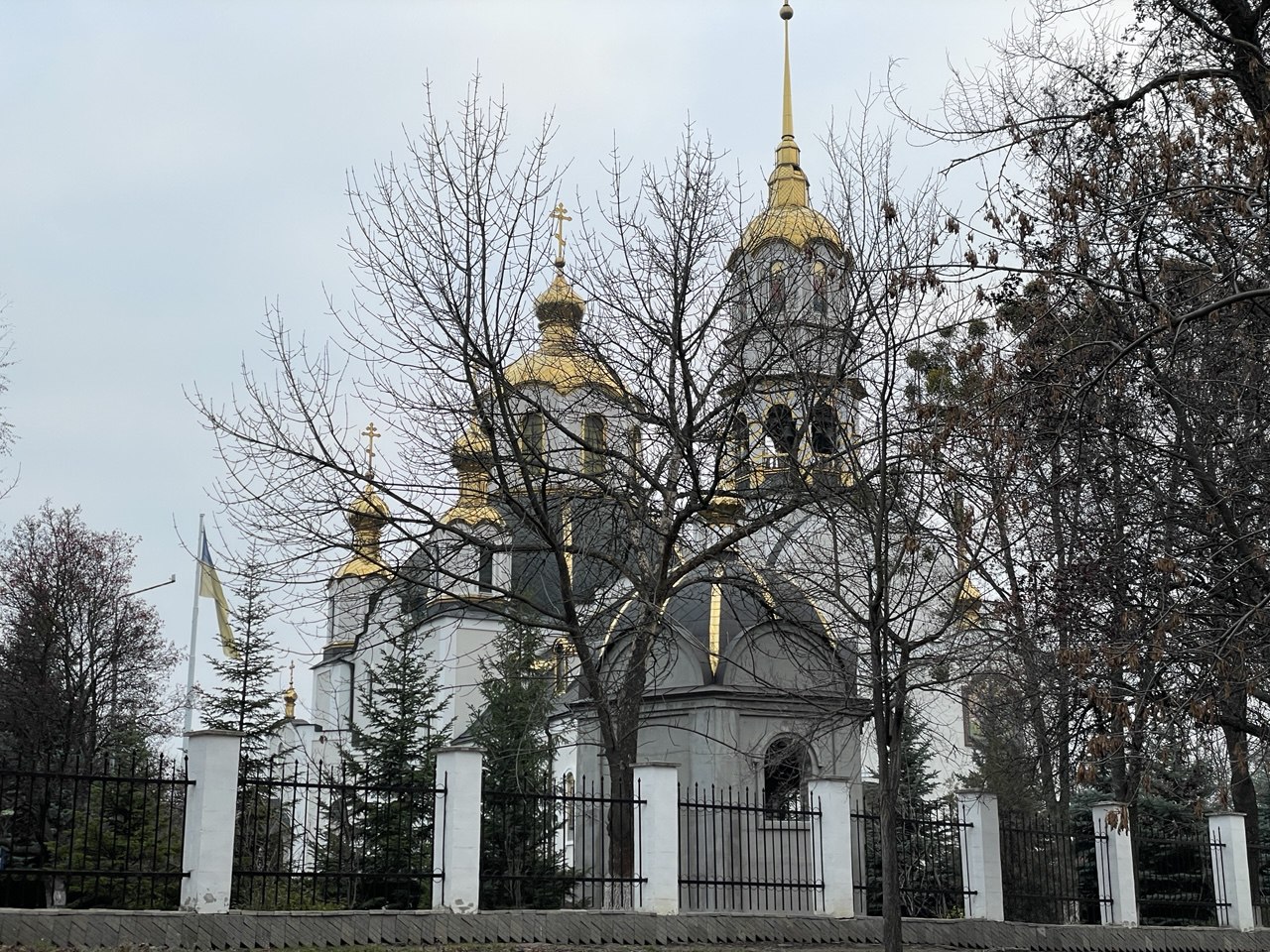
As for faith. Here we have the moscow patriarchate church and people go there. Not all of them support the russian federation. Religious feelings are a delicate thing, not always rational. This issue must not be politicized.
+++
Pensioner, 80 years old, Sloviansk:
— And those who left — what do they say?
— Everyone wants to come home. Sometimes they get picked on because of the language. And can hear things like “too many Donbas people came here, go back where you belong”. But what can you do? They live there, adapt. But it only concers those who went farther away. Few people want to go that far. Mostly they stay way closer, in the neighboring oblasts.
+++
Yaroslav Havryliak, co-owner of a building materials retail chain, 54 years old, Kramatorsk:
— Is there some tension between the military and locals?
— Sometimes, mostly at the market, I see how people are irritated by the Ukrainian language. Not openly, but for example, soldiers were shopping in front of me, and after they left I overheard these elderly sellers saying: “if they weren’t here, if they weren’t given weapons, if they weren’t paid such money — everything would have ended here. And so what if russia were here — people live in Donetsk, people live in Crimea”…
— Do Ukrainian-speaking people really say things like that?
— Yes, Ukrainian-speaking ones too. Many talk like that. It doesn’t depend on the language. My former classmate speaks Ukrainian, his parents are from Western Ukraine, but he supports russia. We’ve had conflicts over this since 2014.
— How does our humanitarian policy — language, church, Bandera — affect the moods of the local population?
— Here it’s mostly the moscow patriarchate. Many don’t want to leave it because of the new holiday dates, nor because of various canons. I don’t know whether they still mention Gundyaev there or not, but people attend those churches.
— Is it just religious conservatism, or do they believe Gundyaev?
— Many of them here are against putin, against the war. But they go to that church. Everyone has their own reasons. A friend of mine couldn’t have children for many years, had medical treatment, tried everything. And then he went to some moscow patriarchate priest, who predicted that no treatments were needed, that he would have a child. And indeed, his wife soon gave birth. Now he doesn’t want to leave that church, even though he doesn’t support russia. And there are many such cases, because people have been going there for decades, and during that time each believer has something personal connected with that church: someone was healed, someone got married, baptized… And Kyiv Patriarchate churches appeared here recently, so purely in terms of time there are still very few such personal connections with them. This takes time.
— Do you often hear that the russian language is being banned? Do people say that?
— They do.
— What gives them grounds to say that, what arguments?
— They watch Skabeyeva. I returned to Sloviansk in 2023 from Ivano-Frankivsk, where we had evacuated to in 2022. I came to the market here and asked in Ukrainian for the price of honey. The seller answered me in russian. I asked her why she was speaking the language of the occupier. She started yelling at me…
— Why did you ask her that? Everything was fine — you asked the price, she answered.
— Well imagine, I hadn’t been here for a year, and I thought that over the year people might have understood that they were attacked, who attacked them, might have changed their language… After all, it’s the language of the enemy.
Corruption, politics, business
Law enforcement officer, 42 years old, Kramatorsk:
— How are corruption scandals perceived here? I mean both Mindich and NABU cases against local officials.
— Yermak’s resignation is perceived positively. Because everyone understands who was in charge, who made the decisions…
— So people now think the situation will improve?
—Yes. I believe that in the end, the retinue makes the king. Zelensky will not delve into many processes himself.
— But he chose his own retinue.
— It’s hard to say what criteria he used, but his circle overdid it on many issues. The situation with Mindich should be tried and receive the highest measure of punishment. And Yermak was meddling in military operations, even though he simply does not have the relevant education.
— Okay. And corruption here, in the oblast?
— Do you mean the situation with Honcharenko? The hydraulic structures near Sviatohirsk and the boiler houses in Selydove that never even existed? Maybe the calculation was that later the entire Donetsk oblast would go to the russians and no one would check anything.
— Can such crimes be proven? Those facilities are in occupied territories, it’s impossible to conduct examinations.
— It is proven procedurally. Examinations in Selydove were conducted using drones. All of this was officially inspected, investigative experiments were even carried out.
— Why do people who live here, and who supposedly are interested in Ukraine remaining here, rob the country like this, weakening the front literally in front of their own homes?
— The managers here are mostly not locals, so they don’t think about it. And the locals don’t either. They serve or work here, they earn money. And they live in other cities. Now locals are out of the game here. People come here from all over Ukraine to get a line in their service record, earn money and move on, to manage somewhere else.
And corruption here has become decentralized, unmanageable. Because the situation allows an individual official to make decisions quickly, independently, within their local area. And they don’t think about tomorrow, because tomorrow here is shrouded in uncertainty. They think only about how to grab something.
+++
Pensioner, 80 years old, Sloviansk:
— We don’t really discuss that corruption much. Before, old ladies gathered outside to talk to each other, but now everyone stays at home. They’re afraid of the enemy strikes. They happen during the day, and at night too. And when your pension is USD 100, corruption is the last thing on your mind…
+++
Yaroslav Havryliak, co-owner of a chain of building materials stores, 54 years old, Kramatorsk:
— Does local business help the military?
— Of course. I won’t list the names, but many do.
— Doesn’t the question arise that “we’re helping here, while in Kyiv they’re stealing billions”?
— Of course it does. Maybe not at the level of business owners, but definitely among hired workers. Especially when you start talking about donations. Then immediately someone will say things like “they’re there skimming millions, and we’re giving our last”… This gives even more arguments to all kinds of those who wain for russia, strengthens distrust toward the state.
— How does business live in a frontline city?
— Cafés, coffee shops, barbershops are doing well. Prices, of course, are insane, but that’s because there are military personnel and they create demand. Most of the business that existed before either doesn’t work anymore or has been relocated to other regions. Because there are enemy strikes, and there isn’t demand for every type of business, and especially if you’re renting. After all, you have to pay rent, electricity, heating… People — like us now — mostly work just to break even, to keep teams together, so employees have something to live on. Profit is out of the question here.
Our business — building materials trade — survives only thanks to the “E-Restoration” program. That’s when a house is destroyed or damaged, a person submits an application in the governmental Diia app, a commission goes out, everything is photographed, documented, an estimated cost is determined, and people are paid money for repairs. And then with that cashless money, people come to us and buy what they need for repairs.
— Are there any relief measures for frontline businesses?
— Only inspections were canceled. But we pay all taxes.
By Serhii Harmash, editor-in-chief of OstroV