
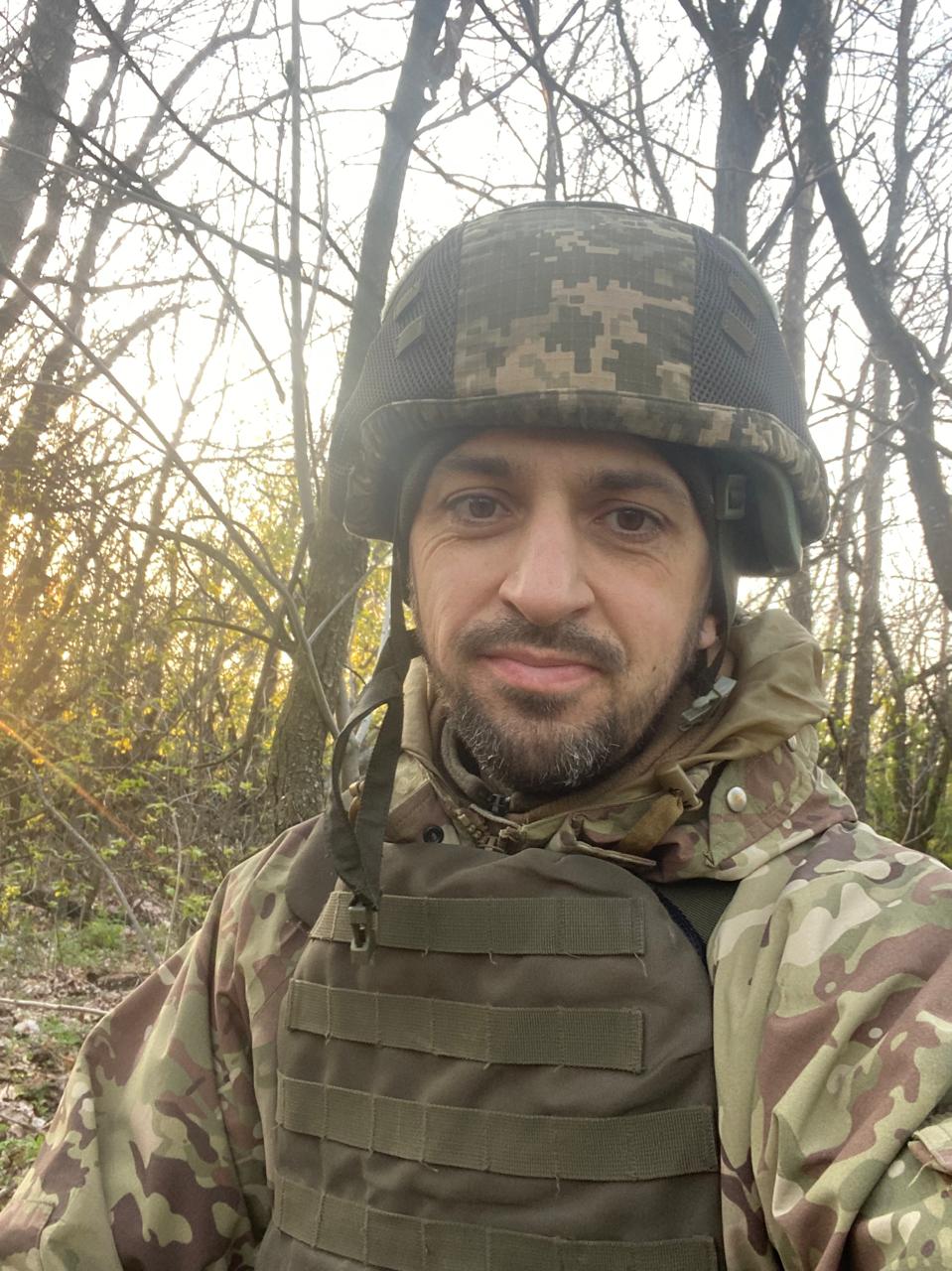
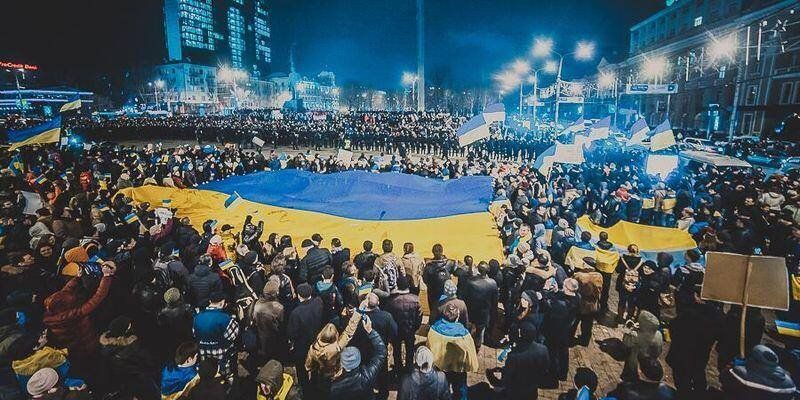
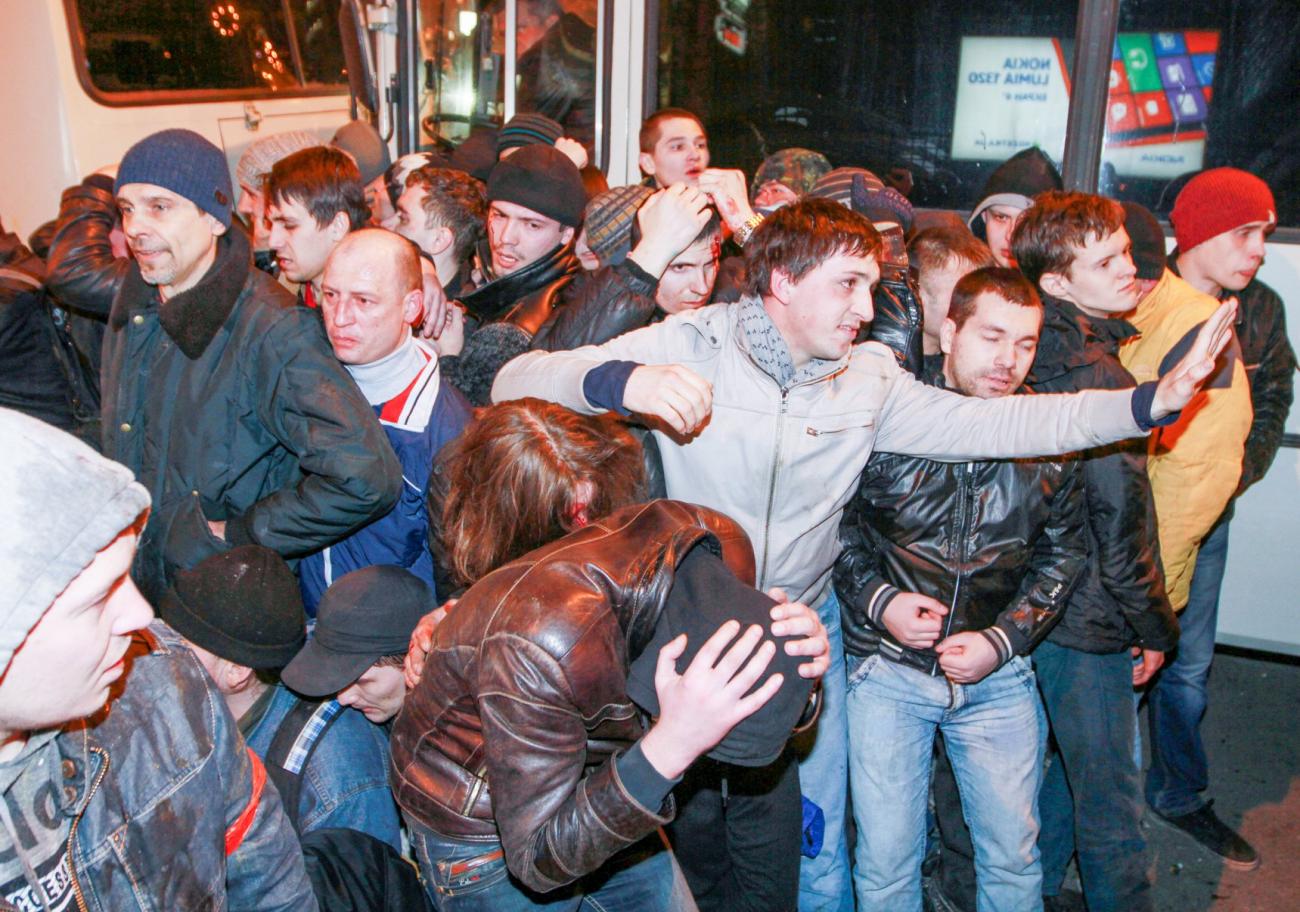
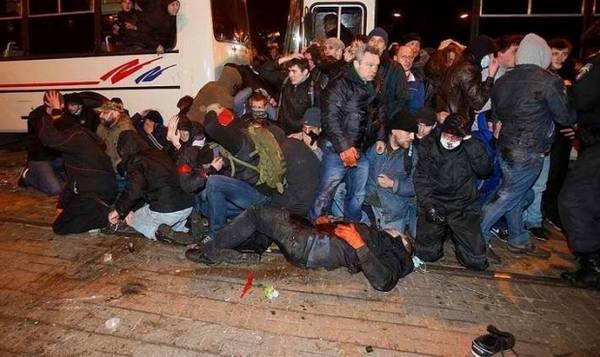
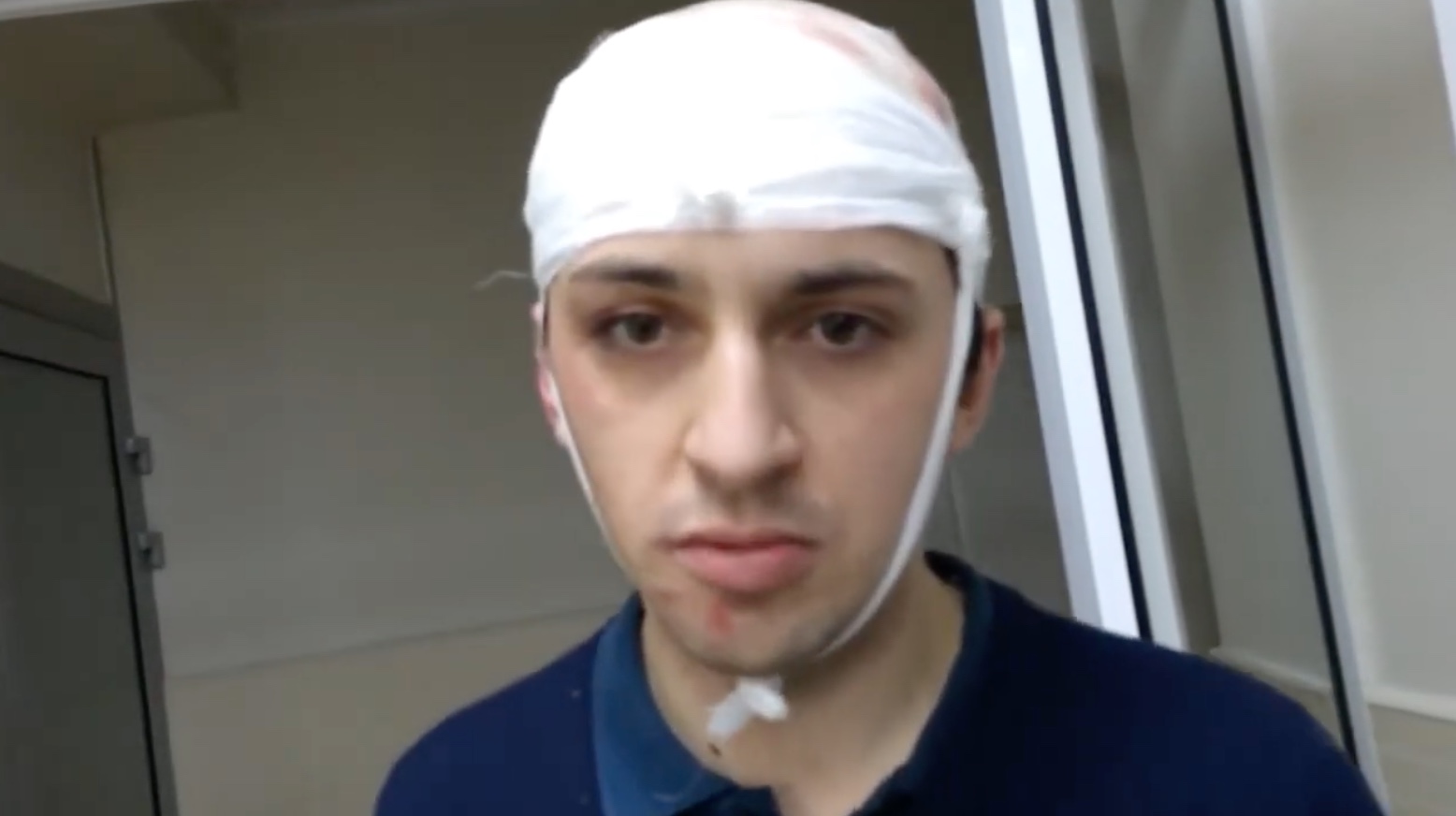
Kramatorsk. A cozy café. My interlocutor is 39-year-old Artem Zayarnyi. He was among those whom the separatists beat with metal rods in March 2014 on Lenin Square in Donetsk. That was when Dmytro Cherniavskyi died — the first victim of this war from Donbas. Artem got away with a traumatic brain injury. Then moved to Kyiv. But in the spring of 2022, he returned again to his home region. First as a volunteer medic, and then as a liaison officer in the 109th Brigade of the Donetsk Territorial Defense. At the time this conversation was recorded, he was already the head of the brigade’s electronic warfare service, awaiting a new appointment…
— Artem, how did you see the future of Donbas after 13 March 2014?
— Honestly, I wasn’t thinking about the future then. I was simply doing what I believed was right at that moment. We understood that Donetsk is Ukraine, so we joined pro-Ukrainian rallies. Although there were plenty of people saying, “Go back to your Uzhhorod and do all that there…” (rallies for Ukraine — ed.).
— Why were they saying that? Especially to you, a native of Donetsk?
— Because back then those people associated everything happening with Yanukovych. They thought that “the people from western oblasts of Ukraine” overthrew the government in Kyiv, “and came there to impose their rules”. They believed — and were told — that Maidan and Yanukovych’s removal were a “coup” by Western Ukraine, which wanted to force its way of life on Donbas. So a defensive reflex kicked in, even though physically no one was actually threatening them. And back then there was this belief that “Donbas feeds Ukraine”, that it’s a very rich region while people live poorly because Kyiv takes everything…
— So the main motive behind pro-russian sentiment in Donbas in 2014, in your view, was economic?
— Apparently, yes. Well, I myself am from Donetsk. My grandparents are from the Luhansk oblast. And there, people from villages and small towns would all go to russia for work. They saw that pensions in russia were twice as high, earned their migrant-worker salaries there — higher than ours — and thought that it should be the same in Ukraine. Although, in any case, when you go abroad for work, you work much more than you would at home, and you save, cut yourself short in everything, just to bring back more. Very few people went to Europe for work. We know that people from other regions, especially western ones, went to Poland, to Western Europe in the same way. People go wherever is closer. For us — that was russia. And what’s very interesting is that after 2014, many of my acquaintances from my grandmother’s village moved to Europe, and now they live there and consider themselves quite successful. And those who used to go to russia say there’s no comparison at all between russia and the EU, which they used to oppose back then.
— Let’s return to today’s reality. How do you see the future of Donbas now?
— Of course, I would like to believe that russia will fall apart and that we will soon be able to regain control of the occupied territories. But we see the situation today: most of Donbas is occupied, an entire generation has already grown up raised on anti-Ukrainian propaganda. And even those pro-Ukrainian residents who left are unlikely to want to return. So it won’t be easy. I think it’s not a near-term prospect.
— So your hope for the liberation of Donbas is no longer tied to the war itself, but to the collapse of the russian federation?
— Right now, that scenario seems the most likely to me.
— And how did it seem to you back in 2022?
— In 2022, I remember us sitting in Avdiivka, near KHAZ (Avdiivka Coke and Chemical Plant — ed.), and I said: guys, here we are sitting here, but imagine: a year passes, two, you’re already 40 years old, and the war still isn’t over. And everyone went: ha-ha, that can’t happen… And now next summer I’ll turn 40. Back then it was impossible to believe the war would drag on this long.
— Today, the key position in negotiations with the Americans is the kremlin’s demand that our troops withdraw from territories in Donbas that russia hasn’t even captured yet. How do the military feel about such a possible development?
— I think that if, God forbid, that happens, it will be the maximum level of stupidity imaginable. I don’t believe that can happen. Pulling the military out of there means voluntarily giving up our territory. And what would change? The war will continue — only with unprepared positions and more of our people dying.
— That’s your personal opinion. But if such an order does come — the military will withdraw — what do you think will happen?
— Let’s start with the fact that the military are people of orders. So they will do what they’re told. You have to understand the mechanism of how an order is carried out. It doesn’t mean the General Staff will send something like “everyone leave your positions in the Donetsk oblast!” A combat order would come to our corps, for example. The corps sends it to the brigades. The brigades — to their battalions, the battalions — to their companies, and the company then relays it to its platoons. And the platoon commander says: we’re shifting our position from point A to point B. People pack up and leave. Meaning — any order will be carried out.
— And won’t the question arise as to what people died for if we just hand everything over to the enemy ourselves?
— It will. But only after the order is executed. Maybe some will be outraged, and some will actually feel relieved. But not for long. Because the war won’t end. The front will just shift. We’ll be preparing new positions. The russians will occupy our fortifications, our dugouts, everything we built, and they’ll keep going.
— You’ve been in Avdiivka, Pokrovsk since 2022, and now — Kramatorsk. So you more or less understand the mood of the locals. How will they react if our military simply leave and hand them over to the enemy?
— Many people have left the frontline cities. That is, you can’t get a representative slice of residents’ opinions in, for example, Kramatorsk, because very few locals remain there. Those who stayed are people who, for various reasons, cannot leave. And I’m not talking about those who “wait for russia”. I mean people who support Ukraine, but circumstances keep them there… However, it’s important to understand that a servicemember doesn’t “leave behind” a civilian. He follows an order and moves from point A to point B. Although, in practice — yes, this would lead to leaving people, property, land…
— Alright, and wouldn’t such a step undermine the people’s trust in our army? Wouldn’t it cause division in Ukrainian society?
— I don’t think the military could be blamed in such a case. One thing is when people abandon their positions on their own, and another is when they are following an order. The decision will be made by politicians, not the military. But again — I don’t believe this could happen at all.
You also have to understand: when you’re at war, you don’t think globally. My relatives call me from abroad, and their main topics are negotiations with the USA, with russia, those 28 points of peace paln, Trump, putin… But when you’re fighting, you know that today a russian sabotage group entered that village; here — we’re holding positions; here — a position hasn’t been mapped yet and drones can be launched from it; and here — we were pushed out today… You’re deeply immersed in your own local area. Any global agreements are barely discussed. For example, Yermak resigned. Well, someone made a joke about Yermak joining the army — and that’s it, nobody even talks about it. In the army, people focus on other things, on their local zones of responsibility.
— In your opinion, did our humanitarian policy — language, faith, the so-called “Banderization” — affect the local population’s loyalty to the state?
— I don’t think so. I know that in Kramatorsk you can walk into any café, and they will serve you in Ukrainian, people will place orders in Ukrainian. I don’t see a problem. No one forbids us from speaking russian.
— Well, and if, for example, we’re speaking russian now, and a “language patrol” like in Ivano-Frankivsk comes up and asks: why are you using “the occupier’s language”?
— If we’re just speaking russian in a private conversation — then they can get lost…
— Ok, let’s go back to the army. Can you name the top five main problems of the Armed Forces of Ukraine, in your view?
— First — there is a very big problem with personnel; we critically lack people. Second — even the people we do have are often used irrationally, not according to their skills. For example, in our EW unit we recently managed to attract quite a number of servicemembers from other brigades. Why? Because a guy arrives, I look at him — he’s smart, he likes EW, his eyes light up, and we do everything to keep him. But earlier he would go on assignment to other units, and they would just hand him a rifle and say: go chase drones. With us he can realize his potential much better, and we get much more benefit from him. So we try to use our people according to their skills and abilities. And this, I think, is one of the serious problems in the army — when an EW specialist or a pilot can be shoved into infantry. This, of course, depends on leadership. Fortunately, our commander understands the importance of this area, and we protect our EW specialists and pilots.
— For readers to understand: EW means electronic warfare. So you jam drones.
— Yes, we jam them and force them down. And by doing that we save our people’s lives and our equipment.
— What other problems are there?
— Many brigades still have issues with logistics and technical supplies. In our 109th Brigade things are pretty good in that regard. But in several other brigades, at least in the EW direction, there’s a shortage.
Another major problem for the Armed Forces is not exactly incompetence, but, let’s say — peculiar approaches of some commanders to managing their units. It’s clear that you can’t protect everyone and tell them: go hide in a dugout and stay quiet. But at the same time, you can take maximum measures to preserve the personnel.
— I was just about to ask: in our army, do they protect people at all?
— It’s a human factor. Everything depends on specific commanders.
— And do commanders bear responsibility for unjustified losses of personnel? Have there been such cases?
— Unfortunately — no. At least, I haven’t encountered a situation where someone would be held responsible. He can be held accountable for losing territory, for losing equipment, but not for losing personnel. Unless, of course, it’s some kind of negligence, like forming people up on the parade ground and then a missile hits…
Another problem is that people are exhausted. And if families see each other twice a year — that doesn’t add motivation to a servicemember. All he thinks about is how to keep his family safe.
— Earlier, gambling addiction was named as an issue. Soldiers were losing their salaries in online casinos…
— Yes, that happened. But now I don’t see that issue. At least in my environment, I haven’t encountered it anymore.
— And before, there were many alcoholics and drug users. Did it change?
— I don’t know why, but there really are far fewer now. Well, we had some — they abandoned their unit. Somehow they just filtered themselves out. Again, it happens that there is a unit, and then the commander receives an order to transfer a certain number of servicemembers to infantry, to the frontline. And naturally, the commander transfers those who are least valuable to him — meaning the same people with addictions…
Another problem is that the motivation of someone drafted in 2025 is much lower than the motivation of the guy who came voluntarily in 2022. I remember when I was going through the medical commission at the military enlistment office, I had a leg problem, and the representative told me: remove the bandage from your knee, otherwise they won’t take you into the army. And I removed the bandage so they would take me. And now the problem is the exact opposite.
— What is the overall quality of preparedness (both professional and motivational) of those being recruited now through coercive mobilization, those who come in through “I don’t want to”?
— Look, mostly no one wants to go to infantry, no one wants to go to the trenches. There are those who volunteer for it, but they’re few. Mostly everyone wants rear positions, less dangerous ones. But even if a guy ends up in a trench, and it turns out he knows how to make spreadsheets in Excel, then there’s a 95% chance he’ll be taken out of the trench very soon. Any qualification, any skill is valued. For example, now new reinforcements have arrived and we’re told we can take some people into our unit. We talk to them and choose based on intellectual qualities. Again — because this is EW, it’s intellectual work. We need people with a good head on their shoulders, especially with an engineering mindset. So everything depends on the specific person.
— What problem do you see for today’s servicemembers after they return to civilian life? Besides broken families and psychological trauma — is there anything else?
— A person comes into the army from civilian life, where they were professionally doing something. And those fields keep developing. Here, the person is focused on the war, and few have the time or discipline to also develop in their civilian specialty. So, in their civilian profession, soldiers stagnate. And that can become a serious problem for their reintegration after leaving the service.
— And how do soldiers feel about all these corruption scandals? No question that we’re fighting here, and those bastards are living it up there?
— As I said — we hardly discuss this here. It does cause emotions, of course, but not like back in civilian life. For example, my father lives abroad, and he calls me, outraged — corruption, this and that. It worries him, he lives with it. And I say: Dad, you’re living abroad! We’re fighting here and will manage somehow ourselves. He tells me — you should unite, gives advice on how to run the country… — Our task is different right now — we need to make sure we don’t lose this country.
— There are also corruption cases in the Donetsk oblast. And in connection with that, there’s a related but logical question: what’s going on with fortifications? They seem to be building them, but we constantly hear that people retreat into nowhere, to unprepared positions.
— They seem to be building them, and they should have been doing so for the past three years, but apparently not at the pace we expect.
— So, there is a problem with fortifications in Donbas?
— I can’t say exactly right now, but six months ago it definitely existed. It’s just that our direction, thank God, isn’t collapsing, and we don’t have to fall back to second or third lines, so I’m not aware.
— And in the midst of all these scandals, who do the military trust today?
— The military trust a good commander.
— So, politicians, all these Yermaks, Zelenskys, Poroshenkos…
— They’re far away. You can speculate about them — whether everyone in Kyiv is bad, or not. But they trust a good commander.
By Serhii Harmash, editor-in-chief of OstroV