
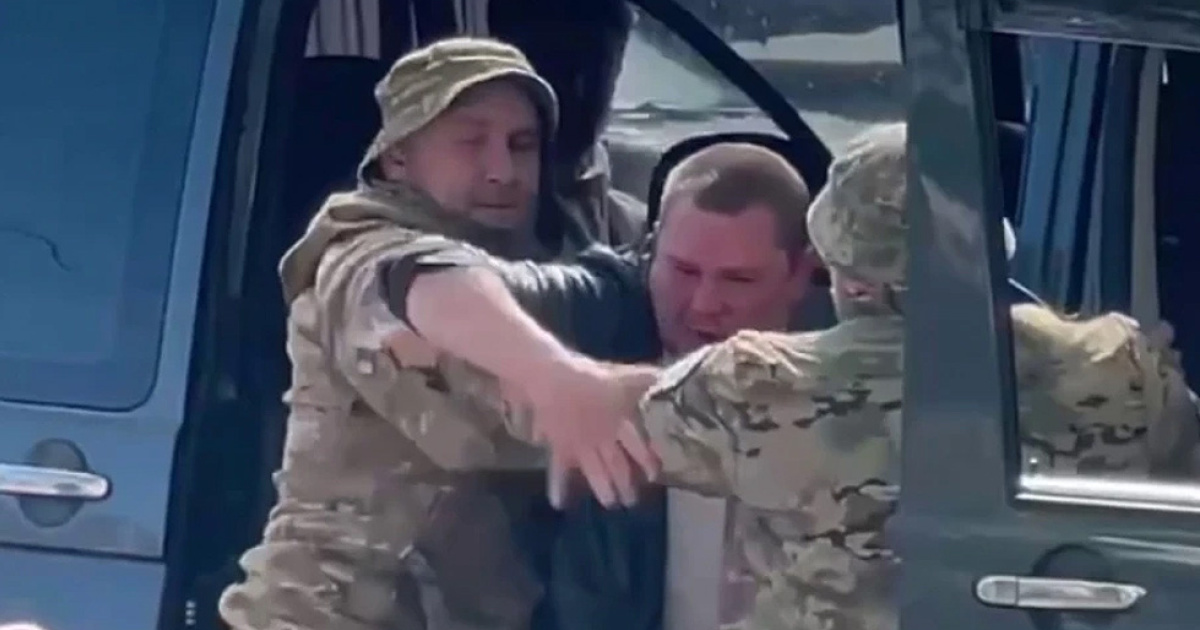
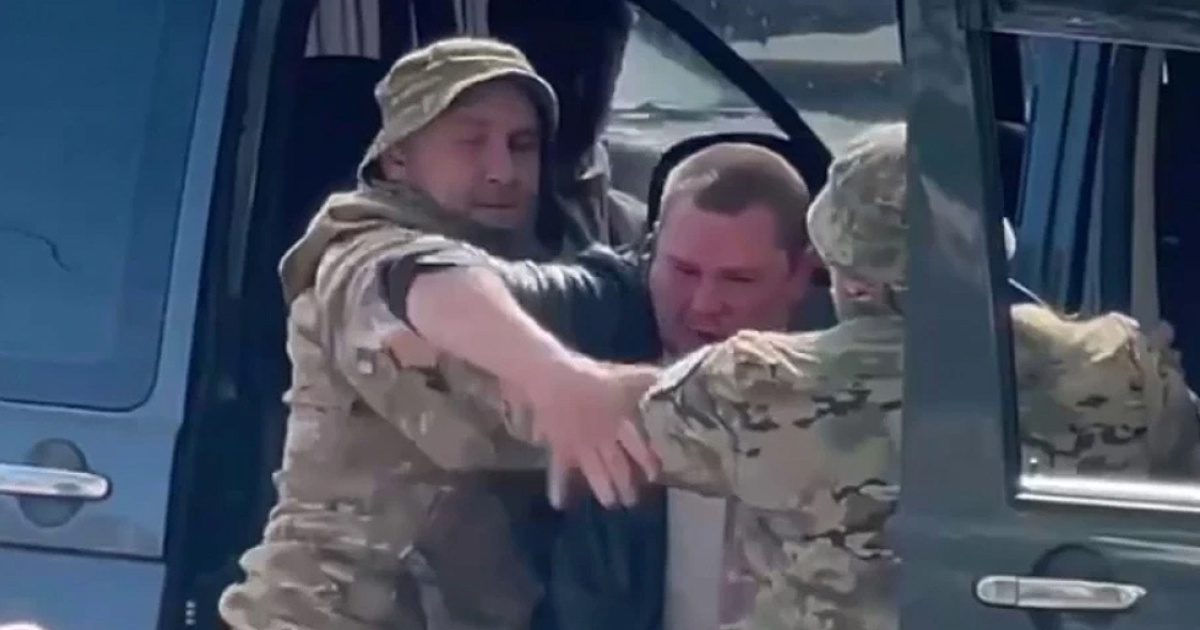
For more than two years, 35-year-old Oleksandr from Kyiv has hardly left his home due to fear of being mobilized. He is not proud of such behavior, but says that numerous videos of forceful actions by the Territorial Centers of Recruitment (TCR) “leave no choice”.
“About two years ago, I decided not to leave my apartment because of the fear of being mobilized on the street. During all this time, I only went out a few times to take a taxi to the dentist. Now life in Kyiv allows you to work from home, order food, clothes, medicines, and other things online with delivery to the apartment. In my social circle, this is a common practice. Some people go out only late in the evening for urgent matters, some do not go out at all. I know at least four people who have also chosen isolation instead of the fear of being mobilized. These are all young people from the IT sector who are not granted exemption. And it is very unfair that employees of McDonald’s or supermarkets automatically have exemption, while programmers who legally work, pay taxes, and donate do not have such an opportunity”, - he told OstroV.
He noted that with the arrival of former Minister of Digital Transformation Mykhailo Fedorov to the Ministry of Defense, he had expectations of positive changes in the approach to mobilization. But the latest news suggests that Oleksandr’s life in isolation may become at least more problematic.
The appointment of Mykhailo Fedorov as Minister of Defense became one of the most unexpected rotations during the full-scale war. A person without a military background, but with a reputation as the country’s chief “digitalizer”, received one of the most difficult areas — strengthening air defense, unmanned systems, and mobilization.
On the one hand, this choice looks logical: the state can no longer afford to work with mobilization resources “manually”. The old model with paper lists, uneven exemptions, dependence on the human factor, and corruption risks has exhausted itself. It provides neither the necessary speed, nor fairness, nor trust.
On the other hand, the new model associated with Fedorov raises no fewer questions. Digitalization means not only convenience, but also total tracking. Automation means not only reducing bureaucracy, but also minimal opportunities to avoid system decisions. And most importantly, it does not cancel mobilization as such, but only changes its form.
“This is not just a rotation, but a signal of a change in approaches. For the first time during the full-scale war, the Defense Ministry was headed by a person whose main competence is not military command, but the construction of digital systems. Innovative approaches are expected from him. And it is not certain that they will please those who systematically criticize current mobilization approaches. There is a well-founded opinion that many will recall with nostalgia the so-called ‘busification’, because theoretically it could be waited out at home”, - one of the MPs of the mono-majority told OstroV.
According to him, the new minister received a clear and at the same time contradictory task from the president — on the one hand, to eliminate forceful “busification” and thus reduce social tension, on the other — to ensure the replenishment of personnel. Fedorov has already spoken about increased recruitment of foreigners and higher payments for signing contracts, but the reform of mobilization will not be limited to this.
The new logic of mobilization
The appointment of the new Minister of Defense took place at a moment when the very model of mobilization in Ukraine had effectively reached a dead end. Over four years of full-scale war, the system has accumulated a critical number of problems — from outdated databases to uneven workload and widespread abuses. And these problems can no longer be solved with isolated measures. In fact, the minister himself directly acknowledges the scale of the challenge.
“We are currently working on a comprehensive reform of mobilization. We will propose a systemic solution to resolve problems accumulated over the years while preserving the country’s defense capability”, - Mykhailo Fedorov stated, effectively indicating that this is not about cosmetic changes, but a complete overhaul of the system.
The key difference of the new approach is the attempt to remove the human factor from the center of the process. Previously, mobilization largely depended on a specific TCR, a specific decision by an official, and a person’s ability to “resolve the issue”. This created inequality and corruption risks.
Now the focus is shifting to automation. Already today, part of the processes operates without human involvement. For example, the extension of deferments occurs through digital systems, and according to Minister Fedorov, “90% of deferments are extended automatically”.
Not long ago, this process “took weeks and required collecting documents”, but now the system itself verifies data through registries. This looks like a technical improvement, but in reality it changes the very philosophy of mobilization. If previously a person could influence their status through actions or contacts, now this status is determined by the system.
But even now the system “malfunctions”, and absurd situations arise. For example, recently Ukrainian journalist Yehor Lohinov said that in Ukraine any woman can be made liable for military service. At the same time, it will be impossible to be removed from the register. He gave the example of his own wife, who was entered into the military register system without her knowledge.
“Any woman in Ukraine can be made liable for military service bypassing all legal procedures, assigned a military medical commission that never actually took place, declared wanted, and fined. It turns out that women can be unlawfully registered, but not removed. There is no such law. That is, even after spending huge amounts of money on lawyers and court procedures, even in the case of a ruling in your favor — it still needs to be enforced”, - Lohinov said.
According to him, after his wife’s story became known in the media, other women with different education and professions contacted her, who had also been placed on the military register. He noted that at least 7 such cases are known.
“If you are preparing to make all women liable for military service, you should announce it officially. The country is at war, if it’s necessary, then it’s necessary. If not, help us figure out what the hell is going on?!” - the journalist noted.
New decisions
As several sources told OstroV, mobilization in Ukraine may soon move into a significantly stricter and more controlled phase. This is not about isolated targeted changes, but about an attempt to close several key “gray zones” at once.
First of all, the authorities plan to conduct a review of the exemption system.
“In simple terms, a large audit or review is being prepared to determine whether the real needs of the defense economy correspond to the number of people who currently have deferments. This is not being done just to look at the numbers, but to find additional resources. That is, it can be said with 100% certainty that we expect news about a reduction in those exempted. Who exactly will be affected is not entirely clear”, - a source from the Verkhovna Rada told OstroV.
The second major block of changes concerns those who have effectively fallen out of the military registration system. According to estimates, this involves hundreds of thousands, possibly up to around a million people who have not updated their data or avoid contact with the TCR. According to some media estimates, they are identified as a priority category for the state. It is expected that in the near future measures to establish their whereabouts and return them to the mobilization system will be intensified, in particular through the synchronization of state registries and digital identification tools.
In parallel with the mobilization reform, Ukraine is discussing a significant increase in pressure on those who avoid military registration or service. If previously the state relied mainly on administrative fines and criminal liability, now it is about a much broader set of restrictions that can directly affect everyday life.
The Ministry of Defense is considering a model in which “draft evaders” would effectively be integrated into a system of administrative sanctions similar to that applied to alimony debtors. This would mean not only legal liability, but also restrictions on basic opportunities: from blocking banking operations to banning access to loans and notarial actions.
Separately, restrictions on the right to operate vehicles are being discussed, which are already used as a tool of influence in other categories of cases. Access to state services may also be complicated — from processing documents to obtaining administrative services. In practical terms, this means that a person is not formally deprived of rights, but in reality faces the inability to fully function within the system.
“This approach reflects a general shift in logic: the state is gradually moving from physical coercion to administrative and digital pressure. If earlier the key tools were summonses and the work of TCR ‘on the ground’, now the focus is on the integration of registries and the ability to influence a person through their interaction with the state. And this will greatly affect those who want to simply sit it out at home. Because it is one thing to stay at home, receive a salary and all services, and quite another when everything is blocked”, - a source in the president’s team explained to OstroV.
That is why the Ministry of Defense plans to bring this draft decision specifically for discussion in the Verkhovna Rada in order to share responsibility and possible backlash, says a source in the mono-majority.
“How much chance is there for the law to be adopted in parliament in the form in which it is currently being leaked to the media with blocking of accounts and driver’s licenses? Almost zero. Right now, the Verkhovna Rada cannot vote for truly important and necessary laws, and you are talking about such controversial things. A long time ago, they already tried to introduce this, but deputies categorically did not support it. Now it will be the same. Therefore, there will either be strong compromises, or the decision will be made at the Cabinet of Ministers level”, - a member of parliament from the mono-majority told OstroV on condition of anonymity.
MP Heorhii Mazurashu does not mince words and says that Defense Minister Fedorov will try to replace street “busification” with a digital one.
“We have already heard some announcements: everything needs to be shut down, bank accounts for AWOL servicemen and for ‘draft evaders’ need to be blocked so that they, roughly speaking, only have three choices: serving, going to prison, or, if someone manages, trying to flee the country”, - he said.
AWOL
The problem of those who are absent without official leave (AWOL) in 2025–2026 has become one of the key issues for the Ukrainian army, and at the same time one of the most difficult to resolve. According to estimates by the Ministry of Defense, this concerns hundreds of thousands of cases. According to information from OstroV, separate decisions are being prepared regarding AWOL aimed at significantly increasing responsibility.
“At first, the authorities tried the ‘carrot’ method and allowed AWOL servicemen to return to service within certain timeframes. But in reality, this method did not work; it began to be used by military personnel to transfer to another unit. The numbers of AWOL cases are growing very quickly, it is no longer 200 thousand, but much more. There are instructions on social media on how to quickly and painlessly go AWOL. This is not normal. Therefore, now there will be the ‘stick’ method. No one reliably knows how this will be fought right now, but there are rumors and leaks”, - a source from OstroV in the president’s team noted.
One of the directions is the introduction of stricter administrative restrictions. This includes, in particular, blocking banking operations, banning access to loans and notarial actions, restricting the right to drive a car, as well as complicating access to state services. Again, a model is proposed in which AWOL servicemen may be equated with alimony debtors — with a similar set of sanctions.
MP and member of the committee on national security, defense and intelligence Vadym Ivchenko partially confirms this information.
“There must be a system of punishment for AWOL and, among others, for ‘draft evaders’. Because it is impossible to reduce AWOL when you are not punishing this. In our country, alimony debtors who do not pay for their children have six different types of punishment. Their accounts are blocked, they are not given loans, and so on. If AWOL servicemen are ‘joined’ to alimony debtors — this is also one of the reasons not to go AWOL, because you incur obligations, criminal liability, and certain restrictions. You cannot live like a normal person: use a car, a driver’s license”, - he said.
At the same time, along with strengthening responsibility, the authorities are trying to build mechanisms for return. As of 2026, a serviceman can voluntarily declare the intention to return, after which their situation is considered within an official procedure involving command and, if necessary, a court. Under certain conditions, even exemption from criminal liability is possible. However, in practice, this process remains complex and bureaucratic, which also discourages some people from returning. In addition, the system is currently structured as follows: at the moment there are two ways to be reinstated in service. The first is simplified, but without the possibility to choose a unit. The second is through a court decision: it allows returning to a desired unit, however it is longer and more complicated.
In the Verkhovna Rada, they are reluctant to talk about strengthening responsibility for AWOL. They want to first see a broader strategy from the Ministry of Defense that would take into account the causes of AWOL.
“That is why I do not even want to enter into a discussion about alimony… There must be logic, breakdown and categorization of people: why they went AWOL, in what condition, what year they have been serving. This must be a global approach”, - explains this logic member of the defense committee of the Verkhovna Rada Solomiia Bobrovska.
This implies the collection and analysis of data, understanding the motives behind AWOL, and dividing cases — from those who left their unit due to exhaustion to those who are deliberately evading.
In a broader context, the AWOL problem is already being integrated into the overall mobilization reform. According to the Minister of Defense, the “comprehensive plan” foresees not only strengthening control, but also searching for additional sources to replenish the army, in particular through more active recruitment of foreigners.
“Our comprehensive plan to address the problems of AWOL and mobilization includes certain decisions on how to ensure that there are more foreigners in Ukraine”, - the minister emphasized.
Military expert and former spokesperson of the General Staff of the Armed Forces of Ukraine Vladyslav Selezniov believes that this can only partially improve the situation.
“As a rule, there are no random people who express a desire to fight on Ukraine’s side, because there is a certain selection process for foreigners willing to take up arms. Therefore, this option may work. The search for alternative ways to replenish units and personnel is always welcome. Credit must be given to Defense Minister Fedorov. He is a technocrat who seeks rational solutions to improve the effectiveness of the Ukrainian army.
If the option with servicemen — citizens of other countries — works, it will be great news. But the further it goes, the more this war takes on the features of a fourth-generation war, where instead of people, drone and unmanned systems increasingly operate, demonstrating an extremely high level of effectiveness”, - he noted to OstroV.
Meanwhile, while the Ministry of Defense is working on the reform, more and more reports are appearing on social media that in recent weeks in the capital there has been a significant intensification of mobilization measures, sometimes under the slogan of searching for AWOL servicemen.
“Morning, Kyiv, the Podilskyi district. Representatives of the TCR together with police are conducting searches — as I was told, they are searching for AWOL. A strange fact as I was sure that the TCR definitely should not be dealing with AWOL, as this is more a matter for the Military Law Enforcement Service. Almost everything was normal, but those balaclavas on the faces of people with signs of military uniform (only one serviceman had full insignia) do not give me peace of mind. I have once again drawn some conclusions for myself, I will now work through official inquiries”, - MP Oleksandr Fedienko reported.
At the same time, an employee of one of the TCRs in the Kyiv oblast told OstroV that in spring mobilization measures “on the streets” were indeed intensified, but this is explained by improved weather, not by “any additional requests from the military”.
“A plan is a plan, it does not change, only the methods are constantly changing and improving. Now we have indeed gone out onto the streets in greater numbers (compared to winter), particularly in the region and the capital, but everything is happening within the law. There will be no raids that are being feared on social media; in the coming months everything will proceed the same as before”, - he noted.
By Andrii Andrieiev, OstroV