
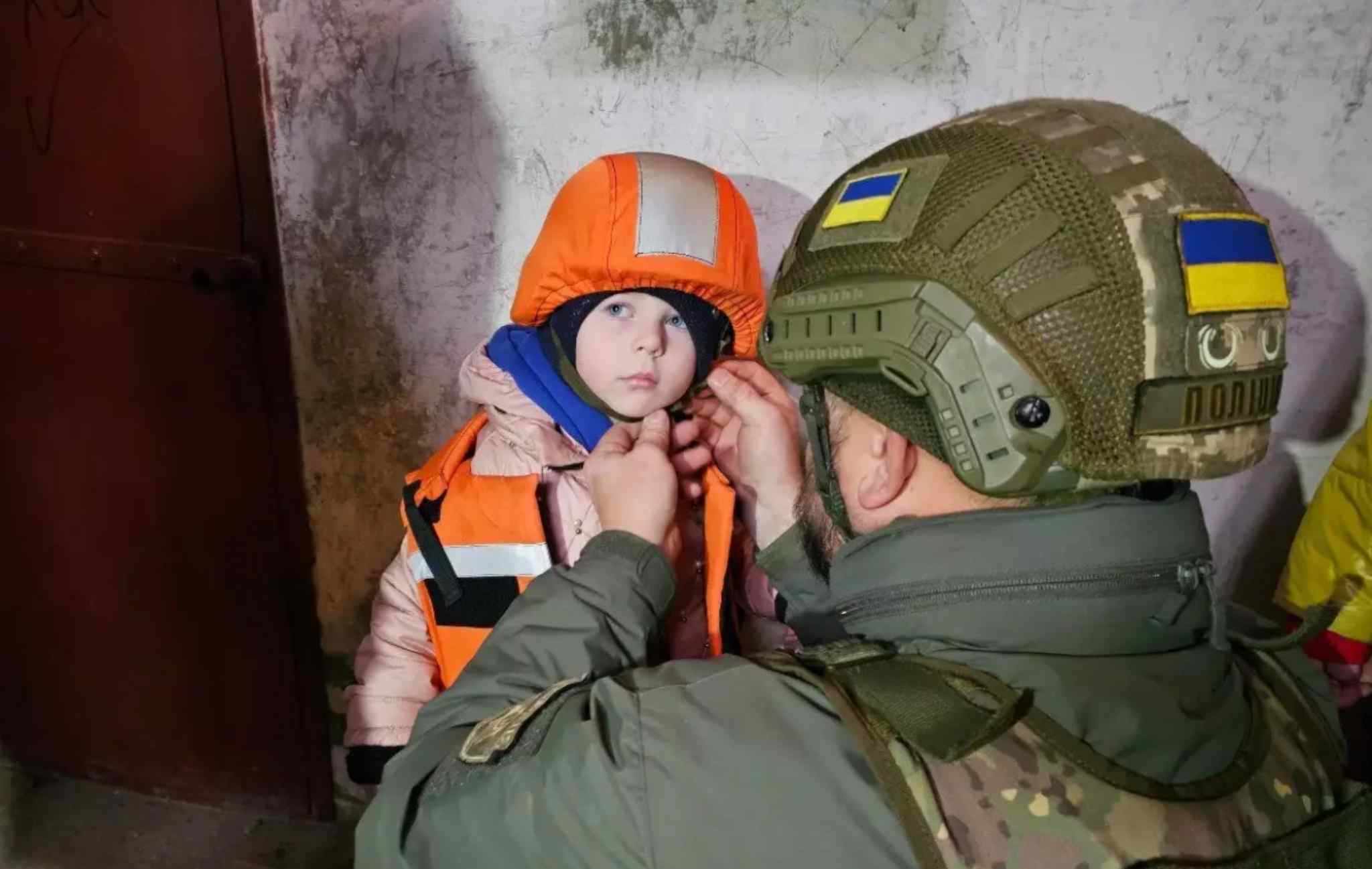

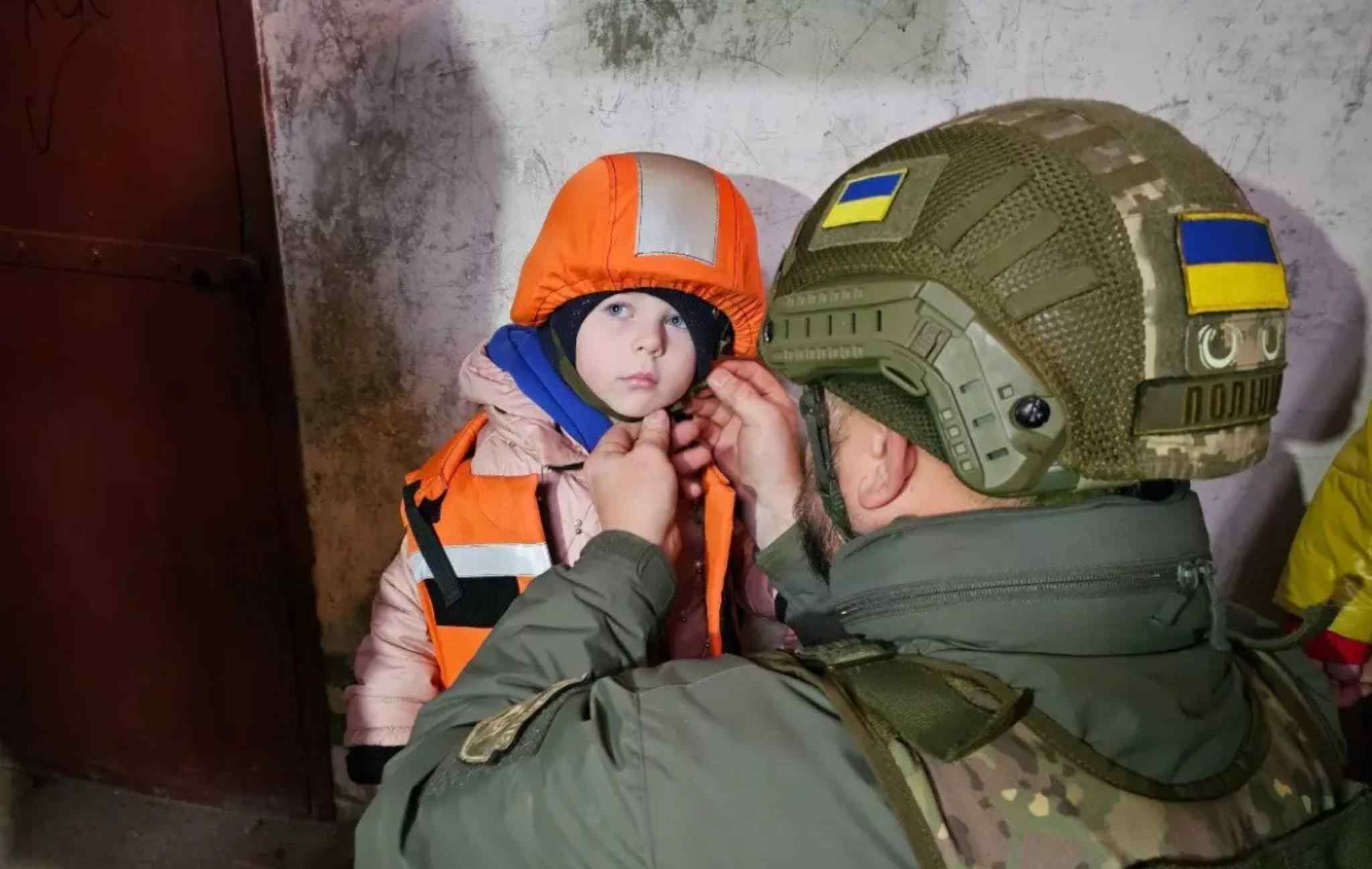
The new law on the mandatory evacuation of the population from combat zones has become one of the most high-profile decisions of the Ukrainian parliament in recent times. The document allows the state to forcibly evacuate children from dangerous areas even without the consent of their parents.
At the same time, human rights defenders warn: the provisions of the law effectively legalize the removal of children from their parents without proper judicial oversight.
What the new law is about
In many frontline settlements, especially in the Donetsk and Kharkiv oblasts, civilians continue to remain despite regular shelling. Among them are hundreds of children. Local authorities have repeatedly announced mandatory evacuation. However, in many cases families refused to leave. Before the adoption of the new law, the state effectively did not have a clear mechanism for how to act in such situations.
In early March 2026, President Volodymyr Zelensky signed law No. 4779-IX regarding the regulation of the issue of conducting mandatory evacuation.
The document defines the procedure for evacuating the population from settlements located in areas of active and possible military (combat) operations, the conditions for accommodation and support of evacuated persons, as well as specific rules for protecting children in such conditions.
It is stipulated that the evacuation of the population, material and cultural assets is carried out by decision of the Cabinet of Ministers of Ukraine or the relevant oblast and Kyiv City Military Administration, usually upon the proposal of the military command.
But the most controversial point is the forced evacuation of children even without the consent of their parents.
“Essentially, this means that the National Police of Ukraine, without the participation of guardianship authorities, may take a child from a settlement where active hostilities are taking place if the adults — parents or other legal representatives who live with the child — refuse to evacuate. The law states that this can be done by coercive means, however it is not yet clear what exactly is meant by such means”, - said the advocacy director of the ZMINA Human Rights Center, Aliona Luniova, in a comment to OstroV.
Before this law, the “evacuation of a child by coercive means” also existed. It appeared in a government resolution about two years ago. It stipulated that guardianship and trusteeship authorities could, in the event of a mandatory evacuation being declared, require the evacuation of a child together with one of the parents. In other words, the wording was similar, but the procedure was different. It did not provide for the removal of a child from the parents. It meant that the relevant authorities could compel one of the parents to evacuate together with the child. Thus, the concept itself existed, but the mechanism was completely different.
At the same time, the human rights defender emphasizes that not only children but also adults may be evacuated from settlements that are designated as areas where military evacuation is being carried out.
“In fact, this concerns all residents. It is not explicitly stated that this will occur by force, however the law states that in settlements where active hostilities continue, such evacuation may be mandatory. After it is carried out, the settlement may be closed to entry. That is, the military command now receives the right to close such settlements. This became possible thanks to amendments made to the law on martial law”, - she explained to OstroV.
Despite the fact that the main discussion is currently focused on the forced evacuation of children, the law also introduces other changes. In particular, to the Family Code of Ukraine, which provide a new ground for removing a child — failure to ensure the protection of their life and health.
“This concerns not only cases of refusal to evacuate. The norm may also be applied in other situations. For example, if parents do not go with the child to a bomb shelter or leave the child alone at home. Theoretically, this may be interpreted as failure to ensure the child’s safety and become grounds for removing the child”, - she said.
Now the process of evacuating civilians, or the so-called military evacuation, may involve not only the National Police of Ukraine, which previously participated in this process, but also the Military Law Enforcement Service of the Armed Forces of Ukraine.
“How exactly they will operate and what the format of their participation will be is still unclear. But the very fact of their involvement means that the military may take part in the evacuation of all categories of the civilian population.
And this is not the best situation. First, the military has combat tasks and they work significantly less with the civilian population. Second, their involvement in such processes may mean a different approach to communication with people than the one civilians are accustomed to when the police are working.
In addition, the general position of the military is that civilians should not remain in frontline settlements. They proposed the relevant changes, however other state authorities opposed them. In particular, the National Police of Ukraine was against it, because the main burden of forced evacuation would fall on it, and it does not have the necessary forces and resources.
At the same time, in the current version of the law it gives the impression that mandatory evacuation may in fact apply to the entire civilian population in those settlements that the military determine to be subject to evacuation”, - explained Aliona Luniova.
The decision to conduct mandatory evacuation is made by the oblast and Kyiv City Military Administration at the proposal of the military command in the respective territory.
At the same time, mandatory evacuation may be either general or partial — for specific categories of the population who, due to age or health conditions, are unable to independently take measures to preserve their life or health, including children, persons with disabilities, and elderly people.
The law contains provisions on the accommodation and life support of the evacuated population, as well as on the evacuation of material and cultural assets. According to the law, evacuated citizens have the right to temporary housing from residential funds.
The law has already entered into force, but the mechanism for its practical implementation must be developed by the Cabinet of Ministers of Ukraine. Three months have been allocated for this.
“That is, theoretically it can be said that it may already be applied now. The absence of subordinate regulatory acts formally is not grounds for not applying certain provisions of the law. For example, the military may already restrict freedom of movement and prohibit entry into or exit from settlements.
As for the forced evacuation of children specifically, it is likely that they will still wait for subordinate acts. It is necessary to clearly understand to whom exactly the National Police of Ukraine transfers the child after they have been evacuated. In addition, I hope that they will still define what exactly is meant by coercion. Because, as we have already said, the definition of coercion is very important, and not only we but also other experts have spoken about this.
At the same time, it can be said that people in frontline areas already know about the existence of this law and are already expressing concern. Those who had already planned to leave are now frightened — they are afraid that someone may come and take away their children by force. And this, unfortunately, does not contribute to people preparing for evacuation and wanting to leave”, - noted the advocacy director of the ZMINA Human Rights Center.
Criticism
First of all, criticism of the new law comes down to the fact that conditions are being created for unjustified separation of families. As human rights defenders note, the legal structure of the document effectively links refusal to evacuate or the inability to accompany a child with the consequence of further loss of parental rights.
“Forced evacuation of children should primarily be carried out as the evacuation of a family, not as the separate relocation of a child without their parents”, - they state in an appeal to the president.
In addition, they draw attention to the fact that during mandatory evacuation carried out by coercive means, officers of the National Police of Ukraine will have the right to apply coercive measures provided for by law.
“It is unclear how the police will interpret this provision. After all, there is the law ‘On the National Police’, which includes the list of coercive measures — physical force, special means, etc. Whether it will be about exactly such measures or other mechanisms is still difficult to say. When it is said that evacuation will be carried out ‘by coercive means’, it is very important to clearly specify what exactly is meant by such coercion.
For example, special means cannot be used against minors, but they can be used against adults. And we can model a situation: the police arrive in a settlement where a family with children lives. The officers try to take the child, but the parents do not give them up. What does the police do? Do they use force? Will they fight with the parents? Use special means? What exactly will happen? This is not specified in the law.
We analyzed the transcripts of the committee meetings, and there, in response to a direct question about whether force would be used against adults, representatives of the police answered that, in general, the law allows it. That is, it is still not entirely clear to whom exactly and how this coercion will be applied. The law does not currently explain this”, - noted the advocacy director of the ZMINA Human Rights Center, Aliona Luniova, in a comment to OstroV.
Another issue that concerns human rights defenders is where the child will be sent after forced evacuation.
“After the child is taken from the family. If the parents or the people he lived with were against evacuation the child is transferred to guardianship and trusteeship authorities. If the parents do not appear and do not take the child back, they may be transferred to an institutional facility (orphanage or another institution where children are kept). This is not directly stated in the law, but it refers specifically to such institutions. After six months, guardianship and trusteeship authorities may initiate a procedure to deprive the parents of parental rights”, - says Luniova.
Issues
Human rights organizations emphasize that they are not opponents of evacuation.
“It is important to emphasize: we are not opponents of evacuation as such. We are not against mandatory or even forced evacuation either. The problem is that the law that was adopted contains so many gaps and unresolved issues that they will probably not be eliminated by subordinate regulatory acts”, - the advocacy director of the ZMINA Human Rights Center noted to OstroV.
The law largely appeared due to a strong demand from the military for settlements to be cleared of civilians. In other words, the idea is that civilians should not interfere with the work of the military. For example, groups of russian saboteurs may infiltrate a settlement, change into civilian clothes, and remain there. Such situations are possible precisely when there is a civilian population in the city. Therefore, the military continues to insist on limiting the presence of civilians in certain settlements.
At the same time, Aliona Luniova suggests looking at the evacuation problem more broadly.
“When we talk about evacuation, we need to understand why people are not leaving. Our position is that people often do not evacuate not because they do not love their children or want to die. There are many cases when people left and then returned to dangerous settlements. This happened because they did not receive sufficient support, did not have the opportunity to live in a new place, could not rent housing, and so on. The problem was not a lack of willingness to save their children’s lives”, - the human rights defender believes.
In other words, the issue concerns uncertainty about exactly where people will be taken and what will happen next, and this may lead to families simply starting to hide their children.
Instead of explaining to people where they are going, providing them with support and at least temporary housing, the state introduces coercion that will not solve the problem of unwillingness to leave. It may only aggravate it.
“We do not know whether families will resist, whether they will hide their children, or simply open the door. It is also unclear what the police will do if the house is closed and there is information that children are inside. Will they break down doors? Will they enter the home?
I understand that the police do not need this. The police, in particular the juvenile police, spent a long time building trust with the civilian population. But when they receive powers of coercion, this trust can easily be destroyed. People with whom there were previously agreements to leave may simply refuse to evacuate”, - says Aliona Luniova.
This is precisely why many questions arise specifically about the text of the law, rather than about the idea of evacuation itself.
The state must create conditions under which people will want to leave, human rights defenders emphasize. It is necessary to give them an understanding of where they are being taken, guarantee that they will not be left at the nearest railway station, and provide social support and assistance to families with children. If this is not done, the problem that the law is trying to solve will not disappear. People will continue to hide and refuse to leave unless the main causes of this are eliminated.
At the same time, the advocacy director of the ZMINA Human Rights Center acknowledges that the motivation to continue living on the front line can vary.
“Recently there was a public case: a family had already been evacuated by coercive means — the children together with their mother. But they returned to the father in the frontline zone because he did not want to be mobilized. They stayed there to live, and later a shell hit the house: the father died, the children were injured, and the mother suffered severe injuries.
This example is often cited as an argument in favor of mandatory evacuation. But at the same time it is not mentioned that this family had already been mandatorily evacuated. Instead, disorder, the lack of work, and the absence of support led to the fact that the people returned. And, unfortunately, such cases do occur. It is impossible to solve the problem of people refusing to leave with simple prohibitions. That is mainly what we are talking about”, - she said.
Another approach
The approach to evacuating families with children should be based on a system of support and a more individualized approach, human rights defenders emphasize.
“If the state decides on mandatory or forced evacuation, it must assume significantly greater obligations for arranging people’s lives. And this concerns not only children and families. For example, if a family with children does not leave because they have a grandmother who is bedridden, then the issue of her placement must also be resolved”, - noted Luniova.
According to her, this does not concern a large number of such families — most likely it is dozens or, at most, up to a hundred.
“Therefore, there must be an assessment of the needs of each family: what they need and why they are not leaving. There should be an information campaign, explanatory work and, most importantly, real arrangements for the family after departure. The state must think in terms of the family as a whole, rather than simply taking children away. The issue should be about evacuating the entire family.
What happens otherwise? The children are evacuated, but the parents remain with an elderly bedridden relative. Does this mean the state does not care about these people? It turns out that we saved the children, but the adults can die? And as a result, the child will become an orphan and will grow up in an institutional facility. Is this really a state approach? That is why we need to talk specifically about evacuating families and creating conditions so that after leaving people feel supported”, - she explained.
It is also important how exactly the evacuation process is organized. It cannot be announced at the last moment, when all residents already want to leave because hostilities have effectively approached the settlement. Very often situations arise when shelling is already nearby, but the state still has not announced mandatory evacuation.
Such decisions must be planned in advance: finding places to accommodate families, organizing assistance for people who need outside care, people with disabilities, people with limited mobility, and so on.
All of this together should solve the problem of leaving frontline territories.
“Instead, the state has now chosen a different approach: to tell people that they will be forced to leave and will be prohibited from returning. But this is a complex problem, and it cannot be solved by such methods. The separation of families is an extreme way of interfering in a family.
The removal of children from their parents should occur only when there are clear grounds defined by law. Such grounds are already established in the legislation. Simply because a family, for various reasons, remains in a dangerous zone, a child cannot be taken away. It is necessary to work with the family and help it. This is very important”, - the human rights defender concluded.
By Vladyslav Bulatchik, OstroV