


Twelve years have passed since the occupation of Crimea. During this time, the peninsula has gone from loud promises of "integration and development" to a systemic crisis that manifests itself in everyday details: emergency power outages, water supply disruptions, fuel shortages, rising prices, and increasing militarization. Monitoring of local social networks, russian regional media, and statements by the occupation administration shows that the problems are not accidental but structural.
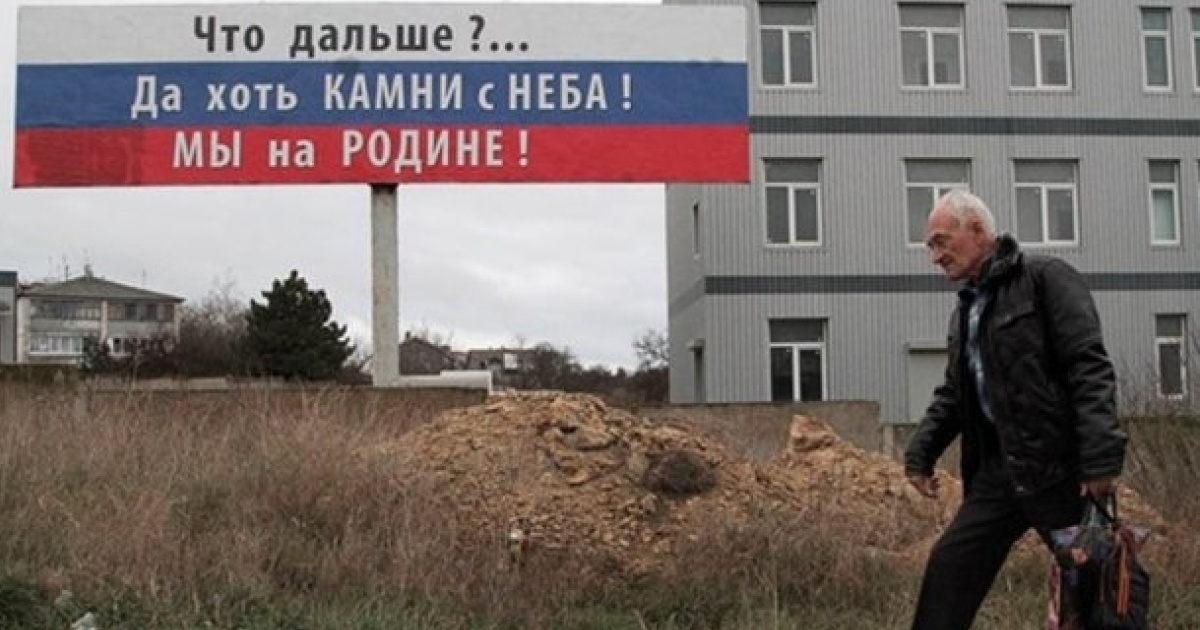
Twelve years ago, russians promised Crimean residents stability, economic development, high salaries, and cheap gasoline. Instead, the peninsula has effectively turned into a front line with unclear prospects for development.
Despite the fact that russia has done everything possible to make Crimean residents with pro-Ukrainian views leave the peninsula or change their opinions under the influence of propaganda, there are still those in Crimea who, if they do not expect Ukraine’s return, at least understand the extremely negative consequences of the russian occupation.
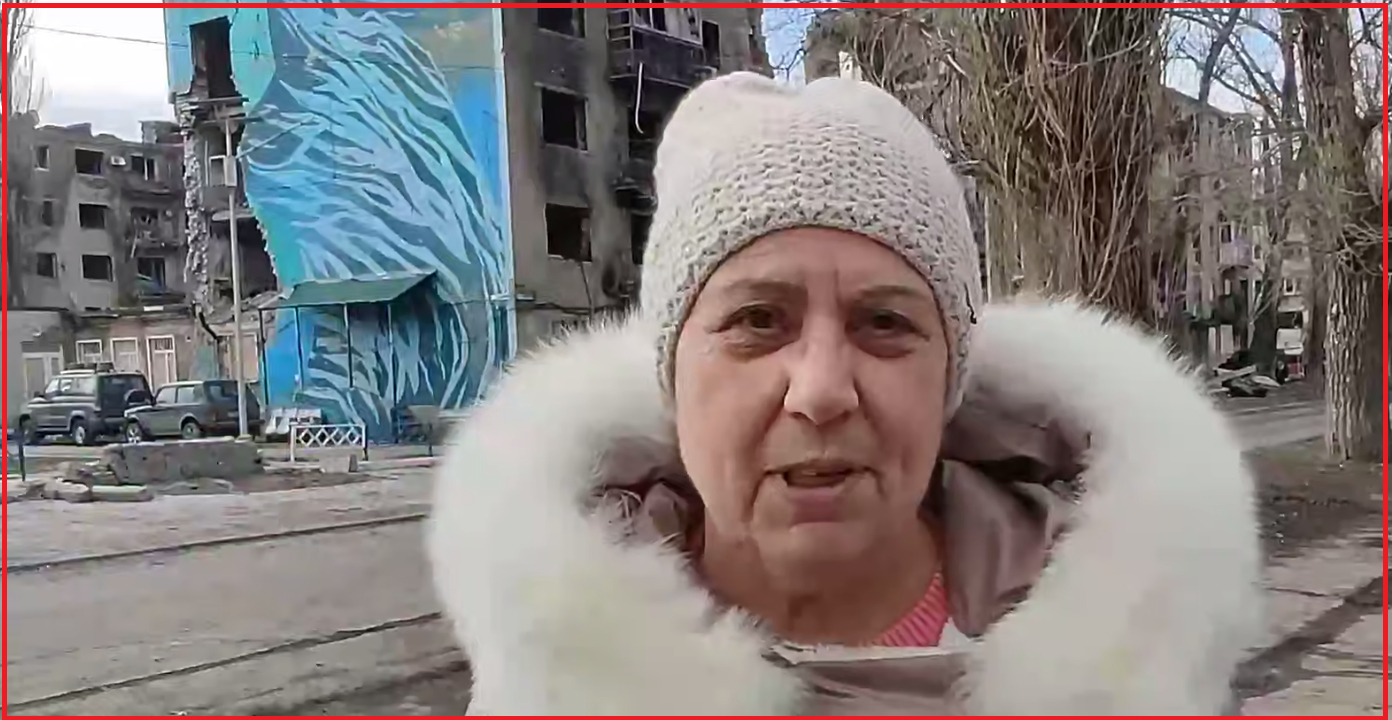
“Yes, russia illegally took Crimea in 2014, just as it is now doing with another territory of Ukraine. But this has already happened, and let’s be honest, no fair referendum or vote today would be on Ukraine’s side. Therefore, it is now very difficult to imagine that Ukrainian authority would be established here. My friends and I sometimes raise this topic in conversations. My friends are all reasonable people, none of them went to the ‘referendum’ 12 years ago, none invited putin, but none of them can imagine Ukrainian authority being established here. Everything here is already russian, including the new generation of children, and many russians who come here to live permanently. It’s sad, but it’s a fact, and we will have to live with it”, - Kateryna, a resident of Simferopol, told OstroV.
As for the present day for Crimean residents, they met the first day of spring 2026 with large-scale air raid alerts in almost all major cities, as well as power and water outages.
“So here we are. First, 12 years ago, we were told how Ukraine had robbed Crimea and about the ‘Banderites’, and we were promised economic prosperity and well-being. Then came sanctions and international isolation, problems with the tourism business, which supports a good portion of the locals, but we endured it all. With the start of the ‘special military operation’ we were told about improvements in the water supply situation, about a land corridor that would improve logistics on the peninsula. And what do we have as of the beginning of March 2026?
The economy is plunging into the abyss, prices are at moscow’s level, and decent salaries have long been forgotten, there are no flights, there is a shortage of doctors, and there is a staffing deficit in almost all public sectors. Several times a week air raid alerts are consistently heard, drones fly around as if they were at home, and no air defense stops them on approach, as we are told. Now problems with electricity have begun. For two days across all of Crimea we have been seeing outages, something like this has never happened before. As local military journalists write, first Ukraine spent several months taking out our air defense systems, and now it has taken on the substations. And ahead of us is at least some kind of tourist season, who will come here if there is no electricity? Young people are leaving for the mainland part of russia, pensioners and the military remain, and that is the entire “bright future” of the peninsula”, - Svitlana, a resident of Sevastopol, shared with OstroV.
The lights went out
In 2024–2026, Crimea regularly found itself in the zone of drone attacks. After strikes on substations and energy facilities, emergency outage schedules were introduced. The occupation enterprise "Krymenergo" repeatedly acknowledged in its reports “technological disruptions” and the need for emergency restoration work. But these outages were local and were canceled fairly quickly.
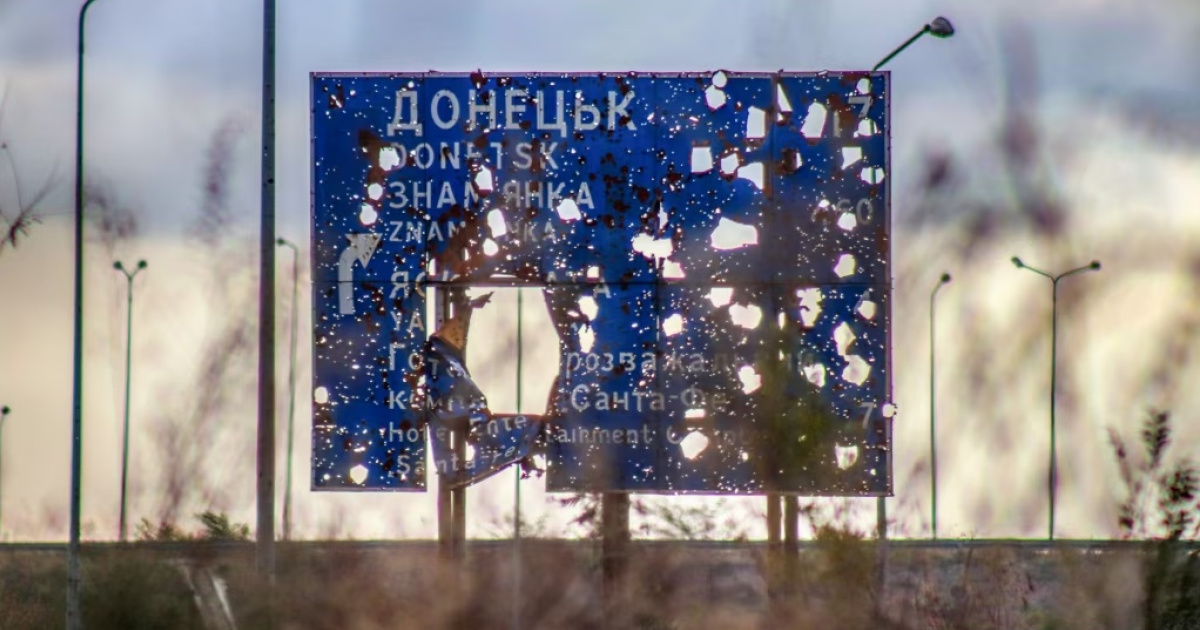
Everything changed on the night from March 1 to March 2, when loud explosions thundered across different parts of the peninsula for almost 20 hours, after which mass outages of electricity and water supply began.
Local social networks reported explosions and fires near energy facilities, as well as power disruptions in several districts of Simferopol, Sevastopol, Yevpatoria, and Feodosia. Official structures confirmed emergency outages but were in no hurry to explain the reasons.
In Sevastopol alone, the air raid alert on March 1 was declared four times and lasted almost the entire day.
The russian head of the city, Mikhail Razvozhaev, wrote on his Telegram channel: “There is a disruption in the electricity supply in Sevastopol. According to preliminary information, the cause is an emergency shutdown in the networks of the Crimean power system. Households in districts supplied with electricity from substations No. 6, 7, 15 have been disconnected. The following districts of the city of Sevastopol are without power: Balaklava, Kozacha Bay, Kamyshova Bay, Streletska Bay, Fiolent, the city center”.
Official media noted that the accident in the networks of the Crimean power system caused a large-scale power outage in Sevastopol and other cities. The “advisor to the head of Crimea”, Oleg Kryuchkov, reported on Telegram that the cause of the power outage in Crimea was an accident on the main power grids.
"It was very unexpected. Drones and missiles no longer surprise us, but before this they attacked almost only military targets, the explosions sounded outside the city, mainly in the area of the military airfield. But this time there were very many explosions, they were stretched out over time, after which the lights went out in almost the entire city. I live in the center of Sevastopol, and everything went out for us: both in the apartment and on the street. The electricity was restored after several hours, after which it was turned off again, and it was not there until morning. Everyone is silent about the real reason, it is simply said that there was an accident in the networks and that’s all", - Dmytro, a resident of Sevastopol, told OstroV.
According to several interlocutors, such long power outages have not yet occurred in Crimea.
"After some attacks the electricity disappeared for an hour or two, and even then only in some districts or even buildings. There had never been outages of such a scale", - noted Iryna, a resident of Yevpatoria.
In addition, in some districts of Sevastopol, Simferopol, and Feodosia the water supply disappeared for several hours.
It should be noted that the problem lies not only in the strikes themselves. The Crimean power system operates under conditions of isolation and sanctions. High-voltage transformers and components for substations are difficult to replace quickly. Russian media acknowledged that the restoration of large-scale equipment requires time and resources, and logistics through the Kerch Bridge remains vulnerable.
In addition, in recent months mobile internet has been increasingly shut down in Crimea.
"This can happen at any moment, it is difficult to predict. Recently I was walking in the park and wanted to call a taxi, but the mobile internet was not working. It’s good that now all services have started writing their phone numbers like in the old days, so at least you can call them. For young people this is very inconvenient, and this tension is felt. Especially when you realize that in moscow the internet is not shut down. It is we who suffer", - says Svitlana from Sevastopol.
Water and fuel
Until 2014, up to 80–85% of Crimea’s fresh water needs were supplied by the North Crimean Canal. With the beginning of the full-scale invasion, the occupation authorities happily reported that now the water problem would be solved. But after the destruction of the Kakhovka Hydroelectric Power Plant in 2023, the stability of this source effectively disappeared. International environmental reports stated that the water supply of the canal is significantly limited, and the consequences of the destruction of the hydraulic structure are long-term in nature.
The occupation administration claimed the drilling of new wells, desalination, the transfer of water from other regions, and the launch of additional pumping stations. But in many Crimean cities water is still supplied according to a schedule and not always of proper quality.
For example, in 2024–2025 water supply schedules were periodically introduced in Simferopol and the surrounding areas. Local media reported a drop in pressure in the network and accidents on water pipelines. On some days water was supplied for only a few hours.
"Water still sometimes flows in a thin stream. We run the washing machine at night when the pressure is a little higher. We have to buy bottled water for drinking. It has also become more expensive. But overall the situation is now stabilized. The same cannot be said about other cities. Our relatives in Alushta have a very tense situation with water, there are constant schedules there and they do not always work. My friends from Feodosia also say that almost every day they have some kind of emergency water shutdown for several hours or even a day", - says Kateryna from Simferopol.
At the beginning of 2026 the "Committee on Water Management and Land Reclamation of Crimea" stated that the total volume of filling of all reservoirs in occupied Crimea amounts to about 144 million cubic meters of water. The smallest water reserves are currently recorded in the reservoirs of the eastern part of Crimea, which supply residents of Kerch, Feodosia, and Sudak, the settlements of the Kerch district, as well as in the Izobilnenske Reservoir, which provides water supply for the population of Alushta.
"Under these conditions the indicated volumes are sufficient to ensure water supply for the population and economic facilities of the Crimean Peninsula on average for about 340 days without taking into account inflow into the reservoirs in the future period, in particular for the urban district of Alushta — for 132 days", - the occupiers reassured Crimean residents.
At the same time, expert of the Crimean Tatar Resource Center and dean of the Faculty of Natural Sciences at the National University of Kyiv-Mohyla Academy, Yevhen Khlobystov, noted that the drying up of the Izobilnenske Reservoir is being recorded in occupied Crimea, which indicates a critically low water level on the peninsula. The problem is systemic in nature and is caused by climate change, increased water consumption, and the absence of alternative water supply sources.
"Crimea will again effectively be divided into privileged and unprivileged districts. There will be no problems with water where the military-FSB political elite is based. All other territories of Crimea will suffer", - the expert noted.
After attacks on oil depots and refineries in russia in 2025–2026, Crimea faced disruptions in gasoline supplies. Russian regional media quoted the head of the occupation administration, Sergey Aksyonov, who acknowledged problems due to the "shutdown of certain plants and logistical difficulties".
At different periods restrictions were introduced on gasoline sales — up to 20 liters per person. Queues formed at gas stations. Local media published videos where cars stood in lines for several hours. In addition, the cost of fuel also rose sharply, which automatically pushed up the prices of products and services. Logistics through the Kerch Bridge, which is under increased security checks, complicates transportation. Shops explain the price increases by "transportation costs".
"The situation with fuel has improved a little now. There is no global shortage like there was six months ago. But from time to time messages appear in local chats that in one district or another fuel has run out or queues have formed. In addition, the price is constantly rising — not even a couple of weeks pass without the cost increasing by 1–1.5 rubles. There is no stability in this issue; today or tomorrow a shortage may occur again, because, as we see, attacks on oil refineries in russia do not stop, and this, to put it mildly, is not encouraging. In this context small businesses suffer greatly", - Dmytro, a resident of Sevastopol, told OstroV.
Tourism industry
Over twelve years the tourism industry in occupied Crimea has undergone several transformations: from a record decline at the beginning, a lull during the pandemic period, and a new rise after the start of russia’s full-scale war against Ukraine. Now official statistics are gradually approaching the pre-occupation figures.
In 2026 the tourism industry on the peninsula stands at a crossroads: official numbers speak of potential millions of visitors, but the infrastructure — power supply, water, transport, and services — is systematically degrading. The consequences are queues at the bridge, internet and electricity outages, rising prices, and dissatisfaction among local residents and visitors.
The occupation administration and regional media report 6–7 million visitors annually in 2024–2025 (according to different sources: about 6.06 million in 2024 and up to 6.9 million in 2025), but these figures hide key problems — declining service quality, the closure of beaches, and a shortage of basic resources. Part of the growth in the flow occurs due to organized bus tours and budget travel packages.
Rising taxes, inflation in fuel and logistics costs, as well as the increase of the ruble exchange rate in local markets have led to higher prices for services: the cost of hotels and rental housing has increased, and package tours for the mass russian tourist have become more expensive. This has already affected demand in certain categories: experts warn of a possible slowdown in growth in 2026 if infrastructure problems are not resolved.
"In 2026 the problems will remain the same and may intensify due to an energy crisis. The problems begin already on the road: people are stuck in traffic jams on the Kerch Bridge for hours, face train delays, and have no opportunity to arrive by plane at all. And once they are here, they experience disruptions with mobile internet and frequent air raid alerts, because of which vacationers have to look for bomb shelters.
But taking into account global politics and isolation, vacationing in Crimea still remains attractive for russians. Therefore, I do not expect that there will be fewer tourists this year. Serious problems will arise in the case of strong strikes on the energy sector, because few people will want to stay in a room without air conditioning and water", - a representative of one of the Crimean tour operators noted in a comment to OstroV.
At the same time local media, against the background of the war in Iran (which has affected resorts in the UAE popular among russians) have already begun cautiously optimistic calculations about an increase in tourists in 2026.
"First they stopped traveling to Europe, now Dubai and other Middle Eastern resorts are next in line. We expect an increase in tourists in Crimea this year, we are always glad to welcome new guests. The main thing is that everything develops and that money is invested so that there is no stagnation", - some users write.
Twelve years after the beginning of the occupation, Crimea is in a state of systemic crisis. Electricity disappears due to damage to energy infrastructure and a shortage of equipment. Water depends on an unstable energy network and the loss of the Dnipro water resource. Fuel is becoming more expensive because of strikes on oil refineries and complicated logistics, while food prices are rising due to isolation and military risks. Militarization is turning the peninsula into a permanent zone of tension.
Crimea lives in conditions of constant balancing between everyday difficulties and military reality, where every new attack can once again plunge cities into darkness.
By Andrii Andrieiev, journalist for OstroV