
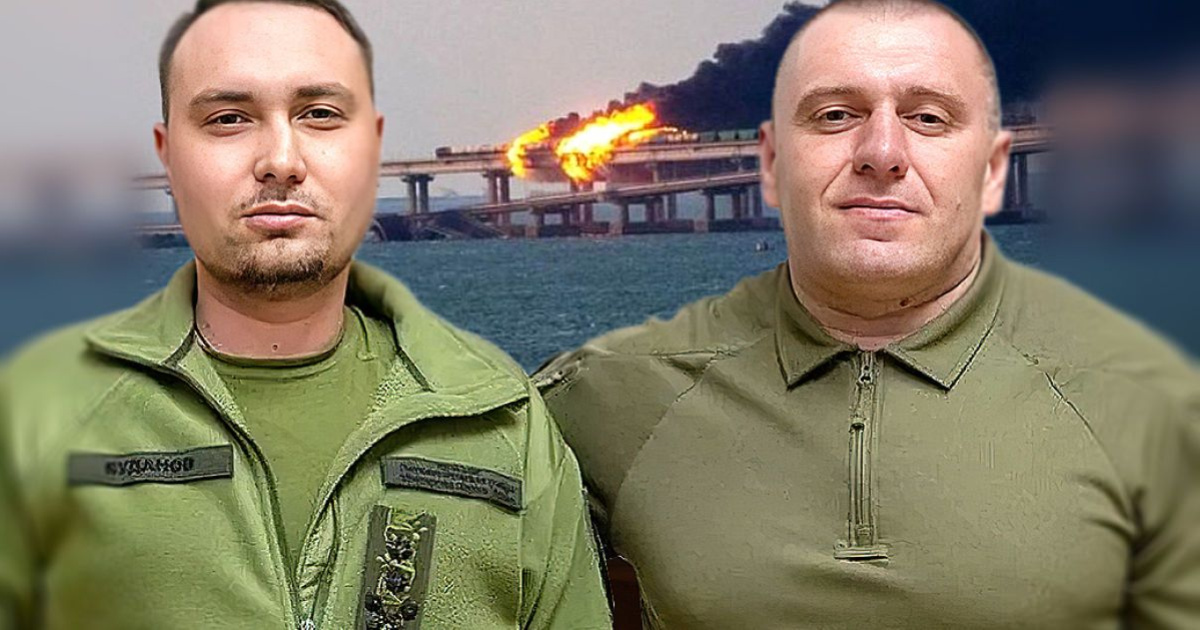
The latest wave of personnel decisions in Ukraine goes far beyond the usual rotation of officials. The replacement of the head of the Office of the President, the renewal of the top leadership of the Security Service of Ukraine, reshuffles in military and foreign intelligence, and new figures in the Ministry of Defense and the energy sector together form a new managerial configuration of the state.
“Zelensky has deployed the last, heavy artillery. He has no one else to rely on. That is precisely why these personnel decisions should be viewed not individually, but as a single package. They do not provide answers to all questions, but they clearly outline the direction in which the system of power is moving. And this direction increasingly resembles not a peacetime political process, but rather a model of rigid governance under conditions of long-term military strain. In fact, with these people he will go to the end; they can still be moved around, but there definitely won’t be any others. If, for example, Mykhailo Fedorov fails in the Ministry of Defense track, Zelensky will have no one left to appoint there — this is the highest level of trust”, - an MP from the mono-majority told OstroV on condition of anonymity.
Office of the President: the end of the Yermak era and a bet on power management
Yermak was not just the head of the apparatus — over the years of his work he turned the Office of the President into a key decision-making center that de facto coordinated the government, the parliamentary majority, the security services, and foreign policy.
His departure marks the end of an entire stage. Yermak was associated with a model of governance where the main tools were negotiations, international contacts, and hands-on political balancing. He was precisely the face of negotiation processes and backroom diplomacy in the broadest sense.
The appointment of Kyrylo Budanov to his position is a sharp break with this logic. For the first time in the entire history of independent Ukraine, the Office of the President has been headed by a sitting chief of military intelligence. This is not just a personnel decision — it is a change in the philosophy of governance.
“There is an opinion that the transition of such a person to the Office of the President means that it is increasingly turning into a wartime headquarters, where the main value is not political compromise, but the speed and toughness of decision-making. In the public space, it is said that this appointment indicates a loss of illusions about a quick end to the war. The state is moving into a mode of long-term confrontation, and the Office of the President is being adjusted precisely to this reality. In fact, everything may be just the opposite: Budanov has a very sober view of military matters, the situation at the front, the real capabilities of Ukraine and russia, he has a credit of trust and solid negotiating experience through the intelligence”, - one of the MPs told OstroV on condition of anonymity.
Political scientist Volodymyr Fesenko believes that from the standpoint of Volodymyr Zelensky’s interests, this is a fairly logical and quite strong step.
“This is a positive move in terms of image. The presidential headquarters will be headed by a hero of the war, a person with a predominantly positive reputation. This corresponds to the conditions of war, especially at its current stage. This is an authoritative and strong figure who controls one of the most powerful special services in the country. Most likely, this news has already unsettled both Zelensky’s opponents and some representatives of the presidential team who dreamed of strengthening their own influence. Perhaps this is also a certain counterbalance to the activity of the National Anti-Corruption Bureau around President Zelensky. This will be perceived not merely as a restoration, but even as a strengthening of President Zelensky’s influence within the system of power. Zelensky’s opponents were counting precisely on a significant weakening of his influence.
It is quite possible that under Budanov’s leadership, the Office of the President of Ukraine may informally and unofficially turn into the central military administration of Ukraine. But how this will affect both the Office itself and relations with other state institutions remains an open question”, - he believes.
At the same time, there is an opinion that in this way Zelensky is preparing a “comfortable successor” for himself who will not pursue him in the future. Moreover, in the corridors there is a directly opposite version — that in this way the head of state is neutralizing a potential competitor in the struggle for the post of President of Ukraine.
“This is all conspiracy theory. They say everything is much simpler. Zelensky offered Budanov this position a long time ago, but he hesitated and delayed his answer as much as possible. The latest anti-corruption scandals have shown that Yermak’s resignation is almost inevitable, so Zelensky’s pressure intensified, and Budanov simply could no longer refuse. They say Budanov was promised coordination of negotiations and access to the activities of the Main Intelligence Directorate”, - a source in the presidential team told OstroV.
According to political scientist Ihor Chalenko, the Office of the President is now returning to its constitutional role, and Zelensky has essentially demonstrated that the security bloc now works directly with him.
“Right now, a kind of informational ‘narrowing’ of the work of the presidential chancellery is taking place — with an emphasis on security, defense, and foreign policy. Under Yermak, the Office of the President effectively turned into a superstructure over the Cabinet of Ministers, concentrating almost all internal and external processes within itself. Now, this model is obviously being attempted to be changed”, - he told OstroV.
Volodymyr Zelensky himself has repeatedly emphasized that the main goal of the rotation is to strengthen the negotiation team and concentrate key security issues directly within the Office of the President. He explained that in the new format “the negotiation group together with the Secretary of the National Security and Defense Council fully work in the building of the Office of the President”, which is supposedly meant to ensure clearer coordination between the security and diplomatic tracks.
Security Service of Ukraine: change of leadership and reformatting of the vertical
Another element of the personnel package was the replacement of the head of the Security Service of Ukraine. Vasyl Maliuk left the post, which he had held since 2023. His tenure fell during a period of large-scale reforms of the Service, the purge of employees suspected of collaboration, and the active involvement of the Security Service of Ukraine in counterintelligence and special operations.
Maliuk himself emphasized that he remains within the Security Service of Ukraine system and intends to focus on a new area of work — the development of asymmetric operations involving strikes against strategic targets deep in the enemy’s rear. This idea was also supported by President Zelensky, who noted that Ukraine needs a number of effective special operations to strengthen its defensive capability.
Several Ostrov’s sources say that the decision to dismiss Maliuk was neither simple nor voluntary.
“He wanted to remain in the position. At a meeting with President Zelensky, Maliuk initially refused to write a resignation letter, arguing that he was at the final stage of several special operations that would fall apart without him. This, to put it mildly, outraged Zelensky, but he gave him time to think and leave voluntarily. And when an information campaign in support of Maliuk began, the pressure on him became much more serious”, - a source in the Verkhovna Rada noted.
At the same time, no one reliably knows the true reasons for Maliuk’s dismissal.
“This is the strangest dismissal. Some say it is revenge for Yermak, the Mindich story; others say it is a request from Kyrylo Budanov, because they have rather tense relations (not conflictual); still others say it is simply renewal for the sake of renewal. The most discussed version in the corridors is Maliuk’s excessively high media activity and his contacts with the Americans. No one will tell you what is the true reason. Only Volodymyr Zelensky knows that. Everything else is theories, guesses. Even MP Arakhamia could not explain it properly”, - the source noted.
According to Member of Parliament and secretary of the relevant Rada committee Roman Kostenko, even Maliuk himself officially does not know the full reason for his dismissal — he was not provided with specific arguments as to why exactly the president initiated the resignation.
A number of sources note that the president officially offered him alternative positions (for example, in the Foreign Intelligence Service or in the National Security and Defense Council), but these proposals were not accepted.
Acting head of the Security Service of Ukraine was appointed Yevhen Khmara, a career general of the Service who had previously worked in special operations units. The appointment took place without approval by the Verkhovna Rada, as required by law, therefore he currently holds the status of acting head.
According to the official biography, Yevhen Khmara has served within the structure of the Security Service of Ukraine for almost 15 years. At the beginning of russia’s full-scale invasion, he took part in combat operations to de-occupy the Kyiv oblast, and after the liberation of the region he was redeployed to the Donetsk direction.
“A basic appointment, a person with an impeccable reputation, but the main question is how he will work with the president, whether there will be a match”, - OstroV’s source in the presidential team noted.
Main Intelligence Directorate and Foreign Intelligence Service: an internal reshuffle of the intelligence community
The transition of Kyrylo Budanov to the Office of the President triggered another chain of appointments. Oleh Ivashchenko, who had previously headed the Foreign Intelligence Service of Ukraine, became the head of the Main Intelligence Directorate.
Oleh Ivashchenko is a career officer with many years of experience in the intelligence sector and military affairs, a lieutenant general of the Armed Forces of Ukraine. He worked for a long time within intelligence structures and gained a reputation as a systemic manager of special services.
Since 2015, he served as First Deputy Head of the Main Intelligence Directorate of the Ministry of Defense of Ukraine. He held this position until 2024, including under the leadership of Kyrylo Budanov. In 2024, he was appointed head of the Foreign Intelligence Service of Ukraine and included in the Staff of the Supreme Commander-in-Chief. He graduated from the National Defense Academy of Ukraine.
“It is interesting that earlier there were rumors that Yermak wanted to replace Budanov specifically with Ivashchenko, so the latter can conditionally be attributed to the quota of the former head of the Office of the President. But all this is conditional. Ivashchenko is not a politician, and he has no obvious conflicts with anyone. He started in the Main Intelligence Directorate and returned there. Essentially, nothing extraordinary”, - a source in the mono-majority noted.
At the same time, according to him, the prospect of appointing a new head of the Foreign Intelligence Service looks much more interesting.
“The president is in no hurry with this. And not without reason. He wants to reform this body. And not without Budanov’s help. Something radical is being planned there, so the new candidate is currently being scrutinized very carefully. It is no coincidence that Zelensky has recently been meeting with Prytula, Sternenko, Zaluzhnyi, Kuleba, Kubrakov. There will be others. In addition to image benefits, these are also castings. Former foreign minister Dmytro Kuleba has very high chances; he is not against it. The commander of the Third Assault Brigade Andrii Biletsky and former head of the Security Service of Ukraine Maliuk are also being considered, but they allegedly are not agreeing yet”, - OstroV’s interlocutor noted.
Cabinet of Ministers and parliament: symptoms of a systemic crisis
The reshuffles in the government proved to be no less interesting. Former prime minister and former minister of defense Denys Shmyhal became minister of energy, while First Vice Prime Minister and Minister of Digital Transformation Mykhailo Fedorov was appointed minister of defense.
Shmyhal’s appointment to the energy sector looks like a pragmatic but forced decision. According to OstroV, several other contenders for this position categorically refused it. As for Denys Shmyhal, he has extensive managerial experience at the highest levels of government, including in the energy sector, which is important when coordinating large-scale recovery work during a critical period for the country.
“This is a very logical decision. He performed well in the Ministry of Defense, he put things in order there, extinguished the fire after Umerov and the corruption scandals. But he did not bring anything new; he is a crisis manager. That is why he has now been appointed to ‘put out the fire in energy’. Zelensky is counting on him very much. So this appointment comes without surprises or behind-the-scenes games”, - a source in the Verkhovna Rada says.
At the same time, many were surprised by the appointment of Mykhailo Fedorov as minister of defense, who for more than six years held the position of vice prime minister and minister of digital transformation. He is one of the key architects of digital reforms in Ukraine and the author of the Diia app.
“He is very close to Zelensky, which is precisely why Yermak, to put it mildly, disliked him and lately tried to undermine him. Mykhailo Fedorov was tipped for the position of head of government, head of the Office of the President, and Zelensky’s successor, but for some reason they stopped at the position of minister of defense. It looks like a demotion. And there is talk that Fedorov did not really want to agree to this position. He was comfortable in his old job, but Zelensky persuaded him to move to the Ministry of Defense for a certain period and carry out a ‘technological revolution’ there. In short, two main tasks were set: drones and territorial recruitment centers, to put order in these spheres”, - OstroV’s source in the presidential team noted.
During his speech in the Verkhovna Rada, Mykhailo Fedorov outlined the key priorities of his work as minister of defense. In particular, he stated that all combat brigades must receive a basic level of drone support in order to reduce the gap between the most effective units and the rest and make planning more predictable. Separately, Fedorov announced a deep audit of the Ministry of Defense and the Armed Forces of Ukraine.
Among other priorities are restarting the system of training servicemen and preparing a systemic solution for the work of territorial recruitment centers after a comprehensive analysis. In the technological block, Fedorov reported plans to scale up interceptor drones, solutions based on artificial intelligence and autonomous systems, as well as intentions to create domestic air defense elements and laser guidance systems for artillery.
At the same time, these appointments did not go smoothly and exposed long-standing parliamentary problems. For example, Denys Shmyhal’s candidacy for the post of minister of energy initially did not receive the required number of votes, so the vote had to be postponed until the next day.
“And this is a key position today. The country is left without electricity and heat, and we have had no minister of energy for almost two months. The mono-majority is going through hard times now; they currently have about 150 votes — what kind of mono-majority is that? This is both a signal of Yermak’s resignation and possible elections, which are being talked about more and more, but no one understands how and when they could take place. And it was precisely when it became clear that the Verkhovna Rada could still surprise, that the National Anti-Corruption Bureau went after Yuliia Tymoshenko. After that, the votes were quickly found”, - a source in the Verkhovna Rada says.
Political scientist Volodymyr Fesenko draws attention to the fact that the inability of the Verkhovna Rada to appoint Denys Shmyhal as minister of energy on the first attempt indicates a crisis within the mono-majority.
“The failure of the vote on appointing Denys Shmyhal as minister of energy became a bad signal both for President Zelensky and for the entire presidential team... The appointment of Shmyhal as minister of energy and Fedorov as minister of defense seemed like a purely technical matter. There were no complaints about the candidates for these positions. Both had reputations as strong and experienced state managers, among the best in the current government. Even the opposition was confident in their appointment to the new positions. But things did not go as expected.
This came as a shock to everyone. To the MPs themselves, even in the opposition, to the public, and especially to Zelensky. I can imagine his reaction to this situation...
The failure of the vote occurred after a long break in the plenary session. Parliamentary sources say that many MPs, including from the Servant of the People faction, went home during the break. Most likely, the faction leadership simply lost vigilance and control over the situation with voting discipline. That is, this is more of an organizational failure, but it has obvious negative consequences. It confirms a deep internal crisis within the mono-majority faction. At the same time, it indicates that President Zelensky is beginning to lose control over the Verkhovna Rada. And this is a very dangerous signal for him”, - he noted on Facebook.
Several OstroV’s interlocutors say that the “personnel tsunami” is not over yet and that new reshuffles, dismissals, and appointments will take place in the near future.
“Right now the president is holding castings, analyzing public reaction; politically his hands are untied at the moment, so surprises and unexpected names are possible. Many interesting figures are receiving offers, but far from all agree”, - an interlocutor in the presidential team noted.
By Andrii Andrieev, journalist at OstroV