

The intensification of international contacts around a possible ceasefire and the search for a formula for a peace agreement between Ukraine and russia is accompanied by growing diplomatic tension and a significant complication of negotiation dynamics. Despite Kyiv’s readiness to demonstrate flexibility and consider compromise options, the kremlin remains unyielding and does not show real willingness to move toward substantive agreements.
The consequences of the conversation between the president of russia vladimir putin and U.S. president Donald Trump proved particularly indicative: instead of softening its position, moscow moved toward putting forward tougher demands, in particular public signals about the need to withdraw Ukrainian troops from Donbas as a condition for ending hostilities. Against this backdrop, the prospects for a peace compromise in the coming months look increasingly unlikely, and the so-called “window of opportunity” for negotiations appears only partially ajar.
At the same time, certain elements of the negotiation process — in particular the issue of security guarantees from the United States — continue to be discussed, however their further implementation directly depends on reaching political agreements regarding the future peace settlement. It is precisely around the territorial block — the status of the occupied territories, Donbas, and control over the Zaporizhzhia Nuclear Power Plant — that the main negotiation deadlock is forming today, in which the kremlin shows no readiness for compromise.
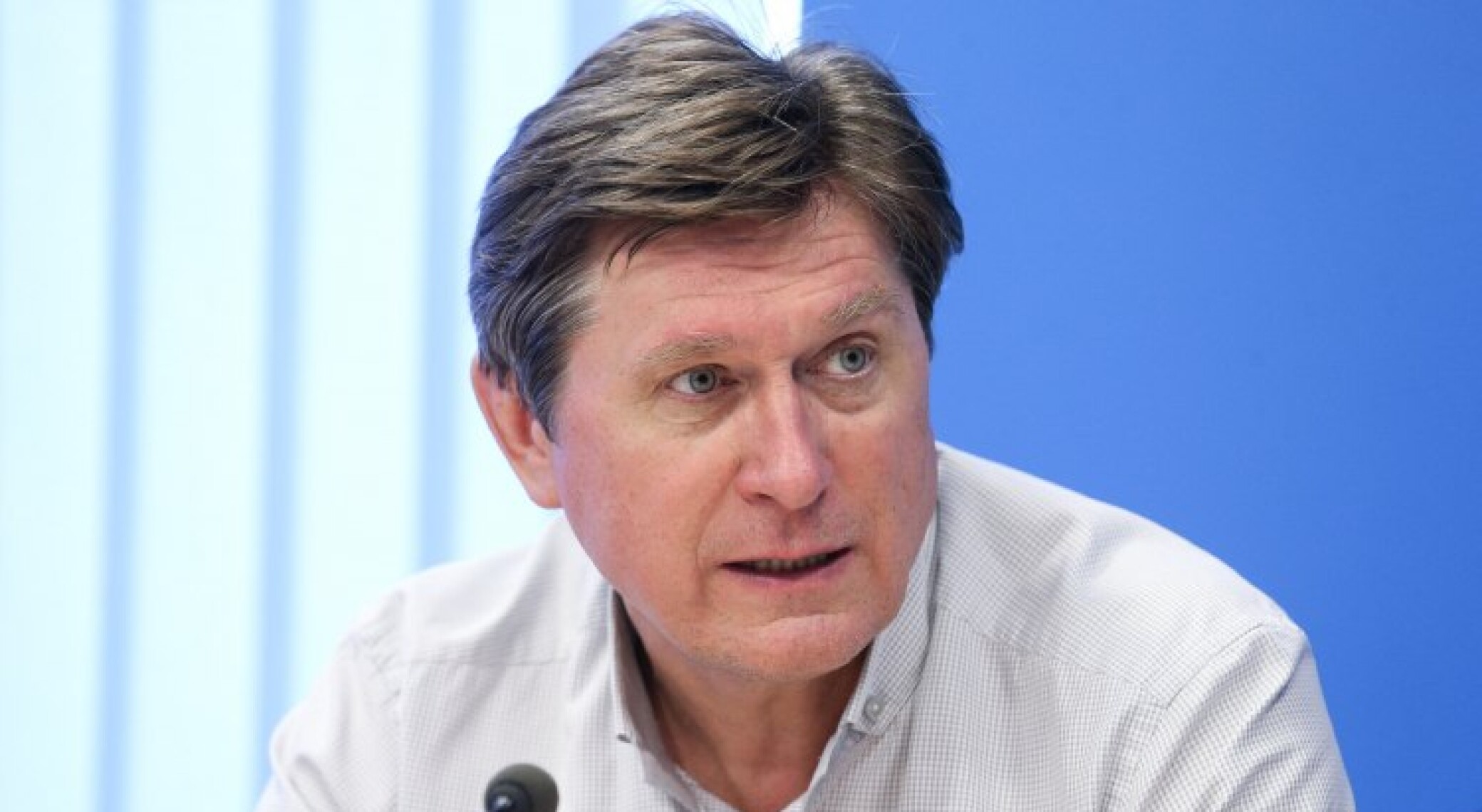
Ukrainian political scientist and director of the Penta Center for Political Studies, Volodymyr Fesenko, told OstroV about these trends, russia’s position in the current negotiation process, the role of the United States, and the influence of Donald Trump on the dynamics of contacts between the parties.
— As of today, what conclusions can be drawn from Volodymyr Zelensky’s visit to the United States?
— The results are still very limited, and the overall assessment is quite restrained. Once again, we demonstrated to the American side our readiness to negotiate and seek compromises. But, unfortunately, it became obvious that the russian side is currently not ready for any real compromises.
In general, Volodymyr Zelensky, judging by some assessments and comments, expected such an outcome. But nevertheless, after the conversation with Trump, he retains a certain hope that the Americans will somehow promote the idea of a ceasefire, as well as an option involving a compromise regarding a referendum.
We will see how it goes. But as of today, unfortunately, we do not see russia’s readiness for compromises. Precisely compromises on Donbas and regarding a potential peace agreement. And this is the main problem. There is certain progress in negotiations on security guarantees from the United States, but in any case they will be tied to a peace agreement. And with that peace agreement, the situation so far does not look optimistic.
— In your view, then why did Donald Trump invite Zelensky, if putin’s position was known, as was Zelensky’s position?
— This is a question for the American side. Perhaps Trump believed it would be possible to pressure either the russians or the Ukrainians, primarily the Ukrainian side, Zelensky himself, into some kind of compromise option.
The Ukrainian side was ready. The option of a referendum on the status of Donbas is essentially an American idea. At least, that is how Zelensky presented it to Ukrainian journalists when he spoke about the 20-point peace plan. We are ready, but under certain conditions. These are a ceasefire for 60 days before the referendum, as well as the withdrawal of forces from both sides. This is a matter for agreement. Russia does not want to agree to this.
— What are the main negative consequences of these negotiations in Florida that you see?
— The main negative is that Trump not only believes putin in his desire to end the war — he sincerely believes, as he said, in putin’s “generosity”, including regarding Ukraine’s success after the end of the war.
What exactly he meant is difficult to understand. Honestly, it is perceived as disgusting. It can be interpreted as sarcasm, but rather, judging by Zelensky’s facial expression, it was clear that he perceived such a statement exactly that way. I think that many Ukrainians perceived Trump’s words about putin and his “generosity” with disgust.
What kind of “generosity” of putin — we can see it perfectly well. I think that recently many residents of Kyiv, unfortunately, have literally felt it. The lack of heating, electricity, and so on.
Therefore, to be honest, my optimism has decreased. Not so much regarding a quick end to the war, but regarding an effective path to some kind of peace compromise in the coming months.
— Some say that an “window of opportunity” for negotiations has now opened. Is it closing?
— It remains, but, let’s say, it is less open than it seemed some time ago. It still exists, negotiations continue, but this window is only slightly ajar. We will see in January–February whether it will work in the near future.
As of today, unfortunately, there are not many chances that some kind of peace agreement will appear already in the next two to three months.
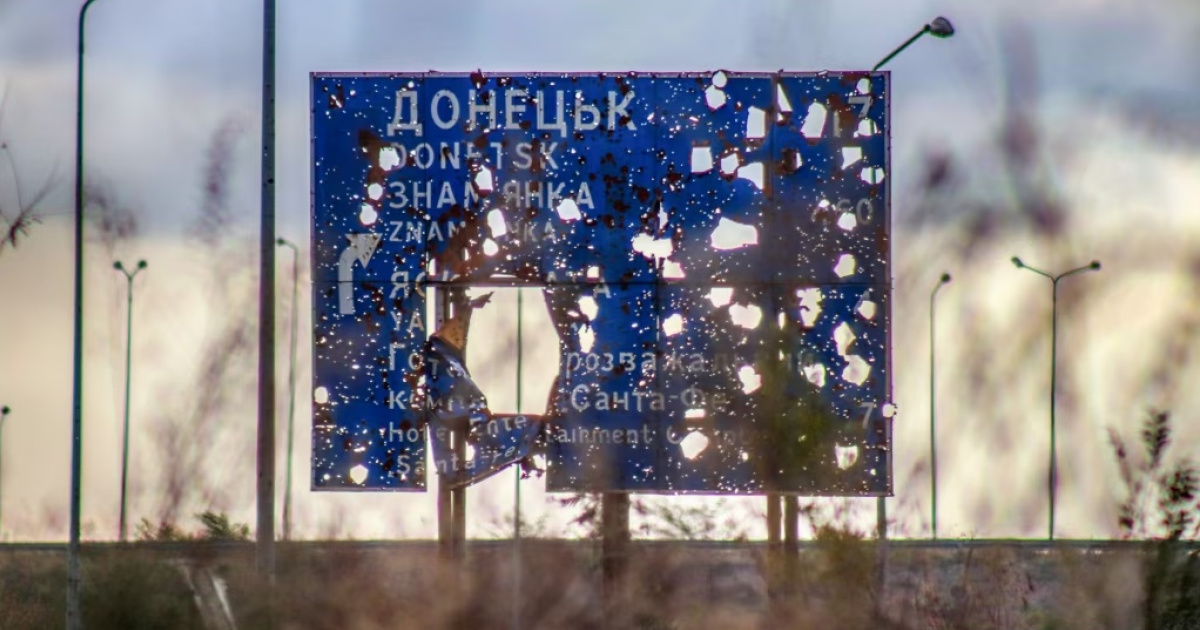
— Peskov stated that Ukraine must withdraw its troops from Donbas in order to stop hostilities. How important is this signal?
— This is not the first such statement, but in the context of the current negotiations it is a clear signal. The other day Ushakov said this after the conversation between putin and Trump. Then Peskov confirmed it.
This is another Trump’s huge mistake. When Trump demonstrates his “constructiveness” to putin, when he begins to believe him, russia immediately starts putting forward ultimatums and demonstrating a tougher position in negotiations. That is the main problem. The situation has not just failed to improve — it has become worse, especially after the conversation between putin and Trump.
— Can it be said that the main stumbling block has been precisely the territorial issue of Donbas?
— Not only that. In a broad sense, the territorial issue as a whole. Pay attention: in the peace plan of the United States and Ukraine there is not a single mention of the status of Ukrainian territories annexed by russia. Not a single mention. And why? Because this is a dead end. A compromise there is impossible even theoretically.
As for Donbas, it was also rather theoretical. And now we see that russia is not ready for a compromise even on Donbas.
The issue of the Zaporizhzhia Nuclear Power Plant is also essentially territorial — who should control it? And on all these issues, unfortunately, I do not see a real compromise.
Theoretically, it is possible regarding Zaporizhzhia, but we do not see russia’s readiness for compromise. And, notably, we have not advanced in searching for a compromise on these two issues even with the Americans.
Therefore, the territorial issue was, is, and will be not just the most difficult — on this issue a compromise between Ukraine and russia is hardly possible. From the side of the United States it is theoretically possible, but from the side of russia — no.
— When, in your view, might putin be ready for real negotiations at least regarding a ceasefire?
— First — if it is possible to stabilize the situation at the front. If the front remains in the state it is in today, there will be no serious concessions from russia. They will demand unilateral concessions from us. Therefore, the determining factor is the situation at the front.
The second factor is a tougher position from the United States. If Trump stops believing putin and demands negotiations only on a ceasefire, then sooner or later russia will agree to this.
The third factor is the deterioration of the economic situation in russia: a drop in oil prices, socio-economic problems.
Another factor is the supply of long-range American weapons to Ukraine.
— How, in your view, might Trump act? Is a change in his policy possible?
— The simple answer: he will not play on our side. That is the first thing to understand. But he can act in different ways. No one knows what Trump’s position will be tomorrow or the day after tomorrow.
Over ten months of the negotiation process, from mid-February until the end of the year, his position regarding the conditions for ending the war changed seven times. It is quite possible that it will change again in January.
On the table in the American administration there are proposals regarding sanctions against russia, in particular in the energy sector. But now, unfortunately, I do not see Trump’s readiness to put pressure on russia. Changes are possible but no one knows when and how.
— Can the American elections help Ukraine?
— The Ukrainian issue will not be the main one in these elections. As, in fact, it never has been.
— Could the China factor increase next year?
— I do not see a direct interest from China in influencing the situation in the russian-Ukrainian war. Even the current activity — Macron’s trip to China, visits by Ukrainian representatives — is not a prerequisite for changes.
Over the past two years, Macron has already traveled to China twice and this has in no way influenced Beijing’s position. He is solving his own issues there. Yes, he raises the topic of the war, but it is not a key one.
— What, in your view, will the next year be like in political and military terms?
— The year will be difficult. It will be a year when the probability of a peace agreement regarding the end of the russian-Ukrainian war will be higher than in 2025.
The negotiations that are ongoing now and will continue in 2026 may potentially lead to a peace agreement either in the spring or at the end of the year. There will be a chance for this.
Another matter is — if putin feels capable of continuing the war or believes that we might lose, he will continue it. Not only in 2026, but beyond.
— Can it be said that next year will definitely be a year of elections in Ukraine?
— No. Possibly, but not necessarily. I would not give one-hundred-percent guarantees.
By Vladyslav Bulatchik, OstroV