
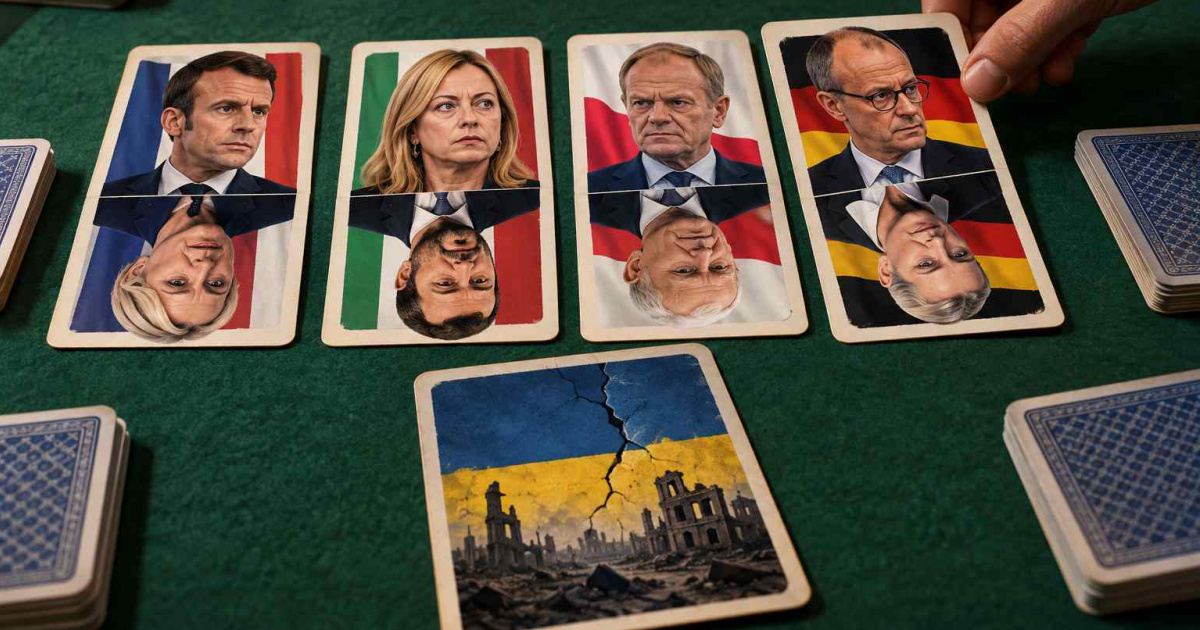

The official website of the President of Ukraine has published the full text of the Joint Statement by the leaders of Germany, France, the United Kingdom, and Ukraine dated November 19, 2026.
The website's statement reads:
The members of the Coalition of the Willing, Ukraine and the United States of America convened today in Berlin.
The leaders remain committed to continue working together towards a comprehensive, just and lasting peace for Ukraine. This is vital for the security of Europe.
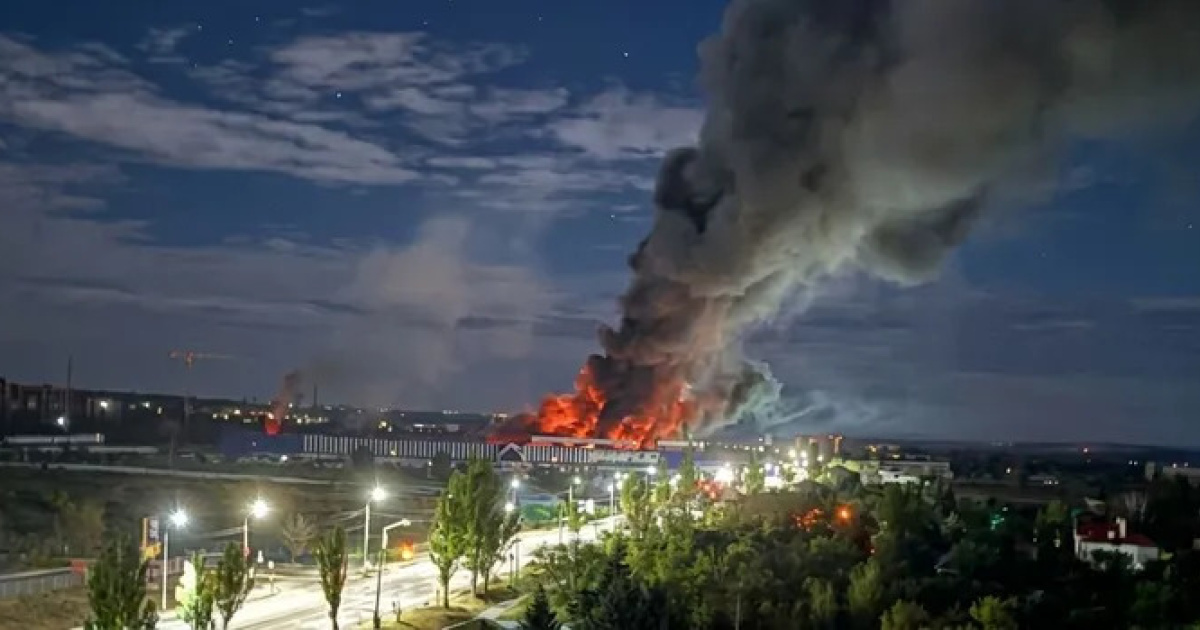
The leaders condemned russia’s systematic escalation of its deliberate and indiscriminate missile and drone attacks against Ukraine’s civilians and civilian infrastructure. They expressed their condolences to the families of the victims. The leaders reiterated their unwavering solidarity with Ukraine and Ukraine’s inherent right to defend itself against the russian war of aggression.
The leaders noted that russia is paying an ever-higher and unsustainable price for its war. Despite suffering record losses, russia has made only minimal territorial gains this year and has failed to take a single strategically important town or city. Russia’s escalating attacks on Ukraine’s civilians cannot make up for its failure on the battlefield.
They also condemned recent russian hybrid attacks in Europe, including sabotage, information operations and cyber-attacks, which seek to undermine support for Ukraine. They were clear that any kind of intimidation would not deter their support for Ukraine. Rather, it would increase their resolve to strengthen the defence of Ukraine, Europe and NATO.
The members of the Coalition of the Willing and Ukraine shared a broad consensus on:
I. Support for Ukraine and pressure on russia
The leaders reiterated their pledge for long-term and comprehensive support to Ukraine, including with political, diplomatic, military, financial and civilian assistance. Russia will not be able to outlast the steadfast support of the Coalition’s members and Ukraine’s resilience.
They reiterated that strengthening Ukraine’s air defence capabilities remains a priority, in particular by means capable of intercepting ballistic missiles, to save civilian lives and protect critical infrastructure. Ahead of the winter, the leaders will make extra efforts, along with third countries, to provide Ukraine with additional missile defence.
They reaffirmed their commitment to fulfil in its entirety the pledge made by NATO Allies to provide 70 billion euro in military equipment, assistance and training for Ukraine in 2026 and at least equivalent levels in 2027.
Under the European Union’s Ukraine Support Loan, 90 billion euro will be provided for military and financial assistance by the end of 2027, covering Ukraine’s financial needs well into 2027. The leaders outlined their determination to meet Ukraine’s financial needs on the basis of clear and detailed information in the coming year and beyond through a joint effort of EU and international partners including within the G7, and to work with Ukraine to pursue and implement agreed reforms including in the area of rule of law and the fight against corruption.
The leaders committed to ramp up the economic pressure on russia’s war effort through the use of sanctions, wider economic measures, and clamping down on sanctions circumvention. In particular, they agreed to pursue further measures to increase pressure on russian oil and gas revenues, sanction russian cryptocurrency and illicit financial flows, and disrupt the russian military-industrial complex. They would continue efforts to impede the russian shadow fleet, which enables russia to circumvent sanctions, and to safeguard maritime security by upholding applicable international rules and standards established through the International Maritime Organization.
II. Security guarantees
The leaders reaffirmed the inextricable link between Ukraine’s security and wider stability and security in the Euro-Atlantic area, and reiterated their support for Ukraine’s European and Euro-Atlantic aspirations. As set out in commitments made in Berlin in December 2025 and Paris in January 2026, they underlined that Ukraine must have robust and legally binding security guarantees in place once a ceasefire enters into force. These guarantees will be defensive in nature and closely coordinated with the U.S.
These guarantees could include, inter alia, the long-term continuation and deepening of the provision of sustained and significant military, financial and technical support to Ukraine to ensure the sustained capability of its armed forces, the participation in a proposed US-led ceasefire monitoring and verification mechanism, a European-led Multinational Force Ukraine composed of contributions from willing nations and supported by the U.S. that will provide reassurance measures in the skies, at sea and on land and work on the regeneration of the armed forces of Ukraine, and a legally binding commitment, subject to national procedures, to take measures to restore peace and security in the case of a future armed attack by russia.
The leaders welcomed the current exercise of the Multinational Force for Ukraine, Koalicja-2026, held mainly in Poland, demonstrating the force’s credibility, high level of preparedness and readiness to deploy and fulfil its role effectively.
III. Peace talks
The leaders reemphasised their commitment to achieve a comprehensive, just and lasting peace for Ukraine, building inter alia on the current U.S. diplomatic efforts. They affirmed that Ukraine’s security, prosperity and sovereignty remain integral to Euro-Atlantic security. They reiterated their unwavering support for Ukraine in defending its freedom, sovereignty and territorial integrity.
They commended President Zelenskyy’s continued willingness to agree to an immediate ceasefire and enter into meaningful talks. They also supported a direct dialogue between Ukraine and russia – with U.S. and European participation.
The leaders further converged on broad positions and principles regarding Europe’s engagement in peace talks. The first priority for talks remains the goal to end the hostilities in Ukraine. They reiterated that international borders must not be changed by force, and that Ukraine’s sovereign right to choose its own security arrangements and alliances must be fully respected. They recalled that russian sovereign assets will remain immobilised until russia ceases its war of aggression and compensates Ukraine for the damage caused by the war.
The leaders emphasised that agreements on wider European security issues would not be possible while russia continues its war of aggression against Ukraine, violating the most basic international laws including the UN Charter, the Helsinki Final Act and the Paris Charter. Elements of any negotiation related to the EU and NATO would need the consent of the EU and its Member States and NATO Allies, respectively.
As a first step towards a cessation of hostilities, the leaders called on russia to agree to an energy ceasefire for the duration of the winter. Given the importance of safe passage and freedom of navigation in the Black Sea for sustaining global food security, they emphasised the necessity to also agree on a ceasefire to allow for food exports from the region.