


Talk of possible presidential elections in Ukraine has once again moved to the midst of the political agenda. Although nationwide elections are explicitly prohibited under Ukrainian law during martial law, the information space has been flooded in recent weeks with reports about possible preparations for a future election campaign.
Most experts and OstroV's sources consider the possibility of holding elections as early as this autumn to be unlikely. At the same time, they acknowledge that Ukrainian political forces are increasingly focusing on the first possible post-war electoral cycle. Closed polling, assessments of potential rivals, team reshuffles, and internal consultations indicate that preparations for various political scenarios are already underway, even though the official start of the election process remains a long way off.
The latest wave of discussion was triggered by several developments at once. President Volodymyr Zelensky stated that he hopes to end the active phase of the war before the onset of winter. Similar signals also came from some government officials, who suggested that the war could enter a different phase if the international situation develops favorably.
At the same time, reports began to emerge about closed-door consultations involving government representatives, politicians, and potential candidates. Additional intrigue was created by reports of a meeting between the president and Ukraine's ambassador to the United Kingdom, Valerii Zaluzhnyi, as well as new opinion polls whose results immediately became the subject of heated debate.
However, there remains a vast gap between political discussions and the actual organization of elections.
The meeting that sparked the political debate
The latest surge of speculation about possible elections was largely prompted by a July 1 publication by Ukrainska Pravda.
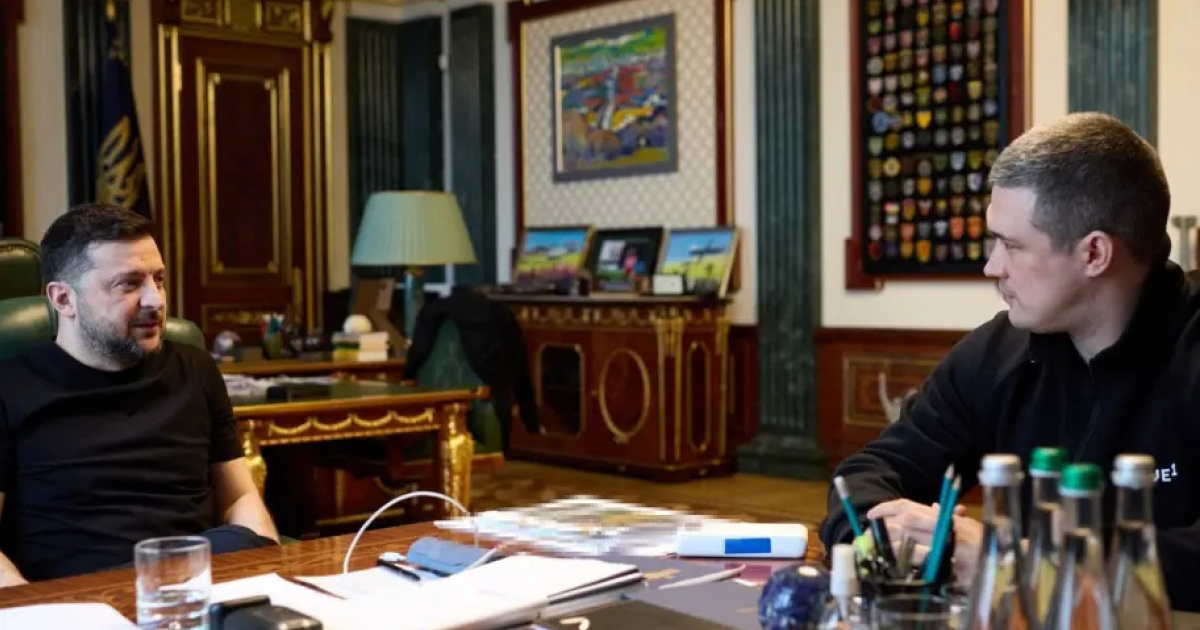
Citing its own sources, the outlet reported that President Volodymyr Zelensky had met with Ukraine's ambassador to the United Kingdom, Valerii Zaluzhnyi.
According to Ukrainska Pravda, during the conversation the head of state allegedly asked whether the former Commander-in-Chief of the Armed Forces of Ukraine planned to run in the presidential election if it were held as early as this autumn. The publication's sources claimed that Zaluzhnyi answered in the affirmative.
There has been no official confirmation of this information. Neither the Office of the President nor Valerii Zaluzhnyi has commented on the reports...
Former Prosecutor General Yurii Lutsenko believes that if the reported conversation between Zelensky and Zaluzhnyi did take place, it could indicate that the president sees a prospect of ending the active phase of the war.
"If President Zelensky summoned Zaluzhnyi and announced that he plans to hold elections in the autumn, then it means he has a plan to achieve a ceasefire by that time. I think this is rather optimistic news for everyone who has been exhausted by the war, for everyone who has so long and so heroically carried the burden of both the front and the home front", - he said in one of his interviews.
In his opinion, russian elites may be interested in a scenario that would involve a ceasefire and simultaneous elections in both Ukraine and russia.
"Abramovich may have brought to Kyiv a plan from the russian oligarchy for ending the war. In my opinion, putin does not want to stop without either the surrender or the military capture of Kramatorsk. I believe that achieving this this year is impossible.
Therefore, the russian oligarchy, which is already tired of what is happening in and around their country, allegedly proposed a different plan: to declare a ceasefire in order to hold parliamentary elections in russia and presidential elections in Ukraine.
Arakhamiia, with what we might call Eastern political habits, is allegedly trying to immerse Zelensky in the warm bath of fabricated polling so that he agrees to this scenario. And it appears that Zelensky agreed because he believed his own 30% approval rating", - the politician said.
Political analyst Volodymyr Fesenko offers a different assessment of the situation. In his opinion, regardless of the credibility of Ukrainska Pravda's report, Valerii Zaluzhnyi is unlikely to become involved in domestic political competition while the war continues.
"I don't think Valerii Zaluzhnyi is going to make any statements right now about participating in the presidential election. As long as the war with russia continues and he serves as Ukraine's ambassador to the United Kingdom, Zaluzhnyi is avoiding involvement in domestic political processes and debates. This is a logical position and, at the same time, a statesmanlike and responsible one. It helps avoid political confrontation during the war. At the same time, Zaluzhnyi is also unlikely to deny the possibility of running in the presidential election—but only after the war has ended", - Fesenko wrote on Facebook.
Preparing (or not preparing) for elections
Despite public skepticism about the possibility of holding elections this year, Ukrainian political forces apparently cannot afford to ignore such a scenario.
The final decision on whether to hold a vote will depend primarily on the situation at the front and on political agreements regarding a ceasefire. However, according to OstroV's sources, preparations for various possible scenarios are already underway.
"All this talk about November or even spring is a classic smokescreen and a major political bluff. On the one hand, Office of the President is indeed constantly commissioning focus groups and closed polling to keep its finger on the pulse and test voter sentiment toward key political figures. The Servant of the People headquarters and its regional branches have conducted a personnel review. But on the other hand, we have no real mechanisms for holding elections during the war.
There are zero security guarantees, and no funding for this has been allocated in the budget. So for now, this is simply a psychological game, an attempt to make the opposition nervous and spend resources, while also preparing for "Day X", which will come only after a sustainable ceasefire.
Everyone is preparing, but no one has given the order to begin. Nobody believes elections will take place this autumn. But that does not mean they will not be held in the foreseeable future—for example, in the spring of 2027", - a source within the parliamentary majority told OstroV on condition of anonymity.
According to another OstroV source familiar with internal discussions within the government team, the main preparation tool today is not the creation of campaign headquarters but the continuous monitoring of public opinion.
"The map of potential frontrunners in the Office of the President's internal polling is currently extremely dynamic. Zelensky consistently remains the race leader, and his core support base has not disappeared, but the main concern of political strategists is the runoff. If victory once seemed almost inevitable, now any strong opponent in the second round could consolidate the protest vote", - the source in the Verkhovna Rada said.
According to the source, the biggest potential challenge for the incumbent president is still considered to be Valerii Zaluzhnyi. Despite serving in a diplomatic position and making no political statements, he continues to enjoy an exceptionally high level of public trust, which, according to the source, has so far proven resistant to any information campaigns.
At the same time, according to another source within the Servant of the People faction, the situation surrounding Kyrylo Budanov, head of Ukraine's Main Intelligence Directorate, is particularly noteworthy.
"His name recognition and media ratings continue to grow steadily, but the Presidential Office does not see him as a hostile figure. He maintains good working relations with Zelensky, and behind the scenes it is believed that an understanding can always be reached with him—either to move forward together as part of a single team or to agree on mutual non-aggression", - the source said.
At the same time, the source added, increasing attention within the government team is being paid to ex Defense Minister Mykhailo Fedorov, whom some officials have begun to view as a politician with his own long-term ambitions.
However, the published opinion polls still do not point to an undisputed frontrunner in a potential election campaign. According to a Rating Group survey published in early July, President Volodymyr Zelensky would receive 32% of the vote among decided voters in the first round of a presidential election, while Valerii Zaluzhnyi would receive 24%.
At the same time, a March survey conducted by the SOCIS Center shows a much narrower gap between the politicians, while in a simulated second round the advantage shifts to Zaluzhnyi.
This suggests that different polling organizations are currently identifying different trends, and that the final political balance of power will largely depend on when Ukraine holds its first post-war election.
A vast gap between political discussions and elections
Despite increasingly active discussions about possible elections, most experts agree that political debate should not be confused with actual preparations for voting.
Even if a ceasefire is achieved in the coming months, that alone will not automatically trigger the election process.
Olha Aivazovska, Chair of the Board of the OPORA Civil Network, describes the idea of holding a presidential election as early as this autumn as virtually unrealistic.
"It's like announcing that the Summer Olympic Games will be held in November while not having a single stadium in which to invite competitors... All work on election legislation came to a halt in early April, and there has been no progress since. Election legislation remains only about 60–65% ready. In reality, there is still a tremendous amount of work ahead", - she wrote on Facebook.
OPORA also points to purely practical challenges. According to the organization's estimates, about half of Ukrainian voters are currently living away from their registered place of residence, while the state still lacks ready-made mechanisms for organizing voting under continuing security risks.
"It is normal and natural for politicians to measure themselves against opinion polls and even to fantasize about upcoming electoral plans. After all, we still have genuine electoral democracy, even now. However, sensitivity to ratings and public support has both positive and negative effects: the negative one is populism, especially when it is necessary to implement essential but unpopular policies; the positive one is responsiveness and attentiveness to the voice of society, which in an authoritarian system is merely an object. What is truly abnormal, however, is the infantilism regarding the system of protection and the predictable management of all the threats surrounding the first election after such a long break", - Aivazovska noted on Facebook.
Political analyst Ihor Petrenko, head of the United Ukraine Analytical Center, expressed a similar assessment in a comment to OstroV. In his opinion, the current surge in discussions about elections is driven primarily by the information agenda.
"If there is talk about a possible end to the war, the topic of elections automatically emerges as well. Various news stories then begin to be framed around it—discussions of ratings, political alliances, and potential candidates. It is also possible that our opponents may exploit these discussions.
We understand that society is tired, that there is demand for change, and that there are many difficult issues. At the same time, Ukrainian unity remains quite fragile, and domestic political confrontation has always been one of the tools through which russia has tried to divide Ukrainian society.
That is why actively fueling the topic of elections now is like counting your chickens before they hatch. Ukraine's main task today is to bring the active phase of the war to an end. Questions of political renewal, elections, or a change of power are secondary. Regardless of public sentiment or the level of fatigue with the current government, these issues remain of secondary importance", - he emphasized.
According to the political analyst, even a possible ceasefire in the autumn would not automatically mean that elections would be held. In his assessment, organizational preparations alone would require at least several months, and considering the necessary legislative changes, as well as arrangements for voting by Ukrainians abroad, military personnel, and internally displaced persons, a realistic timeline could be pushed back even further.
"If we truly want to hold democratic elections while taking all these challenges into account, then we are most likely talking about 2027", - Petrenko believes.
At the same time, political analyst Volodymyr Fesenko allows for the possibility that people close to the president may indeed be considering holding elections as early as this autumn. In his opinion, such a scenario would be politically advantageous for the Presidential Office if positive developments on the battlefield and in the international arena continue and the incumbent president's approval ratings remain high.
"The key question is whether it is actually possible to hold elections in the autumn. It is indeed advantageous for Zelensky. As long as positive trends continue in the war with russia, there is a certain increase in the Ukrainian president's approval ratings, including against the backdrop of the political confrontation with the Poles, so it makes sense to take advantage of this window of opportunity. As the dynamics of political ratings and military developments show, everything can change within six months", - he wrote on Facebook.
At the same time, Volodymyr Fesenko doubts that it will be possible to hold a presidential election as early as this autumn.
"At this point, it appears that this is merely the idea of holding elections during the war—an extremely adventurous idea. So far, there are no practical steps toward implementing it. And if attempts are nevertheless made to hold elections during the war, they are highly likely to face strong criticism from society and parliament and are unlikely to receive the support of a majority of lawmakers", - he concluded.
Most of OstroV's sources are skeptical about the possibility of holding elections this autumn. At the same time, they add that such a scenario cannot be ruled out entirely. The situation at the front, long-range "sanctions", the isolation of Crimea, and economic instability in russia provide cautious optimism that a ceasefire may be possible in the coming months. However, even if that happens, elections are unlikely to be held immediately. The mere cessation of hostilities would not mean the end of the war, the lifting of martial law, or the automatic launch of the electoral process.
Ukraine would have to resolve a whole range of issues—from amending legislation and restoring the electoral infrastructure to organizing voting for millions of Ukrainians abroad, internally displaced persons, and military personnel. That is why most experts agree that the discussion today should focus not on specific election dates but on possible political scenarios, which will depend primarily on developments at the front and the terms of any potential ceasefire.
"All this running around with closed polling, measuring the ratings of Zaluzhnyi or Budanov, and suspicions surrounding Fedorov is simply Presidential Office's attempt to hedge its bets for the future. No one is going to open polling stations under missile attacks because it is technically impossible. The Office of the President's main objective is to keep the situation completely under control. That's why campaign teams are being updated and candidate lists are being reviewed, but no one will actually launch the election process until Presidential Office is 100% confident of victory. For now, it's just a show of strength and a test of nerves", - one influential MP emotionally commented to OstroV on the possibility of holding elections.
By Andrii Andrieiev, OstroV’s journalist