

The Persian Gulf is once again becoming the epicenter of global tension, but the current crisis is no longer limited to risks to crude oil supplies alone. The modern energy market is significantly more complex: it involves petroleum products, liquefied gas, petrochemicals, and logistics that instantly respond to any threats. Against this backdrop, global prices are rising rapidly, and the market is increasingly dependent not only on physical risks but also on political statements and speculative expectations.
Will the current crisis become a new “energy shock” for the world? Who actually benefits from rising oil prices? And is China capable of stabilizing the situation by acting not only as a consumer but also as a geopolitical mediator? This was discussed in an interview with OstroV by an expert on international energy and security relations, president of the Center for Global Studies “Strategy XXI”, Mykhailo Honchar.

– How is the war in the Middle East affecting the global energy market?
– Prices have already increased – for oil, petroleum products, and gas. Since the Persian Gulf, unlike the situation, say, 50 years ago during the first large-scale economic crisis after the Arab oil embargo, was then a source of crude oil – and nothing more. Now this is far from the case. It is not only oil. There is a significant share of petroleum products, petrochemical production, mineral fertilizer production, gas, including liquefied gas. Therefore, the situation is much more complex than it was half a century ago.
Accordingly, the global oil and gas sector is experiencing much stronger turbulence than it did then. Whether this will become the trigger for a full-scale economic crisis, as in 1973, there is no clear answer yet. Obviously, everything will depend on the duration of the current situation in the Gulf.
– How justified are the current fluctuations in oil prices and what can be expected next?
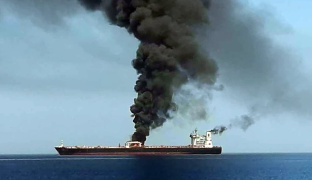
– Some may say these fluctuations are justified, others may argue that this is, conditionally speaking, a “pricing-in” of risks – because risks associated with possible damage to tankers transporting oil to the global market, as well as infrastructure, do indeed exist. Therefore, this issue is not straightforward.
At the same time, the speculative component is clearly present. Traders and banks that finance oil operations always try to profit even from minor crisis or pre-crisis phenomena by increasing prices through appropriate market mechanisms. And this increase is often disproportionate to the risks that actually exist.
At present, the situation looks such that price spikes and overall volatility – when the price rises one day and then slightly falls the next – reflect not only the risks of strikes on tankers and infrastructure, but also the fact that the parties to the conflict do not have effective mechanisms to minimize these risks. And if we look at Trump’s statements, which are heard almost daily, they only add unpredictability and uncertainty to the market. As a result, the market reacts by increasing prices or at least keeping them at a high level.
Each subsequent day of the war only increases this uncertainty. Despite statements that “everything is under control” and that “Iran is defeated”, the real situation looks different – and this causes the opposite reaction from the market. Probably, some clarity may emerge as early as next month, since at the moment nothing indicates a quick resolution of the situation in the coming days.
This somewhat resembles the situation with the Houthis: they seem to have been partially contained, but the problem has not disappeared. The Houthis remain part of a broader Iranian issue, controlling, in particular, part of the oil flows – for example, routes from Saudi Arabia through the East–West pipeline to the Yanbu terminal.
Although Iran is in a weakened position, the Houthis continue to act, and the risks remain. The problem with them arose back in the fall of 2023 and reached a global scale at the beginning of 2024. As of today, it has been muted but not resolved. A similar situation is forming in the Persian Gulf. Despite statements about a “defeated Iran”, it continues to demonstrate the capability to strike. It does not need to launch hundreds of missiles or thousands of drones at the infrastructure of its neighbors. A few strikes a day are enough – and the risks remain. Therefore, overall, the situation does not yet look optimistic.
– If we talk about possible scenarios, are there options that could quickly stabilize the situation?
– Asian countries could play a fundamental role, primarily China and India, as they are the main consumers of Middle Eastern oil. China has a significantly greater margin of safety: its strategic oil reserves are estimated at about 200 days. India is in a more vulnerable position – its reserves are sufficient for approximately 74 days. Accordingly, for these countries this could become an opportunity to join efforts to influence the parties to the conflict, primarily Iran, and persuade it to refrain from attacks on tankers in the Gulf waters.
At the same time, it should be understood that Iran effectively does not touch Chinese tankers, since a significant portion of Iranian oil – more than 90%, and now probably almost 100% – is supplied specifically to China. In addition, Asian countries could theoretically deploy their naval forces to escort tankers.
However, such a scenario would hardly provoke a positive reaction in the White House, particularly from Donald Trump. One of the goals of the war in the Persian Gulf is essentially to cut off oil supply channels to China and make Beijing more compliant. If we look retrospectively at the actions of the Trump administration in recent months, they fit well into the logic of establishing control over the “tap” of oil supplies to China from countries loyal to it.
For example, Venezuela, although it does not play a decisive role in global supplies, has also been considered in this context. At the same time, the Middle East, particularly the Persian Gulf, is of key importance. Iran and Saudi Arabia are the two leading suppliers of oil to China from this region.
According to various estimates, Iran accounts for about 13–14% of China’s oil imports, while russia accounts for about 20% and remains the largest supplier. The United Arab Emirates and Kuwait also play an important, though smaller, role. Overall, nearly half of China’s imported oil comes from the Middle East, primarily from the Persian Gulf.
This creates a significant lever of pressure on China. In the case of liquefied gas, such dependence is much lower, since gas plays a relatively small role in China’s energy balance. Therefore, supplies, particularly from Qatar, are not as critical. At the same time, the oil factor is much more sensitive for Beijing.
– At the same time, we see that Donald Trump has spoken about the possibility of postponing his visit to China…
– The logic of Trump’s actions is clear: he sees that the situation is dragging on, while China is maintaining its position and may even potentially seize the initiative. Accordingly, he needs additional time to increase pressure on Beijing.
At the same time, China has not yet resorted to using its strategic reserves in full. This means that it is capable of withstanding the current situation relatively calmly for some time. Whether real coordination of actions among Asian countries is possible remains an open question. However, such a scenario could theoretically work.
– So in this context, China, as the largest economic and political partner of the countries in the region, primarily Iran and Saudi Arabia, could play the role of a kind of peacemaker?
– Yes. Moreover, it is worth recalling that it was China that several years ago, in 2023, facilitated the restoration of dialogue between Tehran and Riyadh. This became possible because Beijing has turned into a key trade and economic partner for both countries and the main buyer of their oil.
In fact, China stimulated the easing of traditional contradictions between Saudi Arabia as the leading Arab monarchy and Shiite Iran. Accordingly, even now Beijing could theoretically play a similar role. If successful, this would be a serious political blow to Donald Trump, as it would mean that the situation in the Persian Gulf was resolved not thanks to his actions, but effectively despite them – through the activity of a geopolitical competitor.
However, how events will develop further is still difficult to say. At the moment, the situation is only becoming more complicated, and tensions in the region continue to grow.
– If we consider a negative scenario – when the situation drags on for several months, as some experts suggest – what oil prices should we prepare for and what should the market expect overall?
– In fact, forecasting specific prices in such a situation is largely a matter of “guesswork”. One can name any figures and provide arguments for them. For example, during the 12-day escalation between Israel and Iran in June last year, various forecasts were voiced – 100, 120, and even 200–300 dollars per barrel. However, none of this happened. The price did not even reach 90 dollars.
Now the situation is different. We have already seen spikes above 100 dollars, even up to around 120. But it is important to take into account the effect of the market adapting to war and risks. A similar experience has already occurred in the Persian Gulf during the Iran–Iraq war of 1980–1988, which included the so-called “tanker war”. At that time, there were also strikes on infrastructure and attacks on tankers, and the market initially reacted with rising prices.
However, by the mid-1980s, oil prices dropped sharply. Despite the continuation of attacks, mechanisms for escorting tankers were established. In particular, the United States allowed Kuwaiti tankers to sail under the American flag, which gave them a certain level of protection. In effect, a balance was formed: the war continued, but oil trade did not stop. And this led to a decline in prices.
A similar scenario is possible now – depending on how the negotiation process develops, which, despite public statements, continues at various levels. For example, China could potentially allow tankers to fly its flag, and in that case Iran would likely refrain from striking these vessels. Another factor could be the organization of tanker escorts in the Persian Gulf.
Asian countries – Japan, South Korea, China, India – as the main consumers of energy resources from the region, could play an important role. However, the problem is that they have not previously cooperated in this format, and it is unclear whether they will be able to quickly agree on a common position. At the same time, they have a shared interest and a common threat – the risk of serious economic losses. Prolonged maintenance of prices at around 100 dollars per barrel or higher creates significant pressure on their economies.
Therefore, even in the case of a prolonged conflict, it cannot be ruled out that the market will gradually adapt, and mechanisms to protect logistics will help avoid the worst-case scenarios of uncontrolled price increases.
– And what if the market does not adapt?
– Then a whole chain of cause-and-effect problems is triggered. A high oil price means more expensive petroleum products and fuel, which in turn leads to higher transportation costs. As a result, these costs are factored into the prices of a wide range of consumer goods.
At the same time, a certain portion of oil volumes that are at risk in the Persian Gulf can be compensated by supplies from other regions. This is not about a complete replacement, but about partial coverage of the deficit. Oil-producing countries in North and South America have now become more active – primarily the United States, as well as Canada, Brazil, and Guyana. They are capable of partially compensating for the deficit; however, the logistics of such oil are more expensive than supplies from the Middle East. Accordingly, this will also affect the final price.
Therefore, the question is not so much whether the price will be 150 or 200 dollars per barrel, since such scenarios are actively fueled by the speculative part of the market, which operates with “paper” oil and profits from volatility. Instead, as the region adapts to risks and the parties reach certain informal agreements, these risks will gradually become more manageable. Even if individual incidents – such as attacks on tankers – continue, overall traffic will likely recover.
It is also important that, according to the International Energy Agency, there is currently no fundamental oil shortage in the world. High prices, in turn, stimulate a reduction in consumption, since the budgets of countries and companies are usually calculated based on lower projected prices – around 60 dollars per barrel or even less.
This leads to another effect: the longer elevated price levels persist, the more likely a sharper decline becomes after partial stabilization of the situation. This is not about a full return to the pre-war state, but about a market correction.
Under such conditions, producers will try to compensate for losses by increasing production. This means a potential increase in supply. However, the current two-plus weeks of escalation is not yet enough time to significantly ramp up production, say, in Canada or Brazil. But it is obvious that these countries are already orienting themselves toward such an increase.
It should also be taken into account that price levels of 100–120 dollars per barrel do not reflect the full picture of revenues. The key indicator is the weighted average over a long period, usually a year. And it is generally much lower than peak values, since it also includes periods of low prices. Therefore, short-term spikes generate additional profits primarily for traders, but these are essentially “quick money”.
At the same time, costs are also rising sharply. For example, tanker charter rates have increased significantly: whereas previously they were tens of thousands of dollars per day, now they are many times higher, sometimes 8–10 times more for large VLCC-class vessels.
– What does this mean?
– In fact, it means that the growth in revenues is partially “eaten up” by rising costs. This can be compared to taxi fares: let’s say that under normal conditions a ride costs UAH 300, but during peak hours or during an air raid alert the price can rise to UAH 1000. The same applies to the oil market – profits grow, but costs rapidly catch up with them.
– The thesis is often voiced that russia is almost the biggest beneficiary of the current escalation. But is everything really that peachy for it?
– In reality, the situation is much more complicated. Yes, short-term revenues from high oil prices for russia certainly appear. But they do not solve key problems. In particular the budget deficit and difficulties with financing military expenditures. This gives a temporary effect, but in the longer term it is not a systemic solution. For it to truly affect budget stability, such a situation would have to last for years.
For russia, it is certainly beneficial when prolonged instability arises in a key oil-producing region – the Persian Gulf. This is effectively an “ideal scenario” from the perspective of rising prices. And during the 12-day escalation between Israel and Iran in June last year, moscow had already been counting on excess profits, but those expectations were not met.
Now the situation may bring russia certain additional revenues, but it is premature to talk about a large-scale and long-term gain. Instead, a more fundamental issue is different – attempts by the administration of Donald Trump to revise or reformat the sanctions regime against russia, particularly in the oil sector.
U.S. Treasury Secretary Scott Bessent clarified that this is not about a complete lifting of sanctions – only about possible temporary exceptions, for example for oil that is already at sea and could be purchased by India. This concerned a time-limited mechanism, roughly for 30 days. However, Donald Trump’s position appears more flexible and less unambiguous. His statements allow for broader scenarios – including the possibility that some sanctions may not only be eased but also not reinstated in the future.
In this context, a scenario cannot be ruled out in which Trump and putin may be conducting a complex geopolitical game, like, “two against a third”.
– What exactly is being referred to?
– In the global oil market, there are three key players – the United States, Saudi Arabia, and russia. For decades, the United States and Saudi Arabia effectively acted as partners, especially during the period when the United States was the main importer of oil from the Persian Gulf – even before the shale revolution.
Saudi Arabia traditionally aligned itself with the position of the United States, and this interaction shaped the balance in the market. However, the current situation creates preconditions for a potential restructuring of these relations and the emergence of new configurations of influence. At present, the United States – and here Donald Trump likely was not exaggerating too much – imports only about 1% of its oil from the Persian Gulf. The United States has effectively become almost energy self-sufficient. Moreover, it simultaneously remains both an importer and an exporter of oil.
Therefore, Trump’s interest in Saudi Arabia largely lies in the sphere of investments – in particular, expectations that Riyadh will invest significant funds in the American economy. At the same time, the Saudis have somewhat different approaches. For them, a key partner in the oil market for a long time has been russia – within the OPEC+ framework. It was precisely through mechanisms of quotas and production cuts that they jointly kept prices at a level close to 100 dollars per barrel. This model of cooperation effectively operated until 2025.
However, already in the fall of 2024, Crown Prince Mohammed bin Salman publicly stated that a number of countries within OPEC+ were violating quotas and abusing the agreements. Among such countries were russia, Kazakhstan, and Iraq. And the key violator, according to estimates, was russia, which needs additional revenues to finance the war.
In response, Saudi Arabia signaled a shift in strategy starting from 2025 – an intention to expand its share in the global market, in particular through price competition. Against this background, the situation may develop as follows: the United States continues to increase shale oil production – it is enough to recall Trump’s campaign slogan “Drill, baby, drill”. At the same time, Washington is interested in containing China and possibly in attempts to weaken its ties with russia.
Theoretically, this opens up space for a complex geopolitical game in which the United States and russia could act in parallel situationally – particularly in the context of limiting Saudi Arabia’s role in the market. In this sense, tensions around Iran and the Persian Gulf objectively constrain the Saudis’ ability to increase exports.
In such a configuration, both American and russian oil companies benefit, while Saudi Arabia faces sales difficulties. If we assume that such logic is partially implemented, then russia could feel more confident and count on a longer preservation of favorable market conditions – not for months, but potentially for years.
However, this is more of a hypothesis. And even if we assume that in American policy there is an idea to “let russia earn” in order to pull it away from China, it looks unrealistic. The moment for such a shift was missed at least 10–15 years ago.
It is also telling that during the russian-Chinese energy forum in November last year, the head of Rosneft, Igor Sechin, essentially outlined a strategic model of interaction: russia is ready to become a resource base for China, not only in the oil and gas sector, while China becomes a technological support for russia. This indicates a much deeper level of interdependence, which is already difficult to break with short-term political or economic maneuvers.
– Who needs this more, China or russia?
– This is about a certain situational alignment of interests between China and russia, which, however, is much more needed by russia itself. Beijing has already created a dependence of moscow on itself, not the other way around. At the same time, it is indicative that their interests diverge specifically in the oil sector. For russia, the current moment is beneficial, as it allows it to reduce the discount at which it sells oil to China. Due to supply restrictions from other directions, Beijing is forced to buy more russian oil, which does not fully align with its interests, since China seeks to obtain energy resources as cheaply as possible.
This is precisely why China may be interested in reducing tensions in the Persian Gulf as quickly as possible. A decrease in risks automatically leads to a drop in oil prices, and therefore neutralizes the benefits that russia is counting on.
– Can russia stabilize its budget thanks to the current energy situation?
– Most likely, no. Budget stabilization is not a matter of weeks or even months. To cover the existing deficit, high oil prices would need to be maintained for at least a year or even longer. Otherwise, it will be necessary either to cut expenditures or to look for other sources of financing. At the same time, military spending already exceeds revenues from oil and petroleum products – and this was recorded for the first time in the history of post-soviet russia in 2025.
Previously, military spending accounted for roughly one-third of oil revenues (and during periods of low prices – about half), but now the situation has changed fundamentally. According to preliminary estimates as of the end of February, the ratio of military spending to oil revenues has reached about 115%.
Moreover, the russian government is already discussing the need to cut spending in other areas – including social programs – by approximately 10%. This indicates that the scale of the budget “gap” is significantly larger than was assumed even in pessimistic scenarios. Even if we assume that the current crisis will last about 100 days, as is sometimes forecast, this period is not enough to fundamentally correct the budget situation.
Undoubtedly, in the short term, the flow of cash inflows will increase. But these funds do not solve systemic problems, since each sector of the economy already has its own financial “gaps”. It is telling that the russian authorities are focusing on ensuring that these additional revenues quickly enter the banking system.
– What else does this indicate?
– On the one hand, this may indicate instability in the banking sector. On the other – the need to quickly channel these funds into financing the military-industrial complex.
Enterprises of the military-industrial complex have already accumulated significant debts and are essentially unable to service them, since their products do not create economic added value. Unlike arms exports, which generate revenue, current production essentially “burns” resources – the produced weapons are immediately used in the war. Therefore, a significant portion of these funds returns again into the system of financing the war. And the time horizons of this model remain as uncertain as the duration of the crisis in the Persian Gulf.
By Vladyslav Bulatchik, OstroV